
Metal Etching Manufacturer Guide to Etching Titanium for Demanding Applications
This guide from DRAGON ETCHING TECHNOLOGY., LIMITED (DRAGON ETCHING) explores the intricacies of etching titanium for demanding applications across electronics, optics, automotive, medical, and custom industries. Titanium's properties—high strength, corrosion resistance, biocompatibility—make it valuable but challenging to etch due to slow rates, hydrogen embrittlement, and residue formation. DRAGON ETCHING overcomes these through optimized HF/HNO₃ chemistries, precise temperature control (±0.5°C), ultrasonic agitation, and proprietary additives. The process includes surface prep, photoresist masking, etching, stripping, and passivation, with in-house metrology (CMM, SEM, XRF) ensuring tolerances down to ±0.025 mm. Key applications include RF shields, surgical implants, and decorative engravings. Chemical etching offers advantages over laser/EDM: no HAZ, stress-free, fine features, and cost-effectiveness for volume. DRAGON ETCHING's commitment to quality (CpK > 1.67) and innovation positions them as a leader in the chemical etching industry, providing customized solutions from prototype to mass production.
Titanium is a material of choice for industries requiring high strength-to-weight ratio, corrosion resistance, and biocompatibility. However, its chemical stability makes it challenging to etch. This guide, presented by DRAGON ETCHING TECHNOLOGY., LIMITED (DRAGON ETCHING), provides an in-depth look into the processes, considerations, and best practices for etching titanium for demanding applications. As a leader in chemical etching, DRAGON ETCHING combines years of expertise with state-of-the-art facilities to deliver precision components for sectors such as Electronics and Semiconductor, Optics & Filtration, Automotive & Industrial, Medical & Consumer Electronics, and Cultural and Customized Gift Applications.
Understanding Titanium Etching
Titanium etching typically involves chemical milling using strong acids. The most common etchant is hydrofluoric acid (HF) mixed with nitric acid (HNO₃) to control etch rate and surface finish. The process requires careful control of temperature, concentration, and agitation to achieve uniform material removal without pitting or hydrogen embrittlement. DRAGON ETCHING employs optimized chemistries and proprietary processes to ensure repeatable results even for intricate geometries.
Key Challenges in Titanium Etching
Slow etch rates: Titanium forms a passive oxide layer that must be broken down chemically.
Heat generation: Exothermic reactions can lead to non-uniform etching if not managed.
Hydrogen embrittlement: Hydrogen absorption during etching can degrade mechanical properties.
Residue formation: Titanium hydrides and fluorides can leave residues requiring post-etch cleaning.
DRAGON ETCHING addresses these challenges through precise temperature control, optimized agitation, and proprietary additive chemistries that inhibit hydrogen absorption. Their rigorous quality control ensures that each etched component meets the highest standards of accuracy and reliability.
Process Steps for Titanium Etching
The typical workflow at DRAGON ETCHING includes:
undefined
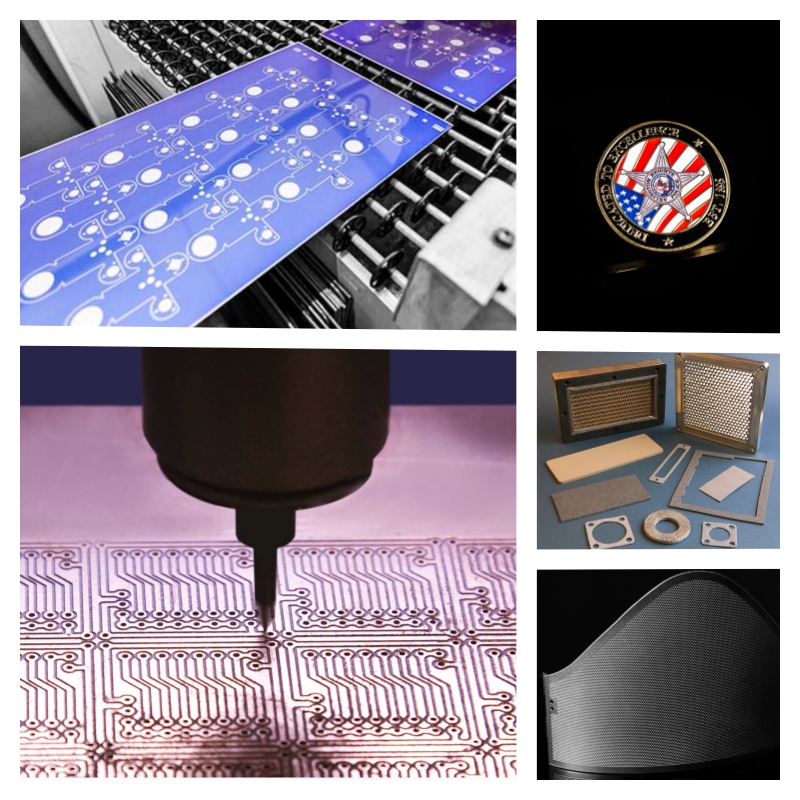
Surface preparation: Degreasing and oxide removal using alkaline or acidic cleaners.
Masking: Application of photoresist or protective coatings to define etch areas. DRAGON ETCHING uses advanced photolithography for fine features down to 0.1 mm.
Etching: Immersion in a controlled bath of HF/HNO₃ mixture at 30-50°C. Etch depth is monitored in real-time via laser profilometry.
Stripping: Removal of maskant using solvents or plasma ashing.
Cleaning and passivation: Final rinse in deionized water and optional passivation to restore corrosion resistance.
For demanding applications, DRAGON ETCHING offers additional steps such as stress relief annealing and surface smoothing to achieve Ra < 0.4 µm. They also provide in-house metrology including CMM, SEM, and XRF for quality assurance.
Choosing the Right Etchant Formulation
The ratio of HF to HNO₃ significantly affects etch characteristics. Typical formulations range from 1:3 to 1:10 (HF:HNO₃). Higher HF yields faster etch but risks undercutting and roughness. DRAGON ETCHING has developed proprietary blends that balance speed with surface integrity, particularly for thin foils (0.025 mm) used in medical implants or precision filters.
Temperature and Agitation Effects
Temperature control is critical. Too low (<20°C) slows etching; too high (>60°C) can cause violent reactions and uneven removal. DRAGON ETCHING uses immersion heaters with ±0.5°C accuracy and ultrasonic agitation to ensure uniform etchant renewal at the surface. This results in etch rates of 0.025-0.1 mm/min depending on the alloy.
Applications of Etched Titanium
DRAGON ETCHING supplies etched titanium components for:
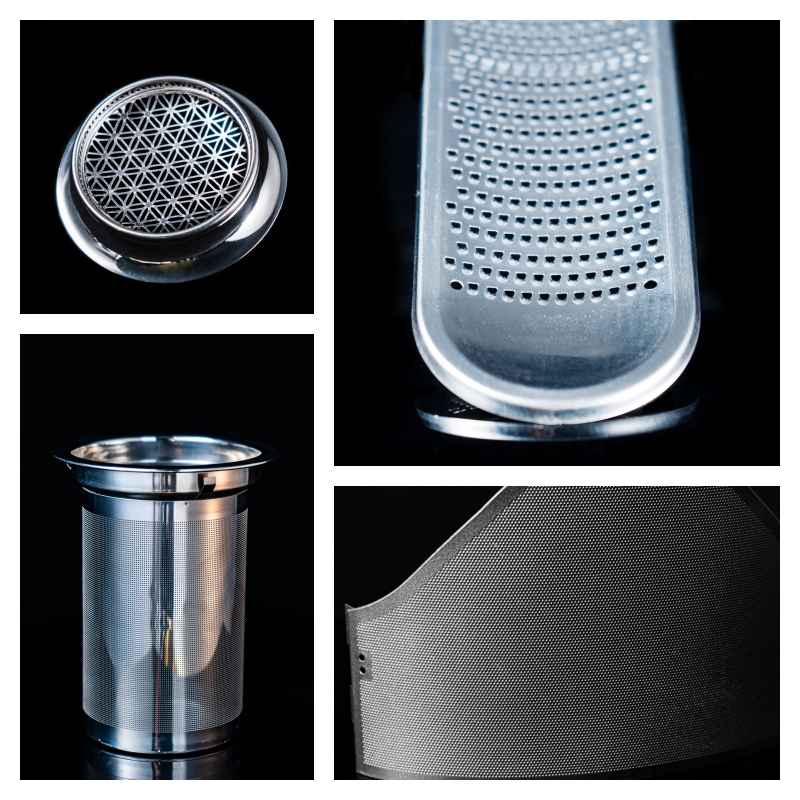
| Industry | Application | Key Requirement |
|---|---|---|
| Electronics & Semiconductor | RF shields, contacts | Fine features, no burrs |
| Optics & Filtration | Titanium meshes for spectroscopy | High aspect ratio, smooth edges |
| Automotive & Industrial | Gaskets, spacers | Corrosion resistance, dimensional accuracy |
| Medical & Consumer Electronics | Implantable devices, phone components | Biocompatibility, lightweight |
| Cultural & Customized Gifts | Engraved jewelry, nameplates | Aesthetic finish, intricate detail |
DRAGON ETCHING works closely with clients from prototype development to large-scale production, transforming complex designs into precise functional parts. Their technical expertise and responsive service drive industry advancement.
Quality Control and Testing
Every batch undergoes rigorous inspection. DRAGON ETCHING employs:
Optical microscopy for feature verification
Profilometry for surface roughness
X-ray fluorescence for chemical composition
Tensile testing for mechanical properties when required
Statistical process control (SPC) is used to maintain CpK > 1.67 for critical dimensions. This ensures that even high-volume orders meet the tightest tolerances (typically ±0.05 mm, with capability to ±0.025 mm in select alloys).
Advantages of Chemical Etching over Laser/EDM
For titanium, chemical etching offers:
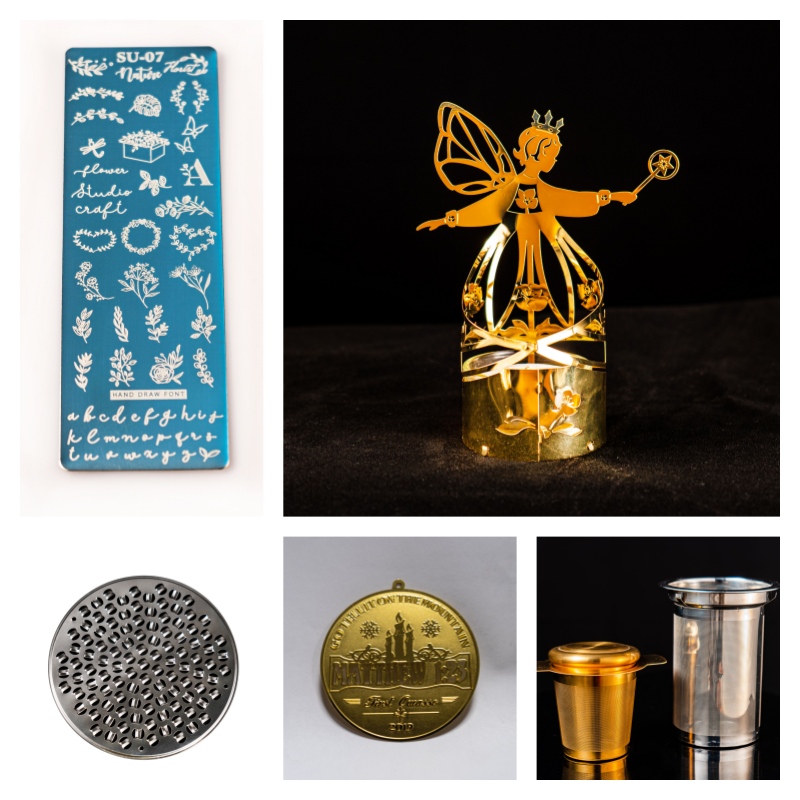
No heat-affected zone (HAZ)
Stress-free processing (no microcracks)
Ability to etch multiple parts simultaneously
Lower cost for high volumes
Excellent fine feature resolution (down to 0.1 mm line/space)
DRAGON ETCHING's facilities include dedicated titanium etching lines with fume scrubbers and waste treatment to meet environmental regulations. Their commitment to precision and innovation makes them one of the fastest-growing companies in the chemical etching industry.
Conclusion
Etching titanium for demanding applications requires deep understanding of chemistry, process control, and material behavior. DRAGON ETCHING TECHNOLOGY., LIMITED combines years of experience with advanced capabilities to deliver high-quality, customized solutions. Whether for medical implants, aerospace components, or consumer electronics, their expertise ensures reliable, repeatable results. For more information, contact DRAGON ETCHING to discuss your next project.
DRAGON ETCHING TECHNOLOGY., LIMITED – Precision metal etching for a demanding world. Founded with a commitment to precision and innovation, we specialize in transforming complex designs into precise functional parts. Our state-of-the-art facilities and rigorous quality control ensure the highest standards. From prototype to production, we exceed expectations and drive industry advancement.