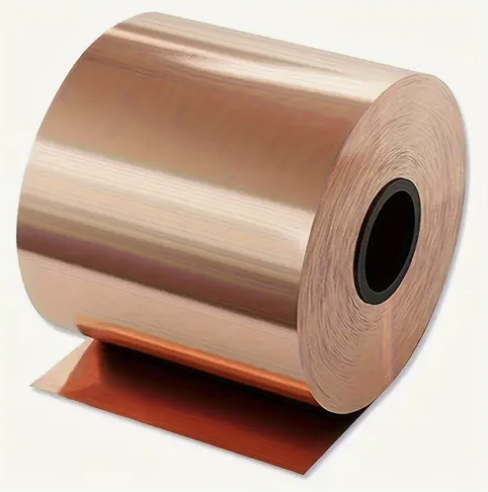
Brass, copper, and bronze are widely applied in the chemical etching industry due to their excellent conductivity, formability, and decorative qualities. Copper and its alloys are particularly suitable for applications that require high electrical and thermal conductivity, making them a preferred choice in electronics, telecommunications, and semiconductor components. Brass, with its good mechanical strength and corrosion resistance, is often etched into precision connectors, contact springs, and decorative metal elements. Bronze, valued for its durability and wear resistance, is commonly used in specialty filters, precision shims, and artistic or industrial design components.


Compared with mechanical machining, photochemical etching of these copper-based alloys allows for fine detail reproduction, burr-free edges, and consistent accuracy even in very thin foils. This process is ideal for producing micro-perforated meshes, shielding elements, intricate logos, and customized parts with complex geometries. In addition, the natural color variations of brass, copper, and bronze offer unique decorative possibilities in architectural and creative design fields.


By leveraging the advantages of chemical etching, these traditional alloys are continually being adapted for modern applications, combining both functionality and aesthetics across multiple industries.

Chemical Etching with Brass

The advantages of using brass over many other metals are many and varied, making it a good choice for applications in electronics, automotive, and telecommunications industries. 

Our engineers and manufacturering leverage brass's affordability, flexibility, and machinability for precision part manufacturing. Also, since brass does not conduct electricity as efficiently as other metals, it's a good choice for use in shields or other parts where low-spark risks are required.

Send us your questions and we will suggest how to use brass for your parts. 

Types of Brass are available

Brass is available in a multitude of compositions and grades. Take advantage of our expert engineering team to help pick the right one for your project.

Here are the most common alloys of brass we use:

260

Call us to discuss which brass alloy is suitablefor your part.


Get the latest price? We'll respond as soon as possible(within 12 hours)
Name Size Operate
Please submit your drawings to us. Files can be compressed into ZIP or RAR folder if they are too large.
We can work with files in format like pdf, sat, dwg, rar, zip, dxf, xt, igs, stp, step, iges, bmp, png, jpg, doc, xls, sldprt.