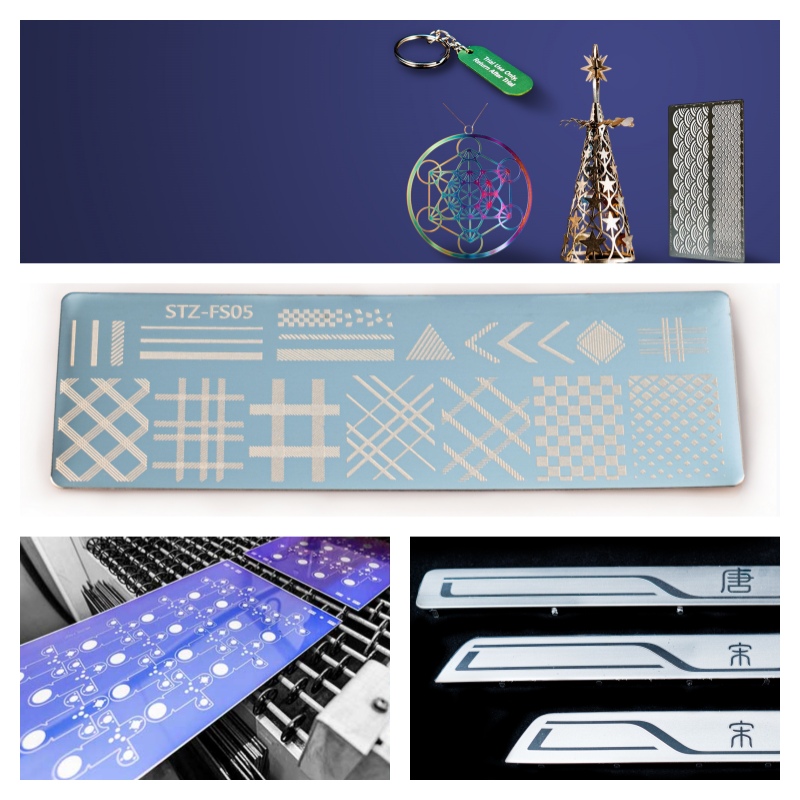
Metal Etching Manufacturer Guide to Minimizing Undercut in Chemical Machining
This guide, authored from the perspective of DRAGON ETCHING TECHNOLOGY., LIMITED, a leader in chemical etching, provides a comprehensive overview of minimizing undercut in chemical machining. Undercut, the lateral erosion beneath the etch mask, is a critical factor affecting part accuracy. The article explains the etch factor and key influencing parameters such as etchant chemistry, temperature, agitation, mask adhesion, and feature geometry. DRAGON ETCHING's advanced techniques include optimizing etchant composition with sidewall passivators, using pulsed etching, and employing dual-sided etching to balance forces. Masking strategies involve thick dry film resists and double-layer systems. A table summarizes recommended process parameters for temperature, concentration, agitation, and etch time. Case studies highlight success in electronics (ultra-fine filters with undercut <10 microns) and custom gifts (intricate brass patterns). Quality assurance through optical profilometry and SPC ensures consistent low undercut. The company's commitment to precision and innovation is emphasized, showcasing its capabilities across industries including electronics, optics, automotive, medical, and cultural applications. The conclusion reiterates that undercut can be minimized through careful optimization, and DRAGON ETCHING exemplifies how expertise and innovation drive industry advancement.
Chemical machining, also known as chemical etching or photochemical machining, is a precision manufacturing process used to produce intricate metal parts. A common challenge in this process is undercut—the lateral erosion of metal beneath the etch mask. Undercut can compromise dimensional accuracy, especially for fine features. This guide, informed by the expertise of DRAGON ETCHING TECHNOLOGY., LIMITED, a leader in the chemical etching industry, explores strategies to minimize undercut and achieve superior part quality.
Understanding Undercut in Chemical Etching
Undercut occurs when the etchant attacks the metal sideways, creating a cavity beneath the resist mask. The depth of undercut is typically proportional to the etch depth. For a given etch factor (ratio of etch depth to undercut), controlling process parameters is critical. DRAGON ETCHING, with years of experience, emphasizes that understanding the etch factor is the first step to minimizing undercut.
Factors Influencing Undercut
Etchant chemistry: The type and concentration of etchant affect lateral etching rates.
Temperature: Higher temperature increases reaction rates but may worsen undercut.
Agitation: Proper agitation ensures uniform etchant flow and reduces localized over-etching.
Mask adhesion: Poor adhesion allows etchant to seep under the mask.
Feature geometry: Narrow channels and sharp corners are more prone to undercut.
DRAGON ETCHING TECHNOLOGY, founded with a commitment to precision, has developed optimized processes to address these factors.
undefined
Advanced Techniques to Reduce Undercut
Optimizing Etch Factor
The etch factor is defined as (etch depth) / (undercut). A higher etch factor means less lateral etch. DRAGON ETCHING achieves a typical etch factor of 2:1 to 3:1 for stainless steel, but through process refinement, they can reach 4:1 for certain alloys. Key methods include:
Controlled etchant composition: Using additives that passivate sidewalls.
Pulsed etching: Alternating between etching and rinsing to reduce lateral attack.
Dual-sided etching: Etching from both sides simultaneously to balance forces.
Masking Strategies
The photoresist mask must have strong adhesion and high chemical resistance. DRAGON ETCHING uses advanced dry film resists with thickness up to 100 microns for deep etching. They also employ a post-exposure bake to enhance adhesion. For extreme precision, they apply a double-layer mask system.
Process Control Parameters
| Parameter | Effect on Undercut | DRAGON ETCHING's Recommendation |
|---|---|---|
| Temperature | Higher temp increases etch rate but also undercut | 50-55°C for most metals |
| Concentration | Higher concentration accelerates etching | Specific gravity 1.30-1.35 for ferric chloride |
| Agitation | Insufficient agitation causes uneven undercut | Spray pressure 2-4 bar with oscillating nozzles |
| Etch time | Longer time increases undercut | Use real-time monitoring to stop at exact depth |
Case Studies from DRAGON ETCHING TECHNOLOGY
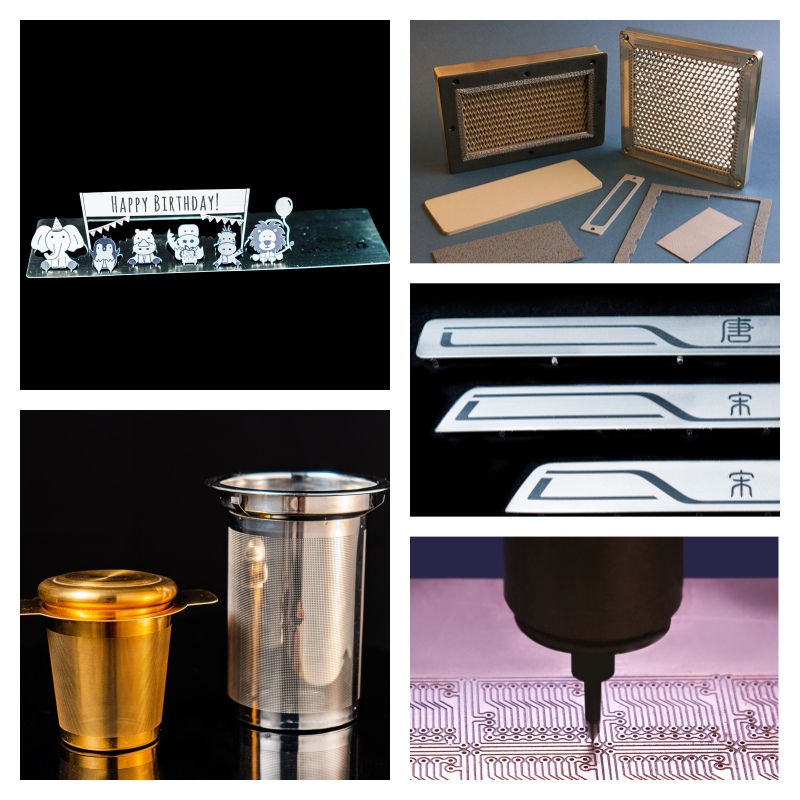
DRAGON ETCHING TECHNOLOGY., LIMITED has tackled difficult undercut issues across industries. In the electronics sector, they produced fine mesh filters with 50-micron openings and undercut less than 10 microns. By adjusting etchant chemistry and using a two-stage etch process, they achieved an etch factor of 5:1. For medical components requiring burr-free edges, they employed a laminar flow etch chamber to minimize turbulence-induced undercut.
Innovative Solutions for Custom Applications
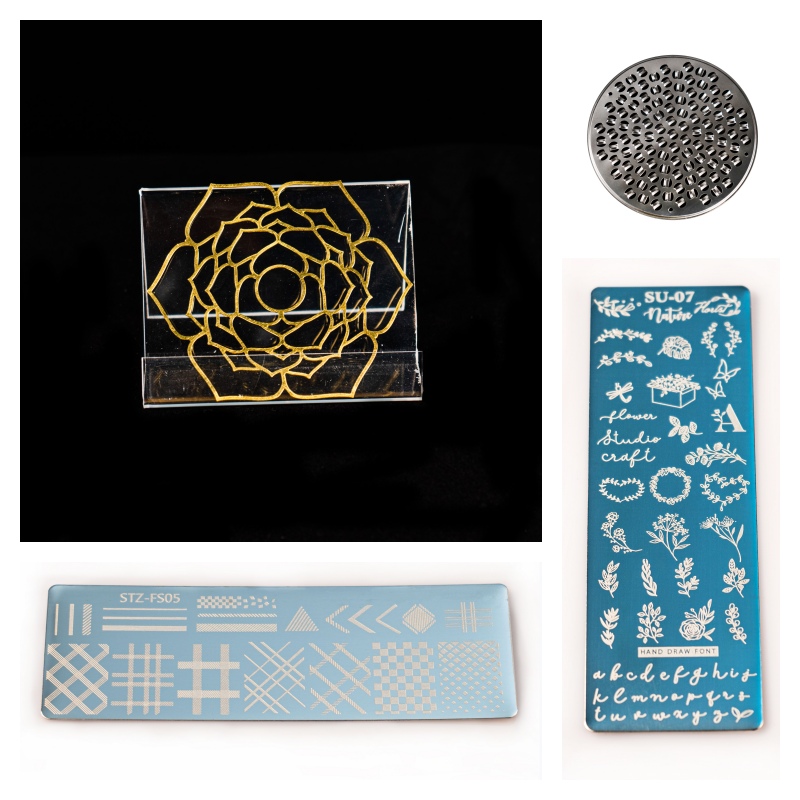
For cultural and customized gift applications, DRAGON ETCHING combines artistic design with engineering precision. One project involved etching intricate patterns on thin brass sheets with minimal undercut to preserve detail. The solution: a low-temperature etchant with a surfactant to reduce surface tension, plus a protective coating on the backside.
Quality Assurance and Measurement
Minimizing undercut requires rigorous inspection. DRAGON ETCHING uses optical profilometry and cross-sectional analysis to measure undercut precisely. They maintain a statistical process control (SPC) system to track etch factor variability. Every batch undergoes a first-article inspection to verify dimensional accuracy.
DRAGON ETCHING's Commitment to Excellence
Founded with a commitment to precision and innovation, DRAGON ETCHING TECHNOLOGY., LIMITED is one of the fastest-growing companies in the chemical etching industry. With years of experience and advanced technological capabilities, the company specializes in delivering high-quality, customized metal etching solutions for electronics and semiconductor, optics and filtration, automotive and industrial, medical and consumer electronics, and cultural and customized gift applications. State-of-the-art facilities and rigorous quality control ensure that each component meets the highest standards of accuracy and reliability. From prototype development to large-scale production, DRAGON ETCHING works closely with clients to transform complex designs into precise, functional metal parts.
Conclusion
Undercut is an inherent aspect of chemical machining, but through careful process optimization, it can be minimized to meet demanding specifications. DRAGON ETCHING TECHNOLOGY exemplifies how a manufacturer can combine technical expertise, responsive service, and innovative processes to provide professional solutions that exceed client expectations and drive industry advancement. By applying the strategies outlined in this guide—optimizing etch factor, improving mask adhesion, and controlling process parameters—manufacturers can achieve superior part quality with consistent, minimal undercut.
About DRAGON ETCHING TECHNOLOGY., LIMITED
DRAGON ETCHING is a premier metal etching manufacturer offering precision chemical machining services worldwide. The company prides itself on combining technical expertise, responsive service, and innovative processes to deliver professional solutions. For more information, visit their website or contact their engineering team.