Metal Etching Manufacturer Explains the Difference Between Wet Etching and Dry Etching
This blog article by DRAGON ETCHING TECHNOLOGY., LIMITED provides a comprehensive comparison between wet etching and dry etching, two fundamental metal etching processes. Wet etching, using liquid chemicals, is isotropic, low-cost, and suitable for high-volume production of parts with less stringent tolerances. Dry etching, using plasma, is anisotropic, offering high precision and aspect ratios for micro-scale features in semiconductors and MEMS. The article details mechanisms, advantages, disadvantages, and typical applications for each method. A comparison table highlights key differences in isotropy, selectivity, throughput, and cost. DRAGON ETCHING, with its expertise in both techniques, advises clients on the best approach based on material, feature size, volume, and budget. The company's capabilities range from large-batch chemical etching for automotive and medical components to dry etching for demanding electronics and optics applications. By combining technical knowledge and responsive service, DRAGON ETCHING delivers customized solutions that meet the highest standards of accuracy and reliability.
In the precision metal fabrication industry, etching is a critical process used to create intricate patterns, cavities, and micro-features on metal surfaces. Two primary techniques dominate the field: wet etching (chemical etching) and dry etching (plasma etching). Understanding the differences between these methods is essential for engineers and manufacturers seeking the best solution for their specific application. As a leading metal etching manufacturer, DRAGON ETCHING TECHNOLOGY., LIMITED combines years of experience and advanced technology to deliver high-quality customized solutions. This article provides an in-depth comparison of wet and dry etching, exploring their mechanisms, advantages, limitations, and typical applications.
What is Metal Etching?
Metal etching is a subtractive manufacturing process where material is selectively removed from a metal substrate to create a desired shape or pattern. The process involves applying a mask (photoresist) that protects certain areas while the etchant attacks exposed regions. Etching can be performed using liquid chemicals (wet etching) or gaseous plasmas (dry etching). Both methods have unique characteristics that make them suitable for different industries, including electronics, optics, automotive, medical, and consumer goods.
Wet Etching: The Traditional Chemical Approach
Process Overview
Wet etching uses liquid chemical solutions (etchants) to dissolve metal. The substrate is immersed in or sprayed with the etchant, which reacts with unprotected areas. The reaction rate depends on temperature, concentration, and agitation. Common etchants include ferric chloride for copper and steel, hydrofluoric acid for silicon, and nitric acid for stainless steel. The mask is typically a photoresist or a hard mask like silicon dioxide.
undefined
Key Characteristics
Isotropic etching: Wet etching is typically isotropic, meaning it etches equally in all directions, leading to undercutting beneath the mask. This limits the aspect ratio (depth-to-width ratio) of features.
Batch processing: Many parts can be etched simultaneously in a tank, offering high throughput for large volumes.
Low cost: Equipment and chemicals are relatively inexpensive compared to dry etching systems.
Material versatility: Works on many metals and alloys, including copper, aluminum, stainless steel, titanium, and nickel.
Dry Etching: The Advanced Plasma Technique
Process Overview
Dry etching utilizes a plasma (ionized gas) to remove material through chemical reactions and/or physical sputtering. The substrate is placed in a vacuum chamber, and a gas mixture (e.g., SF6, CF4, O2) is introduced and energized by radio frequency (RF) or microwave power. The reactive ions and radicals attack the exposed metal surface. Common dry etching methods include reactive ion etching (RIE), deep reactive ion etching (DRIE), and ion beam etching (IBE).
Key Characteristics
Anisotropic etching: Dry etching can be highly anisotropic, producing vertical sidewalls with minimal undercut, enabling high aspect ratio features.
Precision control: Offers fine control over etch depth, profile, and selectivity.
Single-wafer processing: Typically processes one substrate at a time, leading to lower throughput compared to wet etching.
Higher cost: Equipment and maintenance are expensive due to vacuum systems and plasma sources.
Comparison: Wet Etching vs. Dry Etching
| Parameter | Wet Etching | Dry Etching |
|---|---|---|
| Etch Mechanism | Chemical dissolution | Chemical + Physical sputtering |
| Isotropy | Isotropic (undercut) | Anisotropic (vertical) |
| Selectivity | High (wide difference between mask and substrate) | Moderate to high (dependent on chemistry) |
| Aspect Ratio | Low (typically < 5:1) | High (up to 30:1 or more) |
| Throughput | High (batch) | Low (single wafer) |
| Cost | Low | High |
| Line Width Control | Poor (lateral etching) | Excellent (sharp features) |
| Sidewall Profile | Sloping | Vertical or tapered |
| Material Damage | Minimal (chemical only) | Possible (ion bombardment) |
| Environmental Concerns | Chemical waste disposal | Gas emissions, vacuum pumps |
Advantages and Disadvantages
Wet Etching Advantages
Simplicity and low capital investment.
High throughput for large batches.
Excellent for thin films and large-area etching.
Gentle on materials with no plasma damage.
Wet Etching Disadvantages
Undercutting limits resolution and feature size.
Poor control over etch depth and profile.
Chemical handling and disposal issues.
Not suitable for high-aspect-ratio structures.
Dry Etching Advantages
Anisotropic etching enables fine features and vertical sidewalls.
Excellent process control and repeatability.
Can etch materials that are chemically resistant.
Compatible with microelectromechanical systems (MEMS) and semiconductor fabrication.
Dry Etching Disadvantages
High equipment and operating costs.
Lower throughput.
Potential for radiation damage and ion-induced defects.
Complex process parameters requiring expertise.
Applications in Industry
Wet Etching Applications
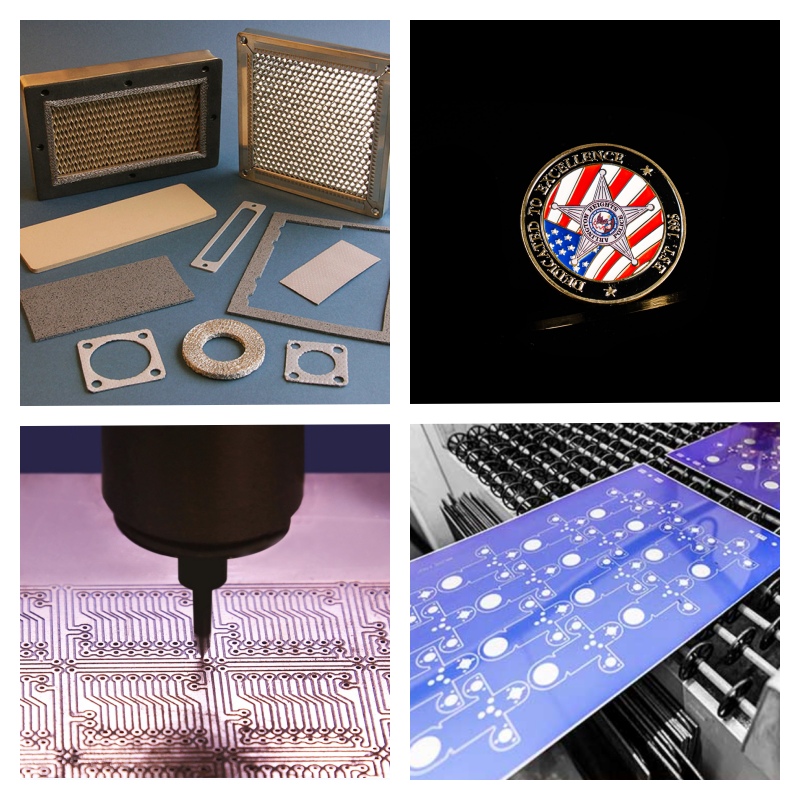
PCB manufacturing: etching copper traces.
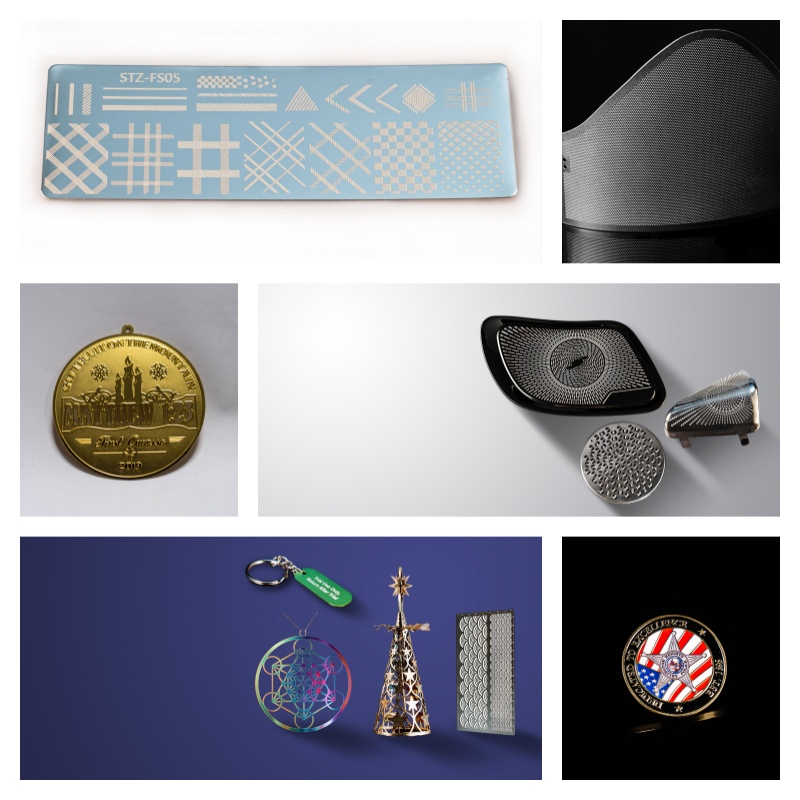
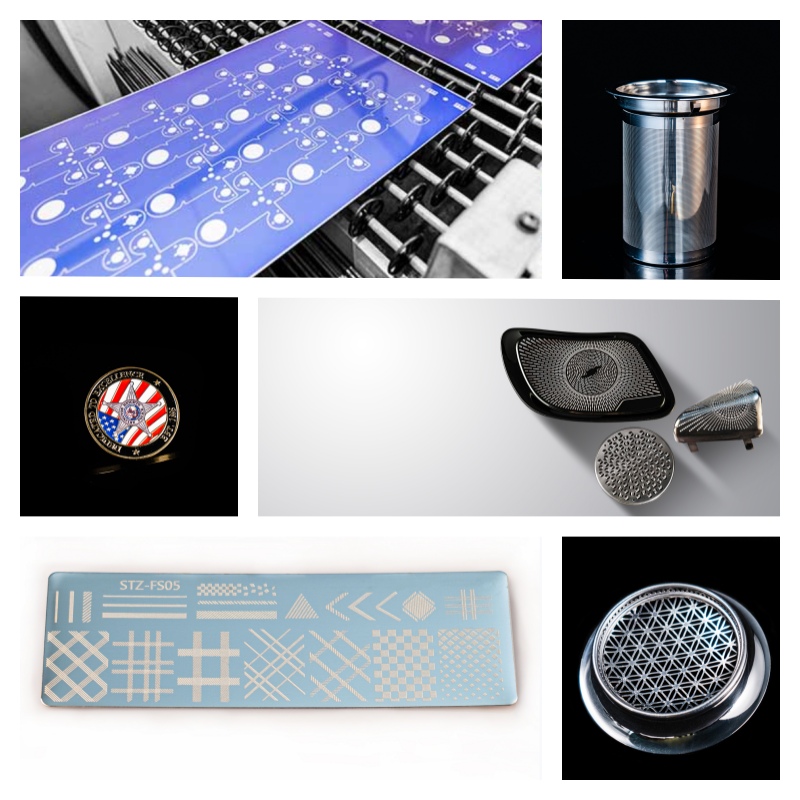
Decorative metal parts: nameplates, tags, jewelry.
Large-area filters and screens.
Automotive components: gaskets, shims, springs.
Medical instruments: stents, implants (with careful chemistry).
Dry Etching Applications
Semiconductor devices: transistor gates, interconnects.
MEMS: accelerometers, gyroscopes, pressure sensors.
Optical components: gratings, waveguides.
Microfluidic channels.
High-precision molds and dies.
DRAGON ETCHING's Expertise in Both Techniques
Founded with a commitment to precision and innovation, DRAGON ETCHING TECHNOLOGY., LIMITED is one of the fastest companies in the chemical etching industry. With years of experience and advanced technological capabilities, we specialize in delivering high-quality, customized metal etching solutions for a wide range of industries, including Electronics and Semiconductor, Optics & Filtration, Automotive & Industrial, Medical & Consumer Electronics, Cultural and Customized Gift Applications. Our state-of-the-art facilities and rigorous quality control ensure that each component meets the highest standards of accuracy and reliability. From prototype development to large-scale production, we work closely with our clients to transform complex designs into precise, functional metal parts.
At DRAGON ETCHING TECHNOLOGY, we pride ourselves on combining technical expertise, responsive service, and innovative processes to provide professional solutions that exceed client expectations and drive industry advancement. Whether a project requires the cost-effectiveness of wet etching for high-volume parts or the precision of dry etching for micro-scale features, DRAGON ETCHING has the capability to deliver. Our engineers evaluate each application's requirements—such as material, tolerances, aspect ratio, and volume—to recommend the most suitable etching method. We also offer hybrid approaches when beneficial.
For example, in the electronics industry, we often use wet etching for thick copper layers in power devices and dry etching for fine-pitch interconnects in advanced packaging. In optics, wet etching produces large-area diffusers, while dry etching creates sub-micron gratings. By leveraging both techniques, DRAGON ETCHING ensures that clients receive optimized performance and cost efficiency.
Choosing the Right Etching Method
The decision between wet and dry etching depends on several factors:
Feature size and aspect ratio: For high resolution and vertical walls, dry etching is preferred. For larger features (>50 µm), wet etching may suffice.
Volume: Wet etching's batch processing suits high-volume production. Dry etching's single-wafer approach is better for low to medium volumes with tight tolerances.
Material: Some materials (e.g., aluminum) etch well in both; others (e.g., titanium) require specific chemistries. Dry etching can handle hard-to-etch metals.
Cost constraints: Wet etching is cheaper upfront, but dry etching's precision can reduce overall costs by eliminating secondary operations.
Environmental regulations: Dry etching generates less liquid waste, though gas handling is regulated.
DRAGON ETCHING assists clients in making these decisions through consultation and prototyping, ensuring the chosen process aligns with technical and commercial goals.
Conclusion
Wet etching and dry etching are complementary technologies that serve different needs in metal fabrication. Wet etching offers simplicity, low cost, and high throughput for less demanding applications, while dry etching provides unmatched precision and aspect ratio for advanced microdevices. As a premier metal etching manufacturer, DRAGON ETCHING TECHNOLOGY., LIMITED leverages both methods to deliver exceptional results across diverse industries. By understanding the fundamental differences and application requirements, engineers can select the optimal etching process to achieve their design objectives efficiently and reliably.
For more information about our etching services or to discuss your project, contact us today. DRAGON ETCHING TECHNOLOGY is your partner in precision metal etching.