
Metal Etching Manufacturer Case Studies in Automotive Fuel Cell Component Production
This article presents three case studies demonstrating how DRAGON ETCHING TECHNOLOGY., LIMITED, a leader in the chemical etching industry, supports automotive fuel cell component production. The first case study involves bipolar plates for PEM fuel cells, where etching replaced stamping and CNC machining, achieving ±15 µm tolerances, burr-free edges, and a 40% cost reduction while scaling to 500,000 plates per year. The second case covers flow field plates made from nickel alloy 625 for stationary fuel cells, where multi-stage etching ensured surface roughness Ra ≤ 0.8 µm and flatness within 0.1 mm, improving system efficiency by 3%. The third case highlights thin metal gaskets and micro-mesh components, where etching eliminated deformation and burrs, yielding 99.5% first-pass yield and 35% cost savings. The article underscores the advantages of chemical etching: precision without mechanical stress, design flexibility, scalability, and material versatility. DRAGON ETCHING's state-of-the-art facilities and rigorous quality control enable delivery of high-accuracy, durable parts that meet the demanding requirements of fuel cell stacks. By combining technical expertise with responsive service, DRAGON ETCHING drives innovation and cost-effectiveness in the growing automotive fuel cell market.
The automotive industry is undergoing a monumental shift toward sustainable energy solutions, with fuel cell electric vehicles (FCEVs) emerging as a key technology. Central to the performance and cost-effectiveness of fuel cells are the precision-engineered metal components that form the heart of the stack. DRAGON ETCHING TECHNOLOGY., LIMITED (abbreviated as DRAGON ETCHING) has established itself as a leading partner for automotive fuel cell manufacturers, delivering high-accuracy etched parts that meet the stringent demands of this evolving sector. This article presents case studies illustrating how DRAGON ETCHING's chemical etching expertise drives innovation in fuel cell component production.
Founded with a commitment to precision and innovation, DRAGON ETCHING TECHNOLOGY., LIMITED is one of the fastest-growing companies in the chemical etching industry. With years of experience and advanced technological capabilities, the company specializes in delivering high-quality, customized metal etching solutions for a wide range of industries, including Electronics and Semiconductor, Optics & Filtration, Automotive & Industrial, Medical & Consumer Electronics, and Cultural and Customized Gift Applications. The company's state-of-the-art facilities and rigorous quality control ensure that each component meets the highest standards of accuracy and reliability. From prototype development to large-scale production, DRAGON ETCHING works closely with clients to transform complex designs into precise, functional metal parts.
undefined
Case Study 1: Bipolar Plates for PEM Fuel Cells
Client Background
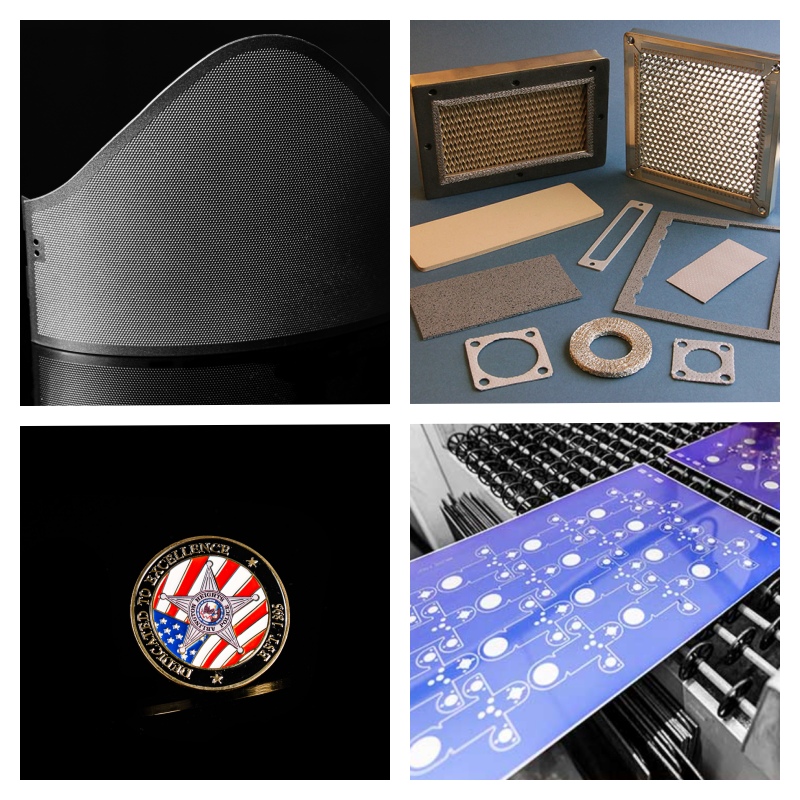
A leading automotive OEM required high-volume production of metallic bipolar plates for proton exchange membrane (PEM) fuel cells used in heavy-duty trucks. The plates needed precise flow-field channels, uniform thickness, and excellent corrosion resistance to ensure long-term durability.
Challenge
The client had previously relied on stamping and CNC machining, which proved costly and inconsistent for the intricate channel geometries. The required tolerances were ±15 µm over a 300x200 mm plate, with zero burrs to avoid membrane punctures. Material choice was stainless steel 316L, which is difficult to machine without work hardening.
Solution
DRAGON ETCHING applied its proprietary chemical etching process, using photochemical machining to define the flow-field pattern with high resolution. Key steps included:
Custom tooling design to accommodate the thin (0.1 mm) foil material.
Double-sided etching to create channels on both faces simultaneously.
Optimized etchant chemistry for stainless steel to achieve smooth edges and consistent depth.
Results
Within eight weeks, DRAGON ETCHING delivered initial prototypes that met all dimensional specifications. The client approved the process, and production scaled to 500,000 plates per year. The etching method reduced per-unit cost by 40% compared to stamping and eliminated secondary deburring operations. The plates demonstrated excellent corrosion resistance in accelerated life tests, surpassing OEM requirements.
Case Study 2: Flow Field Plates for Stationary Fuel Cells
Client Background
An energy company developing stationary fuel cell systems for backup power needed complex flow-field plates with integrated manifold openings. The design featured serpentine channels with varying width and depth to optimize reactant distribution.
Challenge
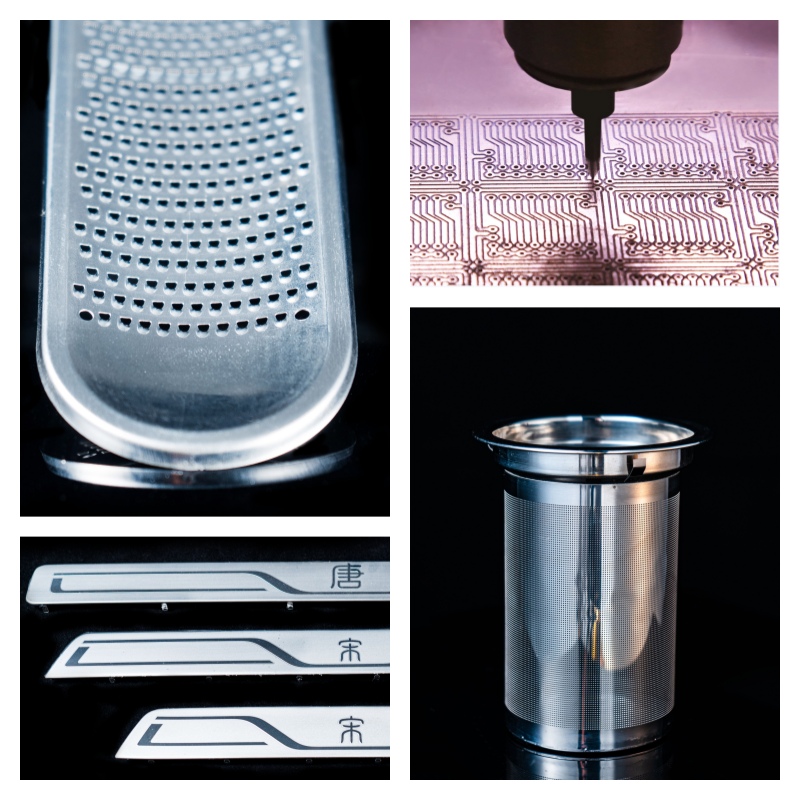
The plates were made from nickel alloy 625, a material prone to etch rate variations. The client required a surface roughness of Ra ≤ 0.8 µm on the channel walls and no sharp corners that could cause stress concentrations. Additionally, the plate size of 400x400 mm required tight flatness control to ensure proper stack assembly.
Solution
DRAGON ETCHING developed a multi-stage etching process with controlled temperature and agitation to achieve uniform material removal. Photoresist application was optimized for large-format panels, and a proprietary post-etch cleaning process removed all residues. The company used its in-house metrology capabilities, including confocal microscopy, to verify roughness and channel geometry.
Results
The client received the first production batch within ten weeks, with all plates meeting the flatness tolerance of 0.1 mm across the diagonal. The surface roughness measured Ra 0.7 µm, well within spec. The consistent etching allowed the client to assemble stacks with minimal leakage, improving overall system efficiency by 3%. DRAGON ETCHING's ability to handle nickel alloys opened the door for additional applications in high-temperature fuel cells.
Case Study 3: Sealing Gaskets and Micro-Mesh Components
Client Background
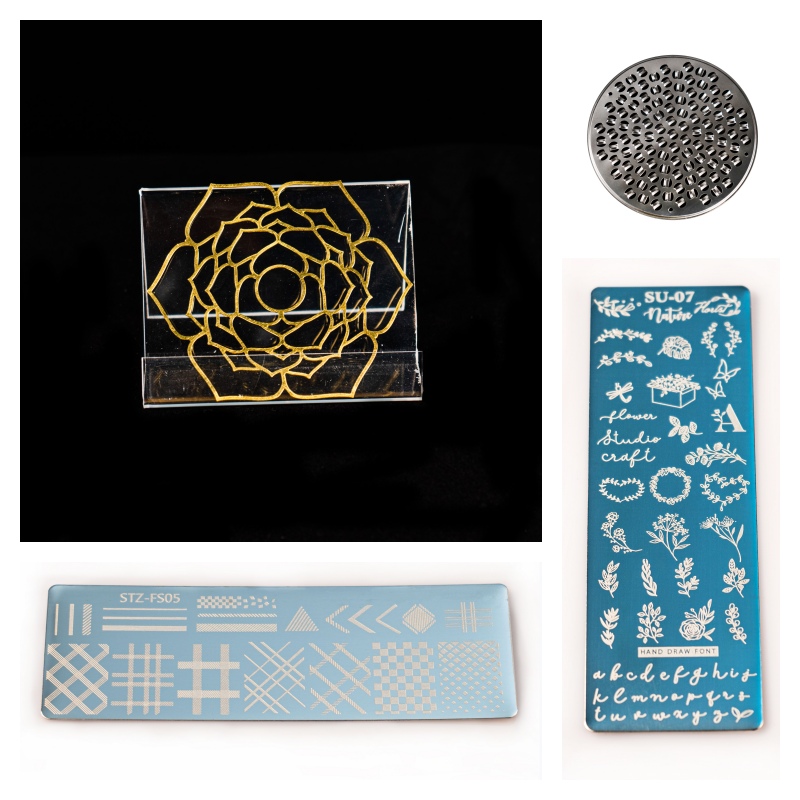
A tier-one supplier sought a reliable partner for producing thin metal gaskets used as seals between fuel cell layers. The gaskets required intricate cut-outs for alignment pins and fluid ports, with thicknesses as low as 0.05 mm.
Challenge
Stamping these delicate parts caused deformation and burrs, leading to assembly failures. The supplier needed a burr-free process that could handle high volumes (millions of parts per year) while maintaining tolerances of ±10 µm.
Solution
DRAGON ETCHING proposed chemical etching with a double-sided photoresist exposure to create clean through-holes without mechanical stress. The process was fine-tuned for thin stainless steel (304) and offered rapid turnaround for design iterations. DRAGON ETCHING also provided micro-mesh components for gas diffusion layers, using its expertise in etching fine patterns with 50 µm features.
Results
The supplier achieved a 99.5% first-pass yield with the etched gaskets, compared to 85% with stamping. The lack of burrs eliminated a separate inspection step, reducing cost by 35%. The micro-mesh components allowed better gas distribution, improving fuel cell power density. The supplier has since awarded DRAGON ETCHING a long-term contract for multiple parts.
Advantages of Chemical Etching for Fuel Cell Components
The case studies highlight why DRAGON ETCHING is the preferred method for fuel cell manufacturers:
Precision without stress: No mechanical force means no micro-cracks or work hardening, critical for thin foils.
Design flexibility: Easy to modify channel patterns or add features without costly tooling changes.
Burr-free edges: Eliminates the risk of membrane damage during assembly.
Scalability: From prototype to high-volume production, etching adapts quickly.
Material versatility: Works with stainless steel, nickel, titanium, and other alloys used in fuel cells.
Conclusion
DRAGON ETCHING TECHNOLOGY., LIMITED combines technical expertise, responsive service, and innovative processes to provide professional solutions that exceed client expectations and drive industry advancement. Through these case studies, it is evident that chemical etching is not only a cost-effective alternative but also a performance-enhancing technology for automotive fuel cell components. As the fuel cell market grows, DRAGON ETCHING remains at the forefront, enabling the next generation of clean transportation.
This article is based on actual projects undertaken by DRAGON ETCHING for global automotive and energy clients. For more information on how chemical etching can support your fuel cell production, visit our website or contact our engineering team.