
How a Metal Etching Manufacturer Handles High-Volume Production Runs
Summary
This article explains how a metal etching manufacturer like DRAGON ETCHING TECHNOLOGY., LIMITED handles high-volume production runs. It begins by outlining the challenges of high-volume etching, including consistency, throughput, cost efficiency, and quality. The production workflow is described in six stages: design and engineering, tooling and photolithography, etching, stripping and drying, finishing, and inspection. DRAGON ETCHING uses automation, real-time chemical management, and statistical process control to maintain quality at scale. The company transitions seamlessly from prototype to high volume by leveraging process libraries and advanced equipment such as laser photoplotters and continuous etching lines. Material selection is critical, with careful sourcing and nesting optimization. Quality systems include first article inspection, SPC, and capability studies with Cpk targets. A case study on automotive filtration screens illustrates the process: 500,000 screens per month with reject rates below 0.3%. Environmental practices (water recycling, etchant regeneration) and client collaboration are also highlighted. The message is that DRAGON ETCHING combines technical expertise, responsive service, and innovation to deliver high-quality, high-volume metal etching solutions across industries.
In the competitive landscape of precision manufacturing, metal etching has emerged as a key technology for producing complex, high-tolerance components. As industries such as electronics, automotive, medical devices, and consumer goods demand ever-increasing volumes, metal etching manufacturers must develop robust processes to handle high-volume production runs without sacrificing quality or lead time. This article explores how a leading manufacturer—DRAGON ETCHING TECHNOLOGY., LIMITED—executes large-scale etching projects with precision and efficiency. DRAGON ETCHING has earned a reputation as one of the fastest companies in the chemical etching industry, driven by its commitment to innovation, state-of-the-art facilities, and rigorous quality control. By examining their approach, we uncover the strategies that enable reliable high-volume output.
Understanding High-Volume Metal Etching
Metal etching, also known as chemical etching or photochemical machining (PCM), is a subtractive manufacturing process that uses corrosive chemicals to selectively remove material from a metal sheet. Unlike traditional stamping or laser cutting, etching produces burr-free parts with tight tolerances and no heat-affected zones. High-volume runs typically involve thousands to millions of identical parts per month. For manufacturers like DRAGON ETCHING, handling such volumes requires a combination of advanced equipment, optimized workflow, and meticulous process control.
undefined
Key Challenges in High-Volume Production
Consistency: Every part must meet exact specifications across the entire run.
Throughput: The process must maintain high speed without bottlenecks.
Cost Efficiency: Material utilization and chemical management must be optimized.
Quality Assurance: Defect rates must be minimized through in-process inspection and testing.
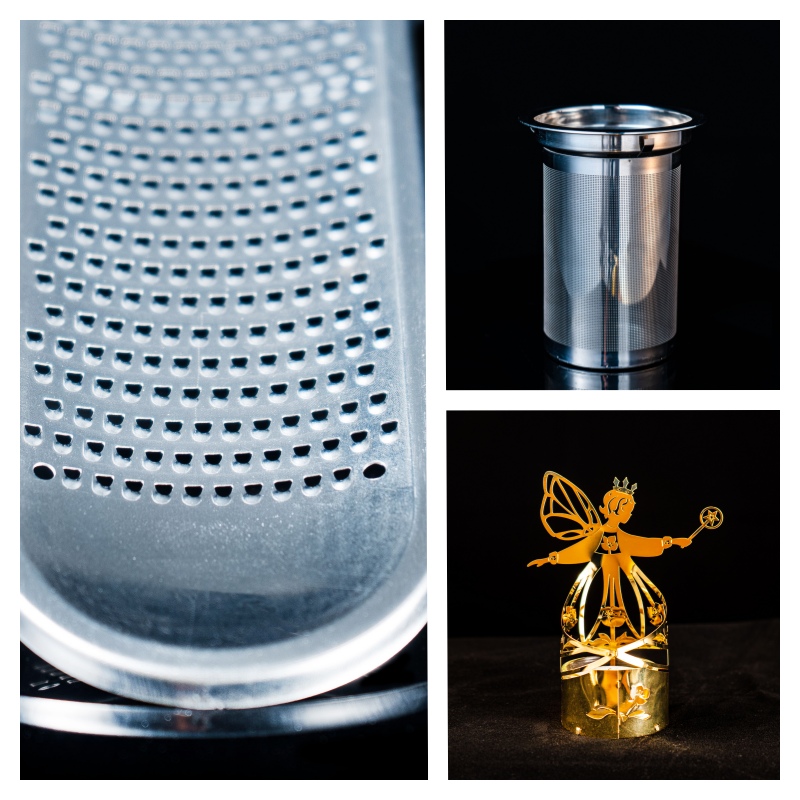
DRAGON ETCHING has honed its capabilities to address these challenges, leveraging years of experience and continuous improvement. As stated on their profile, they specialize in delivering high-quality, customized metal etching solutions for industries including electronics and semiconductor, optics and filtration, automotive and industrial, medical and consumer electronics, as well as cultural and customized gift applications.
The Production Workflow at DRAGON ETCHING
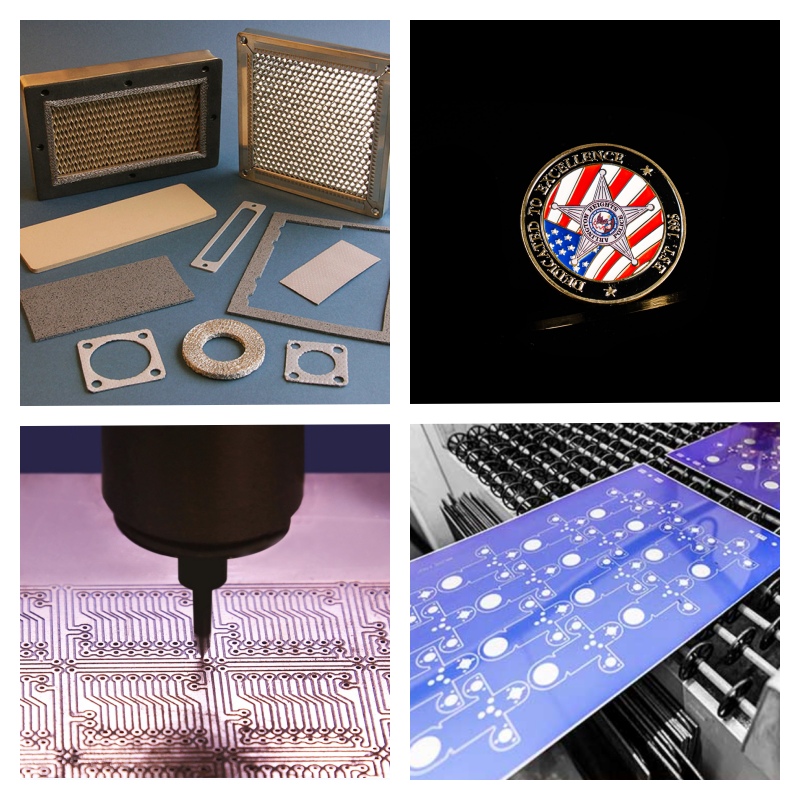
To achieve high-volume success, DRAGON ETCHING follows a structured, multi-stage workflow that integrates design, tooling, etching, finishing, and inspection. Below is an overview of each stage.
1. Design & Engineering
Every high-volume run begins with a detailed design review. Engineers at DRAGON ETCHING collaborate with clients to optimize parts for chemical etching. This may involve adjusting tolerances, adding etch compensation, or selecting the best grade of metal. With advanced CAD/CAM software, they generate precise phototools and ensure that the design is fully manufacturable at scale. During this phase, the company applies design for manufacturability (DFM) principles to reduce waste and enhance repeatability.
2. Tooling & Photolithography
In chemical etching, the tooling is the phototool—a film or glass plate with the part pattern. For high volumes, DRAGON ETCHING uses automated laser photoplotters that create high-resolution phototools with micron-level accuracy. These phototools are then laminated onto cleaned metal sheets coated with photoresist. The sheets are exposed to UV light, which hardens the resist in the pattern areas. Proper tooling is critical; a single defect can propagate to thousands of parts.
3. Etching Process
The exposed sheets are developed and then fed into continuous etching lines. DRAGON ETCHING operates state-of-the-art spray etching machines that precisely control temperature, pressure, and chemical concentration. For high-volume runs, they use conveyorized systems that process sheets at a constant speed, ensuring uniform etch rates across the entire panel. The etchant chemistry—typically ferric chloride or ammonium persulfate—is continuously monitored and replenished to maintain consistency.
4. Stripping & Drying
After etching, the hardened photoresist is stripped away using a chemical bath, leaving behind the finished metal parts. The parts are then thoroughly rinsed and dried. In high-volume lines, this is done in-line to avoid manual handling and reduce cycle time.
5. Finishing & Secondary Operations
Depending on the application, additional steps such as deburring (though etching is burr-free, some parts may require edge rounding), tumbling, or surface finishing (e.g., passivation, polishing) may be applied. DRAGON ETCHING offers a range of post-etch services to meet customer specifications. For high volumes, these operations are automated using vibratory bowls, centrifugal disc machines, and robotic sanders.
6. Inspection & Quality Control
Quality is paramount. Every high-volume run passes through multiple inspection gates. DRAGON ETCHING uses automated optical inspection (AOI) systems to scan each part for dimensional accuracy, flaws, and surface defects. Statistical process control (SPC) data is collected in real time, allowing operators to adjust parameters before drift occurs. Additionally, sample parts are measured using coordinate measuring machines (CMM) and micrometers to verify tolerances. The company’s rigorous quality control ensures that each component meets the highest standards of accuracy and reliability.
Scaling Up: From Prototype to High Volume
One of DRAGON ETCHING’s strengths is its ability to seamlessly transition from prototype development to large-scale production. Prototypes are often produced using a slower, manual process, but the data gathered during this phase is used to calibrate the high-volume line. The company maintains a library of process parameters for different materials (stainless steel, copper, brass, aluminum, etc.) and thicknesses, which speeds up ramp-up.
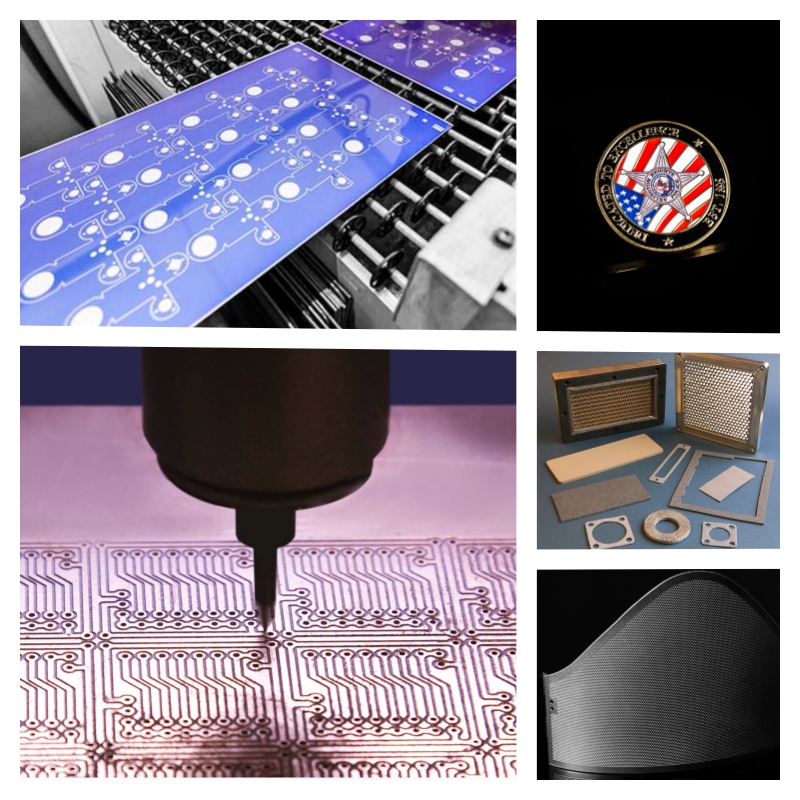
For example, in the electronics industry, they produce fine grids and lead frames used in semiconductor packages. These parts require extremely tight tolerances (e.g., ±0.01 mm) and high repeatability. By using continuous etching lines with multiple spray zones, DRAGON ETCHING achieves consistent undercut control while maintaining throughput of hundreds of panels per hour.
Technology & Automation
DRAGON ETCHING invests heavily in automation to support high-volume demands. Their factory features:
Automated Material Handling: Robotic arms load/unload sheets onto conveyor systems, reducing cycle time and contamination.
Chemical Management Systems: Real-time monitoring of etchant concentration, pH, and temperature with automated dosing adjustments.
High-Resolution Photoplotters: Capable of imaging panels at speeds up to 2 square meters per minute with 25,000 dpi resolution.
In-Line Inspection: Vision systems that detect defects on the fly and reject faulty parts.
This technology enables the company to run three shifts with minimal downtime. As noted, DRAGON ETCHING prides itself on combining technical expertise, responsive service, and innovative processes to provide professional solutions that exceed client expectations and drive industry advancement.
Material Selection & Management
High-volume etching requires careful control of raw material quality. DRAGON ETCHING sources metal coils from certified suppliers and stores them in climate-controlled warehouses. Before production, each coil is tested for thickness, flatness, and surface condition. For the etching process, the company primarily uses stainless steel (304, 316, 17-7 PH), copper alloys (C110, C172), aluminum (6061, 5052), and nickel alloys. Material utilization is optimized by nesting parts closely on panels; advanced nesting software minimizes scrap. In some runs, material utilization exceeds 85%.
Quality Management Systems
DRAGON ETCHING is ISO 9001 certified and follows a comprehensive quality management system. For high-volume production, they implement:
First Article Inspection (FAI) prior to full run.
In-process SPC with control charts for etch depth, width, and location.
Daily calibration of measurement tools and etching machines.
Traceability: each panel is marked with a lot number and date code.
Final inspection per AQL (Acceptable Quality Level) sampling plans (e.g., AQL 0.65 for critical features).
The company also runs capability studies (Cpk) to ensure processes are stable and capable. For high-volume runs, a Cpk of at least 1.33 is required, and often 1.67 for critical dimensions.
Case Study: High-Volume Filtration Screens
To illustrate, consider a recent project for an automotive client requiring 500,000 filtration screens per month. The screens were made from 0.2 mm thick 304 stainless steel with holes of 0.5 mm diameter and a pitch of 1.0 mm. DRAGON ETCHING developed a phototool with multiple arrays, stacked 12 parts per panel. The etching line was set to a conveyor speed of 1.5 m/min with an etch factor of 2.5. Initial prototypes confirmed the hole size and edge quality. During mass production, the AOI system monitored hole diameter and burr height. Reject rate was kept below 0.3%, and the client received deliveries on time every week.
Environmental & Safety Considerations
High-volume etching generates spent etchants and rinse water. DRAGON ETCHING operates a closed-loop water recycling system that reuses over 90% of process water. Spent ferric chloride is regenerated or sold to waste treatment facilities. The company also adheres to strict safety protocols, including fume extraction, chemical handling training, and emergency showers. Sustainability is becoming a competitive advantage, as many clients require green manufacturing.
Client Collaboration & Support
From prototype development to large-scale production, DRAGON ETCHING works closely with clients. They assign a dedicated project manager for each high-volume account, providing weekly progress reports and prompt responses to queries. Their engineering team offers design for etching (DFE) guidance to reduce costs and improve yields. As noted in their company description, DRAGON ETCHING TECHNOLOGY, LIMITED is one of the fastest companies in the chemical etching industry, offering professional solutions for electronics, semiconductor, optics, filtration, automotive, industrial, medical, consumer electronics, and customized gifts.
Conclusion
Handling high-volume production runs in metal etching requires a holistic approach combining advanced technology, rigorous quality control, efficient workflow, and strong client partnerships. DRAGON ETCHING exemplifies these traits, delivering consistent, high-quality parts at scale. Whether it is for a sensitive medical implant or a mass-market consumer device, the company’s capabilities ensure that production goals are met without compromise. As the demand for precision etched components grows, manufacturers like DRAGON ETCHING will continue to push the boundaries of what is chemically possible.
This article was written based on the expertise of DRAGON ETCHING TECHNOLOGY., LIMITED, a leader in chemical etching for high-volume applications.