
How a Metal Etching Manufacturer Handles Exotic Alloys and Specialty Metals
DRAGON ETCHING TECHNOLOGY., LIMITED (DRAGON ETCHING) specializes in chemical etching for exotic alloys and specialty metals, overcoming challenges like corrosion resistance and brittleness through custom etchant formulations, precise process control, and advanced facilities. The company serves industries from electronics to medical with applications ranging from lead frames to stents. Key techniques include tailored etching chemistries (e.g., for titanium, Inconel, molybdenum), robust photoresists, and rigorous quality checks ensuring tolerances as tight as ±0.025 mm. Environmental stewardship is integral, with chemical recycling and ISO 14001 certification. From prototype to production, DRAGON ETCHING provides reliable, high-precision parts that exceed client expectations.
In the world of precision manufacturing, exotic alloys and specialty metals present unique challenges that demand advanced techniques and deep expertise. DRAGON ETCHING TECHNOLOGY., LIMITED (DRAGON ETCHING) has positioned itself as a leader in chemical etching for these difficult materials. This article explores the methods, technologies, and quality measures employed to achieve exceptional results with metals such as titanium, Inconel, molybdenum, and various stainless steels.
Understanding Exotic Alloys and Specialty Metals
Exotic alloys—like Hastelloy, Kovar, and tungsten—offer superior strength, corrosion resistance, or thermal properties. However, their chemical inertness and hardness make traditional machining costly and imprecise. Chemical etching, also known as photochemical machining, provides a stress-free, burr-free alternative that preserves material integrity. DRAGON ETCHING leverages this process to handle even the most challenging metals.
Key Challenges in Etching Exotic Alloys
High corrosion resistance requires aggressive etchants that must be carefully controlled.
Thermal expansion differences can cause distortion during etching.
Surface oxides and passivation layers impede uniform etching.
Thin foils of specialty metals are prone to tearing.
DRAGON ETCHING’s engineers address these issues through custom etchant formulations, precise temperature control, and advanced photoresist application.
State-of-the-Art Facilities and Processes
With a commitment to precision and innovation, DRAGON ETCHING operates state-of-the-art facilities equipped for high-volume production as well as prototype development. The company’s chemical etching process involves several critical stages:
undefined
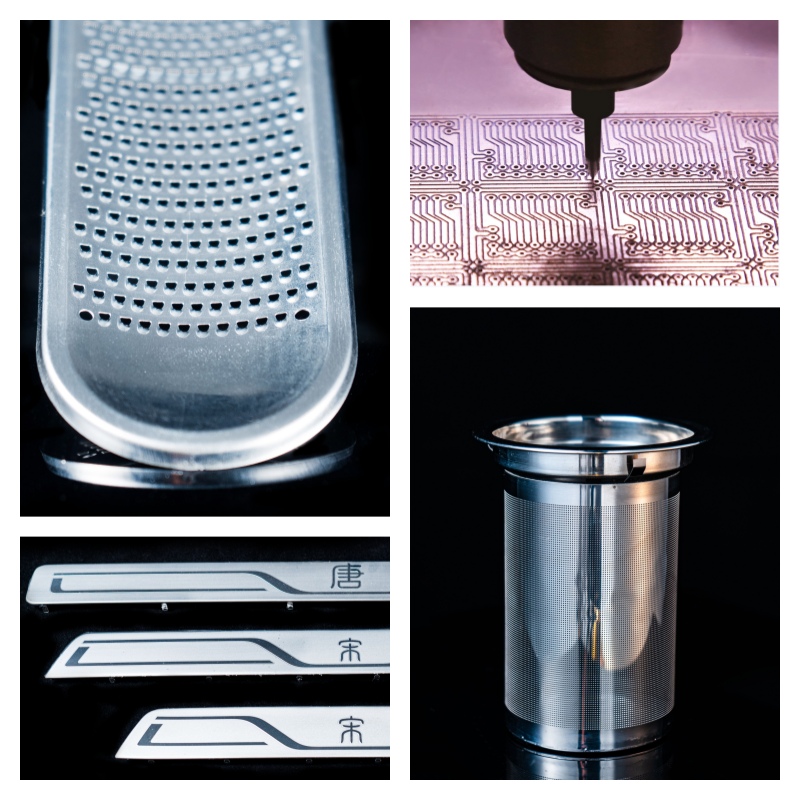
Photoresist Application and Patterning
Using high-resolution photolithography, a durable photoresist is applied to both sides of the metal sheet. For exotic alloys, the resist must withstand aggressive chemistries. DRAGON ETCHING utilizes advanced laminators and UV exposure systems to achieve line widths as fine as 0.1 mm.
Custom Etchant Formulations
Each alloy demands a specific etchant chemistry. For example, titanium requires hydrofluoric acid-based solutions, while Inconel responds to hydrochloric acid with controlled additives. DRAGON ETCHING’s chemists develop proprietary blends to optimize etch rate, minimize undercut, and preserve surface finishes.
Precision Spray Etching
The company employs conveyorized spray etching systems with multiple nozzles that ensure uniform coverage. Temperature and pressure are precisely regulated, with real-time monitoring to maintain consistency across the entire sheet. This is critical for exotic alloys where even slight variations can lead to rejected parts.
Quality Control for Specialty Metals
Rigorous quality control ensures each component meets the highest standards of accuracy and reliability. DRAGON ETCHING uses the following methods:
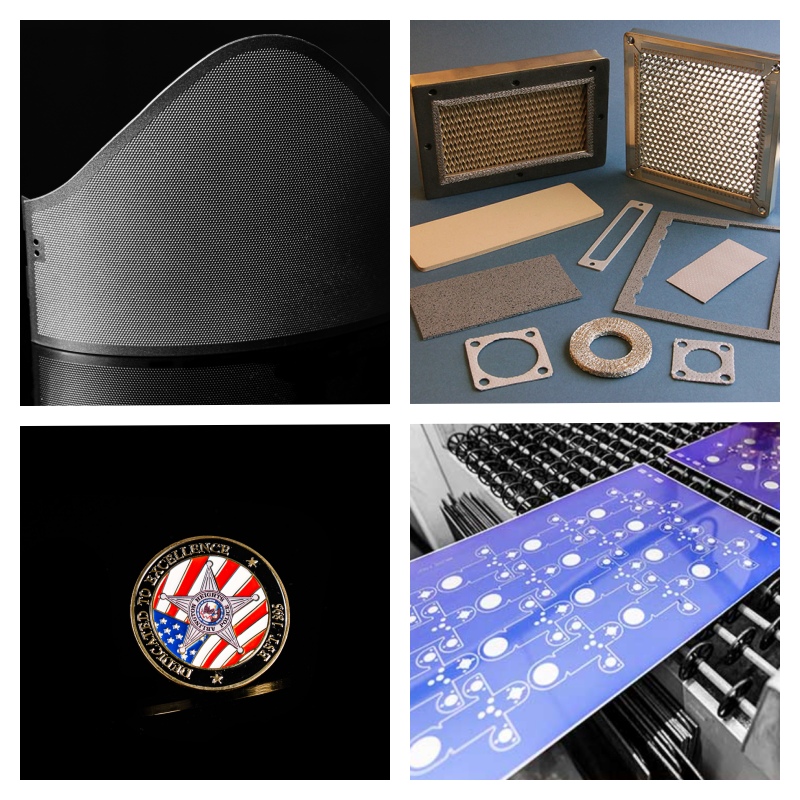
Optical inspection for dimensional accuracy (tolerances as tight as ±0.025 mm).
Surface roughness measurement using profilometry.
Metallographic analysis to check for intergranular attack or micro-cracks.
Functional testing for electrical or thermal conductivity as required.
Additionally, every batch is documented with traceability, essential for medical and aerospace applications.
Applications Across Industries
DRAGON ETCHING serves a wide range of industries, each with unique requirements for exotic alloys:
| Industry | Applications | Exotic Alloys Used |
|---|---|---|
| Electronics & Semiconductor | Lead frames, EMI shields, heat sinks | Kovar, Alloy 42, copper tungsten |
| Optics & Filtration | Shutter blades, fine mesh screens | Stainless steel 304/316, molybdenum |
| Automotive & Industrial | Fuel injector components, gaskets | Inconel, Hastelloy, titanium |
| Medical & Consumer Electronics | Sensor parts, battery contacts | Nitinol, platinum-iridium |
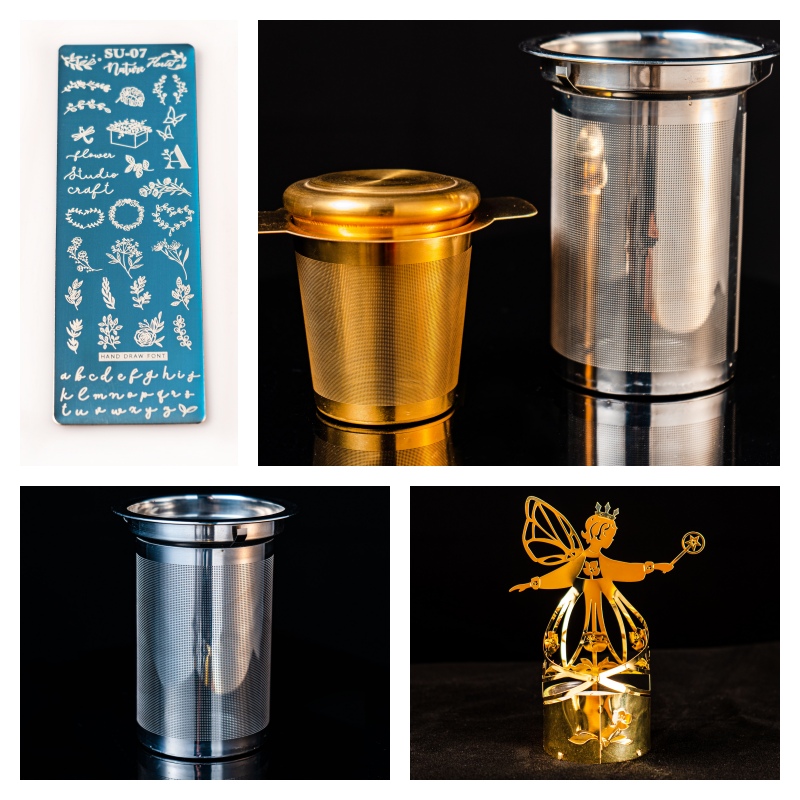
| Cultural & Customized Gifts | Decorative panels, nameplates | Brass, copper, nickel silver |
This versatility underscores DRAGON ETCHING’s ability to tailor processes for both functional and aesthetic products.
Overcoming Specific Material Challenges
Titanium and Its Alloys
Titanium’s tenacious oxide layer requires a two-step etching: first a pre-etch to remove oxide, then a main etch using HF/HNO₃ mixture. DRAGON ETCHING controls the concentration to prevent hydrogen embrittlement, a common issue with titanium.
Nickel-Based Superalloys (Inconel, Hastelloy)
These alloys are extremely resistant to chemicals. DRAGON ETCHING uses a ferric chloride-based solution at elevated temperatures (up to 60°C) with additives to enhance wetting. The photoresist must be extremely robust; the company uses a specialized thick resist to withstand prolonged etching cycles.
Refractory Metals (Molybdenum, Tungsten)
These metals are brittle and prone to cracking. DRAGON ETCHING employs a milder etchant and shorter etch times, combined with careful handling fixtures to avoid stress. The parts are often designed with rounded corners to reduce stress concentration.
Shape Memory Alloys (Nitinol)
Nitinol’s unique properties require precise thermal control during etching. DRAGON ETCHING uses chilled etchants and maintains the metal below its transformation temperature to avoid unwanted shape changes. The result is intricate stents and actuators with exact dimensions.
From Prototype to Production
One of DRAGON ETCHING’s strengths is its ability to work closely with clients from concept to mass production. For exotic alloys, prototyping is essential to validate etch chemistry and tooling. The company’s rapid prototyping service can deliver samples within days. Once validated, the process is scaled up using identical parameters to ensure consistency. Large-scale production is handled in cleanroom environments to avoid contamination.
Environmental and Safety Considerations
Handling exotic alloys often involves hazardous chemicals. DRAGON ETCHING follows strict safety protocols, including closed-loop chemical management, waste treatment, and fume scrubbing. The company is ISO 14001 certified, reflecting its commitment to sustainable manufacturing. For example, spent etchants are recycled to recover valuable metals like molybdenum and tungsten, reducing waste.
Conclusion
DRAGON ETCHING TECHNOLOGY., LIMITED combines technical expertise, responsive service, and innovative processes to deliver professional solutions for exotic alloys and specialty metals. By mastering the chemistry and mechanics of chemical etching, the company enables clients to realize complex designs that would be impossible with conventional methods. Whether for medical implants, aerospace components, or consumer electronics, DRAGON ETCHING remains at the forefront of precision metal etching.
For more information about how DRAGON ETCHING can handle your most challenging materials, visit our website or contact our engineering team.