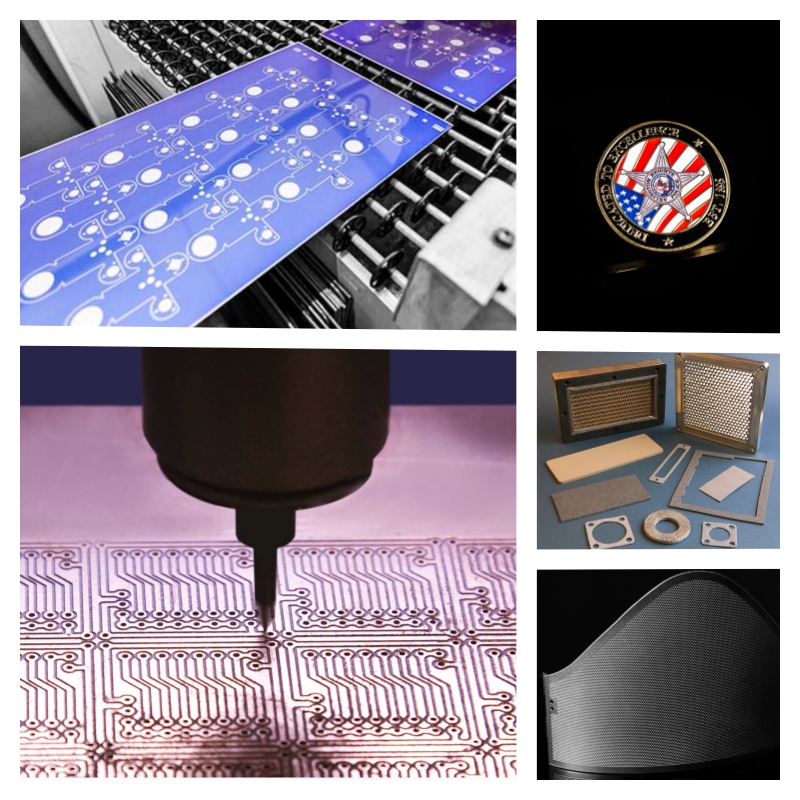
How a Metal Etching Manufacturer Achieves Consistent Repeatability Across Batches
This article explores how DRAGON ETCHING TECHNOLOGY., LIMITED, a leading chemical etching manufacturer, achieves consistent repeatability across batches. The key factors include state-of-the-art facilities with climate control and automated chemical management, rigorous material selection and photoresist application, optimized etching parameters with closed-loop control, extensive automation and data tracking via MES and SPC, in-line quality assurance, comprehensive training, and continuous improvement practices. By controlling variables such as temperature, etchant concentration, and material consistency, DRAGON ETCHING ensures that every batch meets tight tolerances, even for complex applications in electronics, medical, automotive, and custom gift industries. The article also presents examples of successful repeatable production, demonstrating how the company's systematic approach eliminates variation and delivers reliable, high-precision metal components.
In the precision-driven world of metal component manufacturing, batch-to-batch repeatability is not just a goal—it is a necessity. Industries such as electronics, medical devices, and automotive rely on components that meet exact specifications every time, whether the order is for 100 or 100,000 units. For chemical etching manufacturers like DRAGON ETCHING TECHNOLOGY., LIMITED (hereafter referred to as DRAGON ETCHING), achieving consistent repeatability is a complex interplay of material science, process control, and rigorous quality assurance. This article explores the strategies and technologies that enable DRAGON ETCHING to deliver reliable, high-precision metal parts across production runs.
The Challenge of Repeatability in Chemical Etching
Chemical etching, also known as photochemical machining, involves selectively removing metal through a corrosive chemical reaction. Unlike mechanical processes, etching is a wet process influenced by numerous variables: temperature, concentration of etchant, agitation, material grain structure, and photoresist quality. Small deviations in any of these factors can lead to variations in feature size, edge definition, or surface finish. For high-volume production, maintaining tight tolerances—often within ±0.025 mm—requires a systematic approach to eliminate sources of variation. DRAGON ETCHING has invested heavily in understanding and controlling these parameters to ensure that every batch mirrors the first.
undefined
State-of-the-Art Facilities as the Foundation
DRAGON ETCHING’s commitment to repeatability begins with its advanced manufacturing facilities. The company operates in a climate-controlled environment where temperature and humidity are tightly regulated. This is critical because etchant reactivity changes with temperature; even a 1°C fluctuation can alter etch rates by 3-5%. By maintaining a stable environment, the process remains predictable. Furthermore, automated chemical management systems continuously monitor and replenish etchant composition, ensuring that the bath chemistry remains consistent from one run to the next. This level of infrastructure investment sets the stage for repeatable outcomes.
Rigorous Material Selection and Preparation
Repeatability also depends on the consistency of raw materials. DRAGON ETCHING works exclusively with certified metal suppliers and conducts incoming quality checks on every coil or sheet. Material thickness, hardness, and surface roughness are measured against strict standards. For example, in the electronics sector, copper and stainless steel alloys must have a uniform grain size to ensure even etching. Any variance in the metal's metallurgical properties can cause differential etch rates, leading to batch-to-batch discrepancies. By controlling inputs, DRAGON ETCHING eliminates a common source of variability.
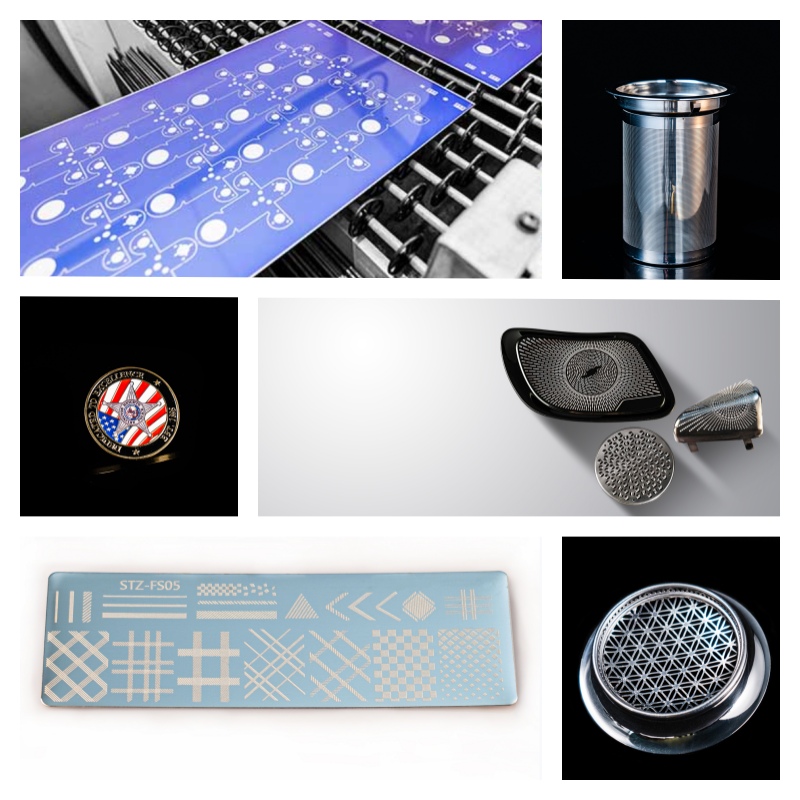
Photoresist Application and Imaging
The photoresist layer is the blueprint for the final part. DRAGON ETCHING uses advanced lamination or liquid coating systems that apply photoresist with uniform thickness across the entire panel. A uneven coating thickness—as little as 1 micron—can result in under- or over-etching in subsequent steps. The company employs automated coating lines with closed-loop feedback to maintain consistency. After coating, high-resolution laser photoplotters or direct imaging systems transfer the design with exceptional accuracy. These systems are calibrated daily using reference standards, and a dedicated team verifies alignment and feature placement before etching begins.
Optimized Etching Process Parameters
The core of repeatability lies in the etching step itself. DRAGON ETCHING uses conveyorized spray etchers and batch immersion systems, both of which are carefully calibrated. Key parameters include etchant temperature, concentration, spray pressure, nozzle orientation, and conveyor speed. For each material and part geometry, the process engineers develop a specific 'recipe' that is stored in a central database. These recipes are never altered without rigorous re-qualification. During production, sensors continuously log data—temperature, pH, conductivity—and the system automatically adjusts to keep parameters within a tight window. This closed-loop control ensures that every part in a batch sees the same etching environment.
Automation and Data Tracking
Human error is a major threat to repeatability. DRAGON ETCHING minimizes manual intervention through extensive automation. Robotic arms handle panel transfer between stations, barcode scanners track each panel through the process, and production data is recorded in a Manufacturing Execution System (MES). This digital thread allows engineers to identify and trace any deviation back to its source. For instance, if a batch shows slightly wider slots than expected, the MES can reveal that the etchant temperature drifted during a specific time window, enabling corrective action for future runs. Statistical Process Control (SPC) charts are generated in real time, giving operators immediate visibility into trends before they lead to reject parts.
| Process Parameter | Target | Tolerance |
|---|---|---|
| Etchant Temperature | 50°C | ±0.5°C |
| Conveyor Speed | 0.5 m/min | ±0.01 m/min |
| Spray Pressure | 2.5 bar | ±0.1 bar |
| Photoresist Thickness | 25 μm | ±1 μm |
Quality Assurance: Beyond the First Article
While first-article inspection is standard, DRAGON ETCHING extends verification throughout production. In-line measurement tools, such as laser profilometers and vision systems, check critical dimensions on a sample basis at defined intervals. If a trend toward the tolerance limit is detected, the process is adjusted before non-conforming parts are produced. This proactive approach contrasts with traditional 'inspect at the end' methods, reducing waste and ensuring that every shipped batch matches the approved sample. Additionally, the company maintains a strict calibration schedule for all measurement devices, traceable to national standards.
Training and Standard Operating Procedures
People are an integral part of the repeatability equation. DRAGON ETCHING invests in comprehensive training for all operators and technicians. Standard Operating Procedures (SOPs) are detailed and include visual aids and checklists. Operators are certified on each process, with annual requalification. A culture of quality is promoted through regular team meetings and feedback loops. By empowering employees to spot and report anomalies, the company creates an environment where consistency is everyone's responsibility.
Continuous Improvement and Innovation
Consistent repeatability is not static; it evolves with technology. DRAGON ETCHING actively participates in industry research and collaborates with equipment suppliers to develop improved etchants and process controls. For example, the company recently implemented real-time etchant monitoring using UV-Vis spectroscopy, which allows precise adjustment of chemical components without interrupting production. Six Sigma and Lean methodologies are applied to reduce variation and streamline workflows. The company's experience across electronics, medical, automotive, and custom gift applications provides a broad knowledge base that informs best practices for every new project.
Case Studies in Repeatability
Consider a project for an automotive sensor component made from stainless steel. The customer required a slot width of 0.200 ± 0.010 mm across multiple batches over a year. DRAGON ETCHING produced over 20 batches without a single dimension out of spec. How? The process recipe was locked, etchant was refreshed at predetermined intervals, and in-line SPC caught a slight drift in spray pressure during batch 12, which was corrected before any parts were affected. Another example: a medical device filter with hundreds of micro-holes needed to maintain identical flow characteristics. DRAGON ETCHING’s ability to hold hole diameter within ±2 μm ensured that each batch performed exactly the same, passing customer qualification on the first attempt.
Conclusion
In an industry where precision is paramount, DRAGON ETCHING TECHNOLOGY., LIMITED demonstrates that consistent batch-to-batch repeatability is achievable through a combination of advanced technology, rigorous process control, and a dedicated team. By controlling every variable—from raw material to etching chemistry to environmental conditions—the company delivers parts that meet the highest standards of accuracy and reliability. For clients in electronics, optics, automotive, medical, and beyond, this repeatability translates into faster time-to-market, lower total cost, and confidence that every component will perform as designed. As the demand for ever-tighter tolerances grows, DRAGON ETCHING continues to invest in the systems and expertise that make true repeatability a reality.