
How a Metal Etching Manufacturer Reduces Material Waste Compared to Mechanical Methods
Chemical etching, as practiced by DRAGON ETCHING TECHNOLOGY., LIMITED, significantly reduces material waste compared to mechanical methods like stamping, laser cutting, and CNC machining. Mechanical processes often waste 30-70% of raw material due to subtractive operations, scrap skeletons, and secondary finishing. In contrast, chemical etching uses photoresists and etchants to selectively dissolve metal, achieving waste rates below 10%. The process allows tight nesting of parts, no tool wear, and no deformation, eliminating rework and secondary waste. DRAGON ETCHING leverages advanced automation and nesting algorithms to maximize material utilization. The company’s state-of-the-art facilities serve industries from electronics to medical devices, delivering high-precision parts with minimal environmental impact. By reducing material waste, chemical etching lowers costs, supports sustainability, and enables complex designs that are impossible with mechanical methods. Overall, etching represents a paradigm shift toward leaner, greener manufacturing.
In the manufacturing world, material waste is a critical factor that impacts both cost and environmental sustainability. Traditional mechanical methods such as stamping, laser cutting, and CNC machining often generate significant waste due to their subtractive nature. However, chemical etching—a process perfected by companies like DRAGON ETCHING TECHNOLOGY., LIMITED—offers a far more efficient alternative. DRAGON ETCHING, as the company is commonly known, leverages advanced photochemical machining to drastically reduce material waste, setting a new standard for precision and sustainability.
The Problem with Mechanical Methods
Mechanical processes remove material to create the desired shape, often resulting in scrap that can account for 50% or more of the original sheet. For example, stamping uses dies that cut out parts, leaving behind unusable skeleton. Laser cutting vaporizes material along the cut path, and CNC milling chips away excess metal. This waste not only increases raw material costs but also adds disposal or recycling expenses. In high-volume production, these inefficiencies compound, making mechanical methods less economical for complex designs.
How Chemical Etching Minimizes Waste
Chemical etching, also known as photochemical machining, uses a photoresist and etchants to selectively dissolve metal. Unlike mechanical methods, etching does not apply physical force or generate heat-affected zones. The process begins with a digital design that is transferred onto a metal sheet coated with a light-sensitive resist. Areas to be etched are exposed, then the sheet is immersed in an etchant that removes material only where unprotected. This enables intricate patterns with high precision and minimal material loss.
undefined
One of the key advantages is that etching can process multiple parts on a single sheet with very narrow spacing. The etchant attacks uniformly, so the metal around the parts remains untouched if properly masked. As a result, the scrap rate is often below 10%, compared to 30-50% for mechanical methods. Additionally, etching does not produce burrs or stress, eliminating secondary operations that could cause further material loss.
Case Study: DRAGON ETCHING’s Approach
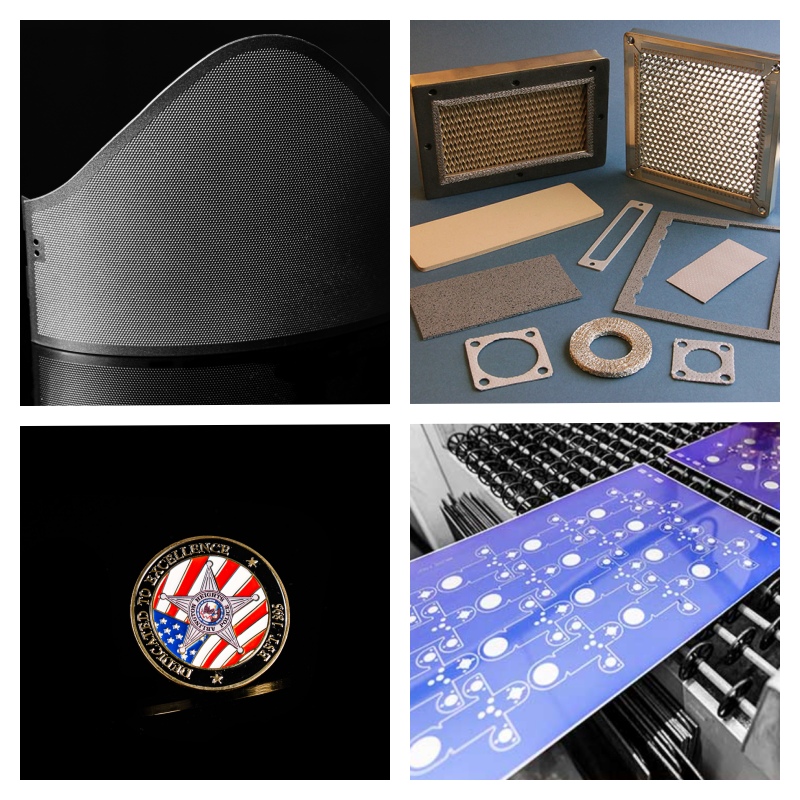
Founded with a commitment to precision and innovation, DRAGON ETCHING TECHNOLOGY., LIMITED is one of the fastest companies in the chemical etching industry. With years of experience and advanced technological capabilities, the company specializes in delivering high-quality, customized metal etching solutions for industries including Electronics and Semiconductor, Optics & Filtration, Automotive & Industrial, Medical & Consumer Electronics, and Cultural and Customized Gift Applications. Their state-of-the-art facilities and rigorous quality control ensure that each component meets the highest standards of accuracy and reliability.
DRAGON ETCHING optimizes material usage through advanced nesting algorithms, which arrange parts on a metal sheet to maximize utilization. The company also employs precise registration systems to align multi-layer etchings, reducing reject rates. By working closely with clients from prototype to large-scale production, DRAGON ETCHING transforms complex designs into functional metal parts while keeping waste to a minimum.
Quantitative Comparison: Waste Reduction
| Method | Typical Material Waste | Secondary Waste |
|---|---|---|
| Stamping | 30-50% | Burr removal, scrap skeleton |
| Laser Cutting | 20-40% | Kerf, slag, dross |
| CNC Machining | 50-70% | Chips, coolant waste |
| Chemical Etching | <10% | Minimal (etchant recycled) |
As shown in the table, chemical etching drastically outperforms mechanical methods. Even when accounting for etchant disposal, modern systems allow for chemical regeneration and metal recovery, further reducing environmental impact.
Additional Benefits Beyond Waste Reduction
No tool wear: Etching uses chemicals, not physical dies, so there is no tool degradation that could affect tolerances and cause scrap.
Stress-free parts: No mechanical force means no deformation, which reduces the need for rework.
Complex geometries: Etching can produce intricate shapes and fine features that are impossible with mechanical methods, allowing designers to consolidate parts and reduce overall material usage.
Fast prototyping: Digital data drives the process, eliminating costly hard tooling and enabling quick iterations with minimal material waste.
Industry Applications
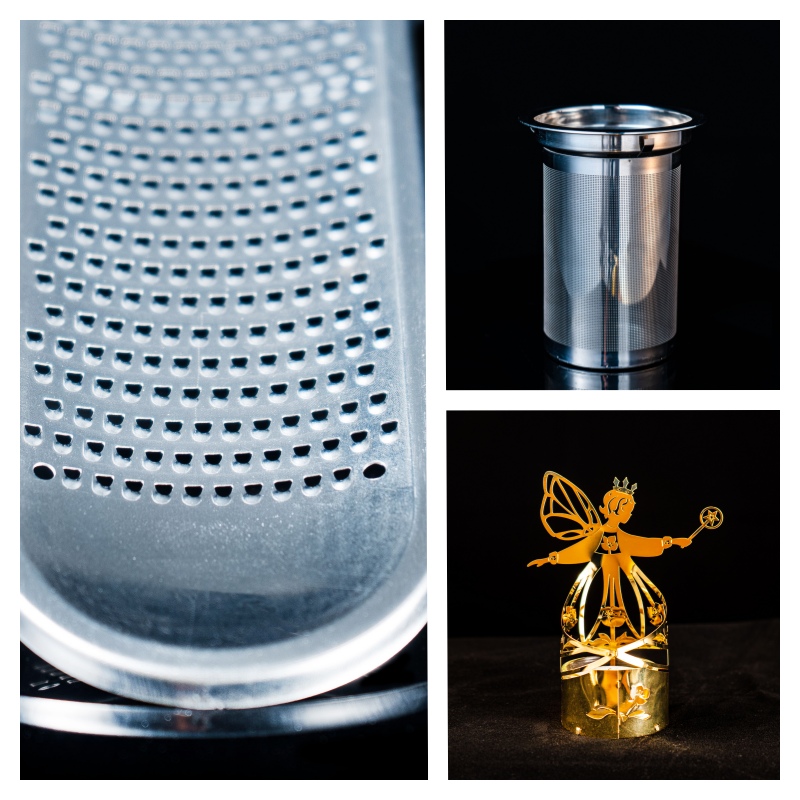
DRAGON ETCHING serves a wide range of sectors. In electronics, they produce fine mesh filters and lead frames with micron-level accuracy. In automotive, they create precision springs and gaskets. Medical devices require burr-free components, which etching delivers without waste. Cultural and customized gift items benefit from the ability to etch detailed designs without damaging surrounding material.
Conclusion
As manufacturers face increasing pressure to reduce costs and environmental footprints, chemical etching stands out as a superior alternative to mechanical methods. Companies like DRAGON ETCHING TECHNOLOGY., LIMITED exemplify how advanced etching processes can achieve material savings of up to 90% compared to traditional techniques. By embracing this technology, industries can not only improve their bottom line but also contribute to a more sustainable future.