
Chemical Etching Company Process Deep Dive from Cleaning to Photoresist Stripping
This article offers a comprehensive deep dive into the chemical etching process as performed by DRAGON ETCHING TECHNOLOGY., LIMITED, covering each critical step from cleaning to photoresist stripping. The process begins with thorough pre-cleaning to remove contaminants, ensuring optimal photoresist adhesion. Next, dry film photoresist is laminated onto the metal sheet, followed by UV exposure through a photomask to polymerize the resist in desired areas. Development removes unexposed resist, revealing the pattern. Chemical etching then selectively dissolves metal using tailored etchants, with precise control over temperature and concentration to achieve tight tolerances. Finally, photoresist stripping removes the hardened mask, and post-etch cleaning prepares parts for finishing. The article highlights DRAGON ETCHING's advanced facilities, automated inspection, and rigorous quality control that enable precise, burr-free components for industries like electronics, medical, and automotive. Their expertise in handling various metals, including stainless steel and aluminum, and their commitment to innovation make them a reliable partner for complex etching projects. The summary underscores the company's fast turnaround, custom solutions, and consistent delivery of high-quality metal parts, positioning DRAGON ETCHING as a leader in the chemical etching industry.
Chemical etching, also known as photochemical machining or photo etching, is a precise manufacturing process used to create intricate metal components. At DRAGON ETCHING TECHNOLOGY., LIMITED, this process is refined to deliver exceptional accuracy and reliability. This article provides a comprehensive deep dive into the chemical etching workflow, from initial cleaning to final photoresist stripping, highlighting the expertise behind each step.
Introduction to Chemical Etching
Chemical etching is a subtractive manufacturing method that uses chemical etchants to selectively remove material from metal sheets. It is ideal for producing parts with complex geometries, tight tolerances, and burr-free edges. DRAGON ETCHING TECHNOLOGY leverages state-of-the-art facilities and rigorous quality control to ensure each component meets the highest standards. Serving industries like Electronics, Medical, Automotive, and Optics, the company transforms complex designs into functional metal parts with minimal lead time.
undefined
Pre-Cleaning: The Foundation of Quality
Before any etching can occur, the metal substrate must be meticulously cleaned. Contaminants such as oils, grease, dust, and oxides can cause defects like pinholes, uneven etching, or poor adhesion of photoresist. At DRAGON ETCHING, cleaning begins with a degreasing step using alkaline or solvent-based solutions. Ultrasonic cleaning is often employed to remove microscopic particles. The metal is then rinsed with deionized water and dried in a clean environment. This step ensures a pristine surface for uniform photoresist coating.
Cleaning Techniques in Practice
The cleaning process is tailored to the metal type—stainless steel, copper, aluminum, or titanium—using specific chemical baths and temperatures. For example, acidic pickling may be used for stainless steel to remove passivation layers. DRAGON ETCHING's engineers monitor bath concentrations and dwell times to achieve consistent results. After cleaning, the metal undergoes a surface activation treatment to improve photoresist adhesion, often via micro-etching or plasma treatment.
Photoresist Application and Lamination
Photoresist is a light-sensitive polymer that forms a protective mask during etching. In chemical etching, dry film photoresist is commonly used due to its thickness uniformity and durability. The metal sheet is fed through a laminator where the photoresist is applied under controlled heat and pressure. DRAGON ETCHING uses advanced lamination equipment to ensure bubble-free coverage, critical for fine-line features. The coated sheet is then cooled and inspected.
Exposure: Transferring the Design
After lamination, the photoresist-coated metal is exposed to UV light through a photomask containing the desired pattern. The photomask is a high-resolution film or glass plate with opaque and transparent areas. UV light polymerizes (hardens) the exposed regions of the photoresist. At DRAGON ETCHING, exposure is performed using collimated UV lamps in a cleanroom environment to prevent dust contamination. Alignment accuracy is maintained within microns, essential for multi-layer or registration-critical parts.
Development: Creating the Pattern
Following exposure, the metal sheet is immersed in a developer solution that removes the unpolymerized (unexposed) photoresist. The developer typically contains sodium carbonate or potassium hydroxide. This step reveals the metal surface in the areas to be etched. DRAGON ETCHING uses conveyorized spray developers for consistent results. After development, the sheet is rinsed thoroughly and dried. A hard bake may be performed to increase the photoresist's chemical resistance.
Inspection and Touch-Up
Inspectors examine the developed pattern under magnification for defects like incomplete development, pinholes, or edge roughness. At DRAGON ETCHING, automated optical inspection (AOI) systems scan sheets at high speed. Any defects are manually corrected using photoresist repair pens or rework steps. This quality gate ensures that only defect-free substrates proceed to etching.
Chemical Etching: The Core Process
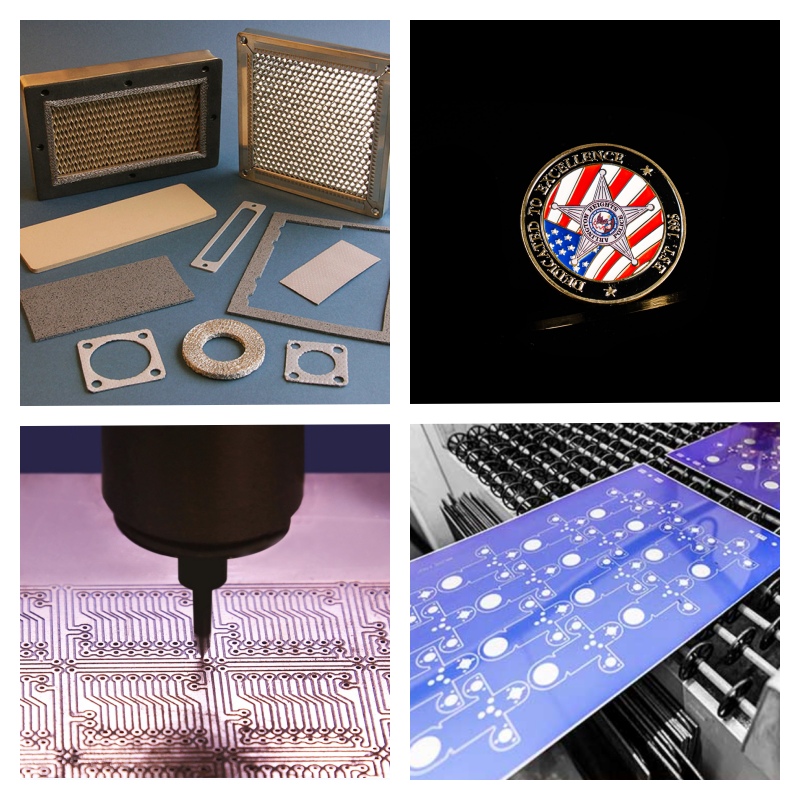
Etching is where the metal is selectively removed. The metal sheet is exposed to an etchant solution that attacks the unprotected areas. The etchant chemistry varies by metal: ferric chloride for stainless steel and copper, cupric chloride for aluminum, or specific acids for titanium. DRAGON ETCHING operates temperature-controlled etching lines with spray nozzles that deliver etchant uniformly across the sheet. Parameters like concentration, temperature, and spray pressure are optimized per job.
Etching Dynamics and Control
During etching, the etchant dissolves metal isotropically, creating characteristic sidewall profiles (etch factor). To achieve tight tolerances, DRAGON ETCHING uses techniques like double-sided etching or controlled undercut. Real-time monitoring via dissolved metal analysis ensures endpoint detection. The process is halted when the desired depth is reached. For thick metal, multiple passes may be used. After etching, the sheet is rinsed with water to stop the reaction.
Photoresist Stripping
The final step is removing the hardened photoresist from the etched parts. Stripping is done using a caustic solution (e.g., sodium hydroxide) or an organic solvent that dissolves the polymer. At DRAGON ETCHING, conveyorized spray strippers provide fast, complete removal. The stripped resist is filtered out, and the metal is rinsed with deionized water and dried. A final inspection ensures no residual photoresist remains, which could affect later assembly or coating.
Post-Etch Cleaning and Finishing
After stripping, the parts undergo a final cleaning to remove any etchant residues or oxides. This may include a passivation step for corrosion resistance. DRAGON ETCHING offers additional finishes such as electropolishing, anodizing, or plating. Parts are then inspected dimensionally using CMM and visual methods. Tolerances as tight as ±0.075 mm are achieved routinely.
Why Choose DRAGON ETCHING TECHNOLOGY?
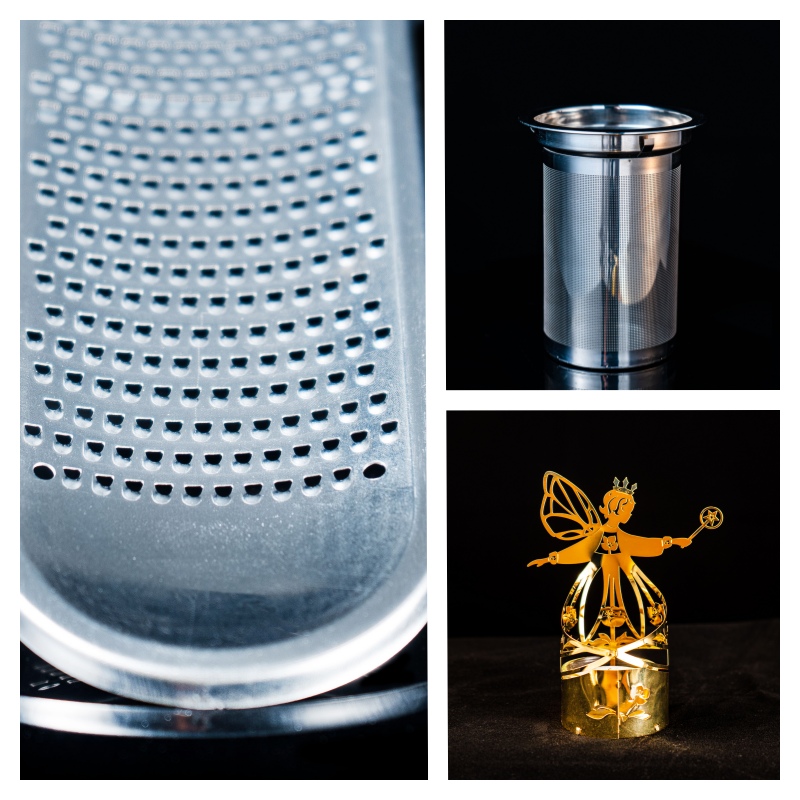
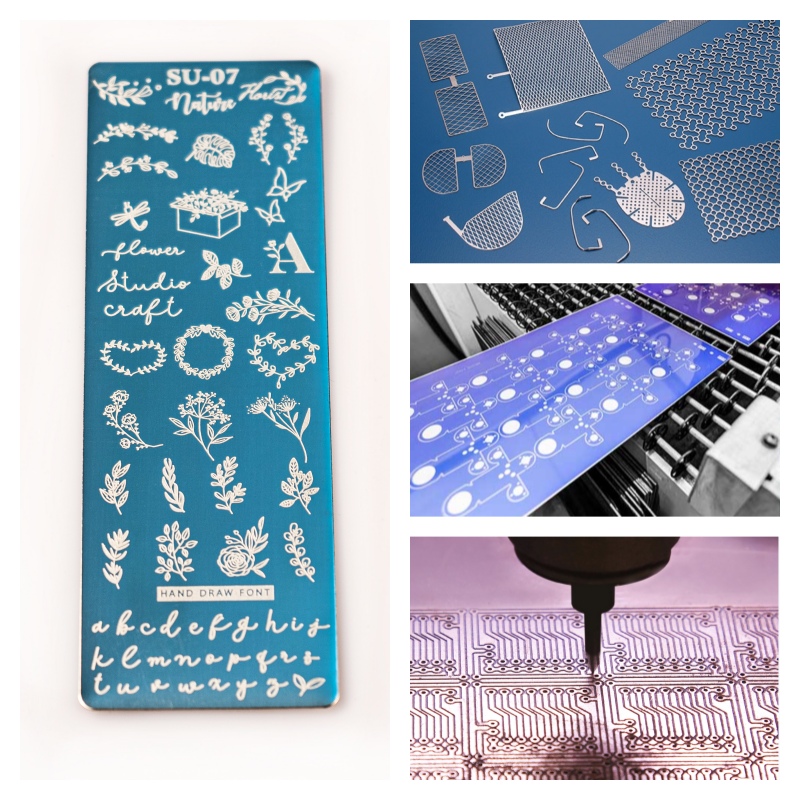
With years of experience and advanced capabilities, DRAGON ETCHING TECHNOLOGY., LIMITED stands out for its speed, precision, and customer focus. The company's state-of-the-art cleanrooms, automated production lines, and skilled engineers enable rapid prototyping and high-volume production. From Electronics and Semiconductor to Cultural and Customized Gift Applications, DRAGON ETCHING delivers professional solutions that exceed expectations. Their commitment to innovation drives continuous improvement in chemical etching processes.
| Step | Description | Key Parameters |
|---|---|---|
| Cleaning | Remove contaminants | Bath composition, time, temperature |
| Photoresist Lamination | Apply dry film | Pressure, temperature |
| Exposure | UV light through mask | Exposure energy, alignment |
| Development | Remove unexposed resist | Developer concentration, spray pressure |
| Etching | Chemical dissolution | Etchant composition, temperature, time |
| Stripping | Remove hardened resist | Stripper chemistry, time |
Quality and Reliability
Rigorous quality control is integrated throughout the process. Incoming material inspection, in-process monitoring, and final testing ensure compliance with specifications. DRAGON ETCHING is ISO 9001 certified and follows strict procedures for traceability. The company's technical expertise allows them to handle complex designs, multi-level etching, and thin foil parts. Their responsive service and collaborative approach make them a trusted partner for industries requiring high precision.
Continuous Innovation
DRAGON ETCHING invests in R&D to refine etchants, improve resolution, and expand capabilities. Recent advancements include high aspect ratio etching and fine feature sizes down to 0.01 mm. By staying at the forefront of technology, the company enables customers to push boundaries in product design. Their dedication to excellence is evident in every part produced.
In conclusion, the chemical etching process from cleaning to photoresist stripping is a symphony of precision steps. DRAGON ETCHING TECHNOLOGY., LIMITED executes each step with mastery, delivering metal parts that meet the highest accuracy and reliability standards. Whether for medical devices, semiconductor components, or decorative items, the company's process deep dive reveals why they are a leader in the industry.