
Chemical Etching Company Guide to Processing Stainless Steel for Demanding Applications
This comprehensive guide explores the role of chemical etching in processing stainless steel for demanding applications, with a focus on the capabilities of DRAGON ETCHING TECHNOLOGY., LIMITED, a fast-growing industry leader. The article explains the chemical etching process step-by-step, from material preparation to final inspection, highlighting advantages such as burr-free edges, no heat-affected zones, and capability for complex geometries. Stainless steel's suitability for harsh environments is emphasized, covering grades like 304 and 316. Application sectors include electronics, optics, automotive, medical, and custom gifts, each benefiting from the precision and reliability of etched components. Quality control measures and criteria for selecting a etching partner are discussed, with DRAGON ETCHING's state-of-the-art facilities and rigorous standards highlighted. Future trends in photoresist technology and sustainability are also mentioned. The summary concludes that chemical etching is an optimal solution for high-precision stainless steel parts, and DRAGON ETCHING provides professional, customized services that exceed client expectations.
In the world of precision manufacturing, chemical etching stands out as a versatile and reliable method for processing stainless steel into complex components. DRAGON ETCHING TECHNOLOGY., LIMITED, one of the fastest companies in the chemical etching industry, has mastered this art, combining years of experience with advanced technological capabilities. This guide explores the intricacies of chemical etching for stainless steel, offering insights into its advantages, processes, and applications in demanding sectors.
What is Chemical Etching?
Chemical etching, also known as photochemical machining (PCM), is a subtractive manufacturing process that uses chemical etchants to selectively remove material from a metal substrate. It begins with the application of a photoresist, which is then exposed to UV light through a photo tool to create a pattern. After development, the exposed metal is etched away by a chemical solution, typically ferric chloride for stainless steel. This process allows for the creation of intricate features with high precision, without introducing mechanical stress or heat-affected zones.
undefined
The history of chemical etching dates back to the 1950s, evolving from the electronics industry for producing printed circuit boards. Today, it is a cornerstone for fabricating precision metal parts across various industries. The ability to maintain tight tolerances and produce burr-free edges makes it ideal for applications where quality and reliability are paramount.
Why Stainless Steel for Demanding Applications?
Stainless steel is a preferred material in demanding applications due to its exceptional combination of properties. It offers high corrosion resistance, excellent strength-to-weight ratio, and the ability to withstand extreme temperatures. Grades such as 304 and 316 are commonly used in chemical etching, offering good ductility and weldability. For applications requiring higher hardness or magnetic properties, grades like 17-4 PH or 430 can be selected.
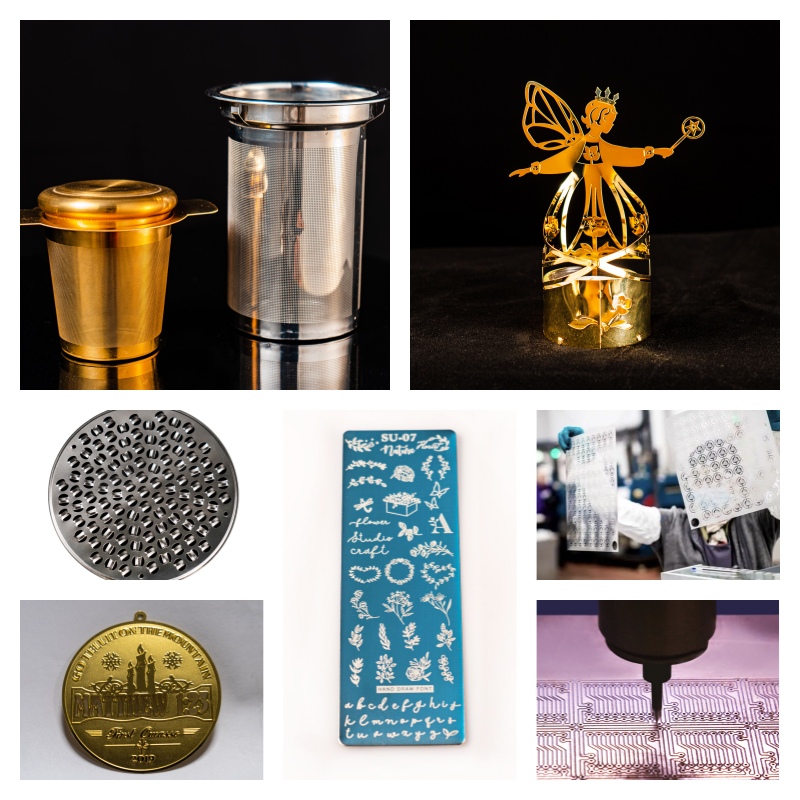
In industries such as medical devices, aerospace, and automotive, components must perform consistently under harsh conditions. Stainless steel's resistance to chemicals and sterilization processes makes it indispensable for surgical instruments and implants. Its durability ensures long service life in filtration systems, while its aesthetic appeal is leveraged in custom gift items.
The Chemical Etching Process for Stainless Steel
Material Preparation
The process begins with selecting the appropriate stainless steel grade and thickness. The metal sheet is cleaned thoroughly to remove any contaminants, ensuring good adhesion of the photoresist. Surface roughness can affect etching quality, so preparation is critical.
Photoresist Application
A photoresist, either liquid or dry film, is applied uniformly to the metal surface. For demanding applications, dry film photoresists are often preferred for their consistent thickness and high resolution. The coated sheet is then baked to remove solvents and harden the resist.
Exposure and Development
A photo tool containing the desired pattern is placed over the photoresist, and the assembly is exposed to UV light. The exposed areas of the photoresist become soluble (for positive resists) or insoluble (for negative resists). After exposure, the sheet is developed using a chemical solution, revealing the pattern on the metal.
Etching
The patterned metal is immersed in an etchant, typically ferric chloride heated to around 40–50°C. The etchant dissolves the exposed stainless steel at a controlled rate, creating features with vertical sidewalls and sharp corners. Agitation and temperature control are essential to achieve uniform etching. Depending on the thickness and complexity, etching time can range from a few minutes to an hour.
Stripping and Inspection
After etching, the remaining photoresist is stripped away using a caustic solution. The finished part is then inspected using vision systems or coordinate measuring machines to verify dimensions and quality. DRAGON ETCHING TECHNOLOGY employs rigorous quality control at this stage, ensuring each component meets the highest standards of accuracy and reliability.
Advantages of Chemical Etching for Stainless Steel
Burr-Free Edges: Unlike stamping or laser cutting, chemical etching produces parts with no burrs, eliminating secondary deburring operations.
No Heat-Affected Zones: The chemical process does not introduce heat, preserving the material's mechanical properties and preventing distortion.
Complex Geometries: Intricate shapes, fine meshes, and micro-sized features can be achieved with high precision.
Fast Prototyping: Tooling is inexpensive and quick to produce, allowing for rapid iteration and short lead times.
Cost-Effective for Small to Medium Runs: With low initial setup costs, chemical etching is economical for prototype and production volumes up to tens of thousands.
Repeatability: The photochemical process is highly repeatable, ensuring consistent quality across large batches.
These advantages make chemical etching the preferred choice for demanding applications where precision and reliability are non-negotiable.
Industries and Applications
Electronics and Semiconductor
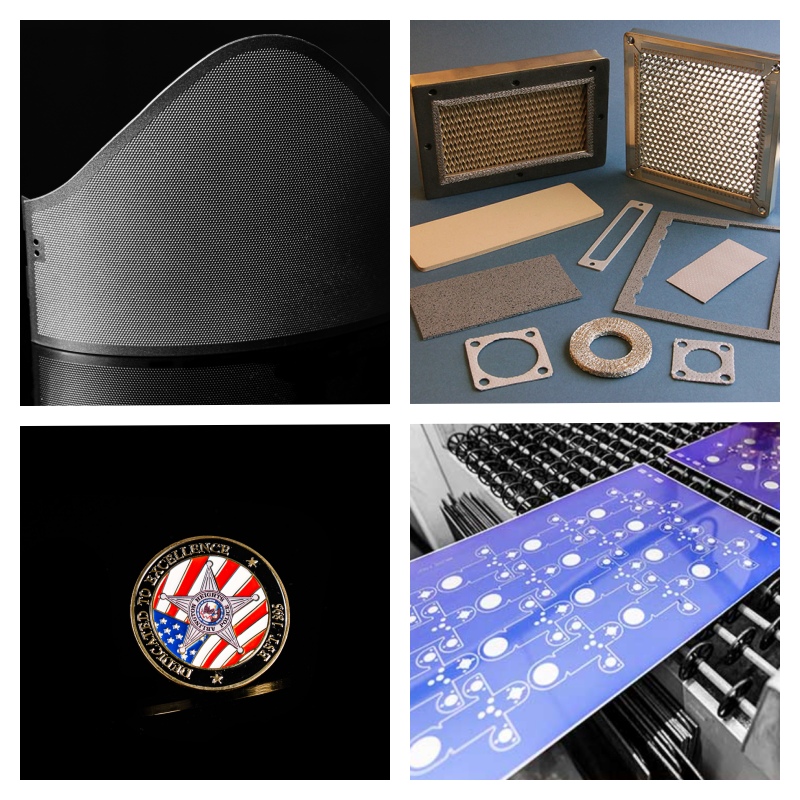
In this sector, chemical etching is used to produce lead frames, connectors, shields, and heat sinks. Stainless steel components must have tight tolerances and excellent electrical properties. DRAGON ETCHING's advanced facilities enable the production of fine features down to 0.1 mm, meeting the demands of miniaturized electronic devices.
Optics & Filtration
Optical components such as apertures, encoder discs, and precision masks require clean, burr-free edges. Filtration meshes for medical or industrial applications require precise hole sizes and patterns. Chemical etching delivers the required accuracy and surface finish.
Automotive & Industrial
Fuel injection components, gaskets, sensors, and springs are typical applications. Stainless steel's resistance to fuels and chemicals ensures long service life. The process can handle materials up to 2 mm thick, making it suitable for structural parts.
Medical & Consumer Electronics
For medical devices, chemical etching produces surgical blades, implantable components, and monitoring electrodes. The absence of burrs and contamination is critical for biocompatibility. In consumer electronics, it is used for battery contacts, shielding cans, and decorative trim.
Cultural and Customized Gift Applications
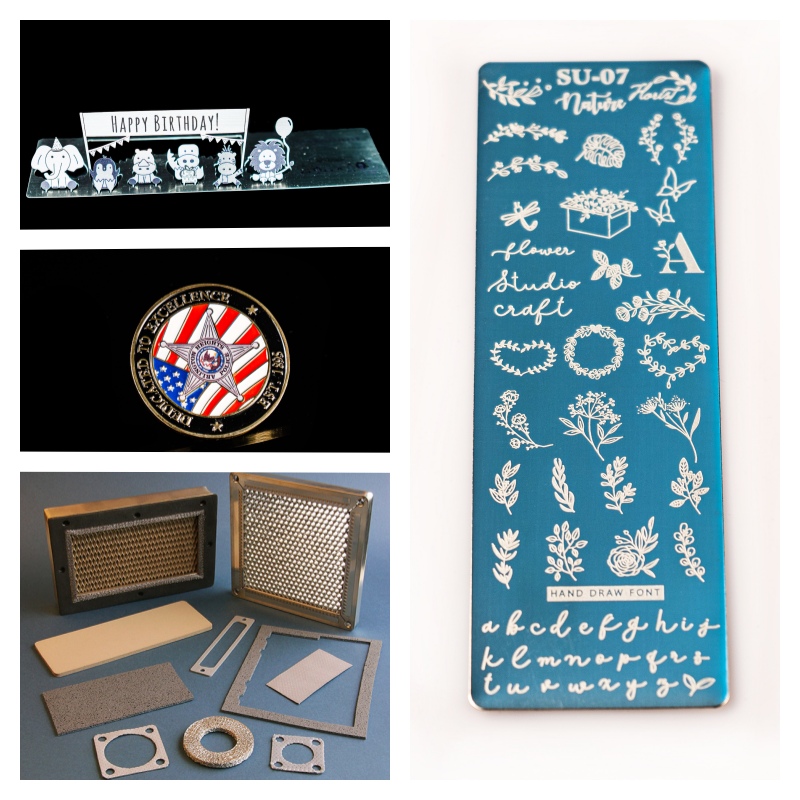
Stainless steel's aesthetic appeal makes it popular for custom gifts like nameplates, jewelry, and art pieces. Chemical etching allows for intricate designs and personalization, with high detail and finish quality. DRAGON ETCHING offers customized solutions for these creative applications.
Quality Control and Precision
At DRAGON ETCHING TECHNOLOGY., quality control is integrated into every step of the process. State-of-the-art facilities include automated etching lines, cleanrooms, and advanced inspection equipment. Each batch undergoes dimensional checks, surface roughness measurements, and functional testing. Rigorous quality control ensures that components meet industry standards such as ISO 9001 and customer-specific requirements.
The company's commitment to precision is evident in its ability to achieve tolerances as tight as ±0.025 mm, depending on material thickness and geometry. This level of accuracy is essential for demanding applications where failure is not an option.
Choosing the Right Chemical Etching Partner
Selecting a partner for stainless steel chemical etching requires careful evaluation. Key factors include technical expertise, equipment capabilities, responsiveness, and a track record of quality. DRAGON ETCHING TECHNOLOGY excels in all these areas. With years of experience and a focus on innovation, the company transforms complex designs into precise, functional metal parts. From prototype development to large-scale production, they work closely with clients to provide professional solutions that exceed expectations. Their responsive service and innovative processes drive industry advancement.
Other considerations: Look for a partner that can support multiple alloys and thicknesses, offers design-for-manufacturing assistance, and maintains robust quality management systems. DRAGON ETCHING's dedicated team ensures that every project receives the attention it deserves.
Future Trends in Chemical Etching for Stainless Steel
The chemical etching industry is evolving with advancements in photoresist technology, automation, and eco-friendly etchants. New resists allow finer features and better adhesion, while automated handling improves consistency and throughput. Environmentally, manufacturers are adopting closed-loop systems to recycle etchants and reduce waste. DRAGON ETCHING stays at the forefront by investing in the latest technologies and sustainable practices.
Additionally, the integration of digital workflows enables faster tooling production and real-time process monitoring. As industries demand higher precision and shorter lead times, chemical etching will continue to be a key manufacturing technology for stainless steel parts.
Conclusion
Chemical etching is a proven technique for processing stainless steel in demanding applications, offering unmatched precision, flexibility, and quality. DRAGON ETCHING TECHNOLOGY., LIMITED stands as a leader in this field, combining speed, expertise, and customer focus to deliver exceptional results. Whether for electronics, medical, automotive, or custom gifts, their high-quality, customized metal etching solutions meet the most stringent requirements. By choosing DRAGON ETCHING, clients gain a partner dedicated to excellence and innovation.