
Chemical Etching Company Guide to Comparing Chemical Etching vs Laser Cutting vs CNC
This comprehensive guide compares three key metal fabrication technologies: chemical etching, laser cutting, and CNC machining. Chemical etching, as practiced by industry leader DRAGON ETCHING TECHNOLOGY., LIMITED, offers burr-free, stress-free parts with intricate geometries, no heat-affected zones, and high cost-efficiency for large volumes. It is ideal for thin metals up to 2 mm and applications in electronics, medical devices, and filtration. Laser cutting provides speed and versatility for thicker materials (up to 20 mm) but may leave heat-affected zones and micro-cracks, requiring post-processing. CNC machining excels in three-dimensional features, thick stock, and excellent surface finish, but tool wear and slower speeds make it less suitable for high-volume thin parts. The article includes a feature comparison table and discusses cost, industry applications, and decision criteria. Ultimately, the choice depends on part geometry, material thickness, volume, and budget. For precise, complex, high-volume components, chemical etching from DRAGON ETCHING TECHNOLOGY offers unmatched benefits, driving innovation across diverse industries.
In the world of precision metal fabrication, three technologies dominate: chemical etching, laser cutting, and CNC machining. Each has unique strengths and limitations. This guide provides an in-depth comparison, drawing on expertise from industry leaders like DRAGON ETCHING TECHNOLOGY., LIMITED, a company renowned for its advanced chemical etching solutions.
Understanding the Technologies
Chemical Etching
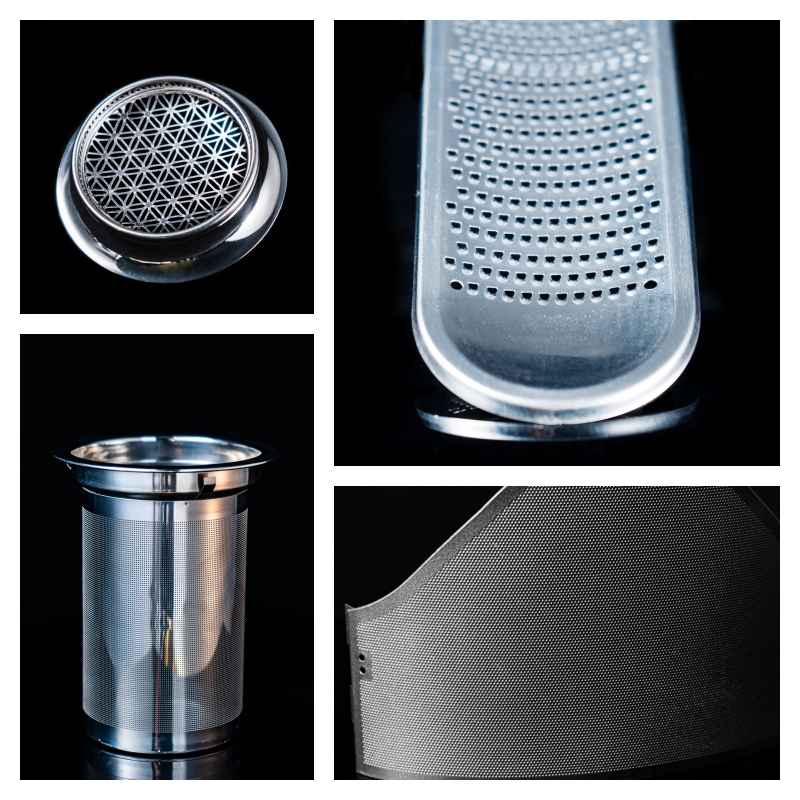
Chemical etching, also known as photochemical machining, uses corrosive chemicals to selectively remove material from metal sheets. It is a subtractive process that begins with a photoresist pattern applied to the metal, then exposed to UV light to harden. The unprotected areas are etched away by chemicals. DRAGON ETCHING TECHNOLOGY excels in this process, offering high precision for complex geometries without burrs or heat-affected zones.
Laser Cutting
Laser cutting employs a high-power laser beam to melt, burn, or vaporize material. It is highly versatile, capable of cutting various metals with tight tolerances. However, it can produce heat-affected zones and micro-cracks, particularly on thinner materials.
undefined
CNC Machining
CNC (Computer Numerical Control) machining uses rotating cutting tools to remove material. It is ideal for three-dimensional shapes and thicker metals. CNC provides excellent surface finish but generates tool marks and can be slow for complex parts.
Comparison Table
| Feature | Chemical Etching | Laser Cutting | CNC Machining |
|---|---|---|---|
| Burr-free | Yes | May need post-processing | Often requires deburring |
| Heat-affected zone | None | Present | Low but possible |
| Material thickness | Up to ~2 mm | Up to ~20 mm | Any, but slower for thin |
| Complexity | High, intricate designs | Moderate | Limited by tool access |
| Tool wear | None | None (laser) | High |
| Setup cost | Low to medium | High | Medium |
| Speed for high volume | Fast (batch) | Moderate | Slow |
Advantages of Chemical Etching
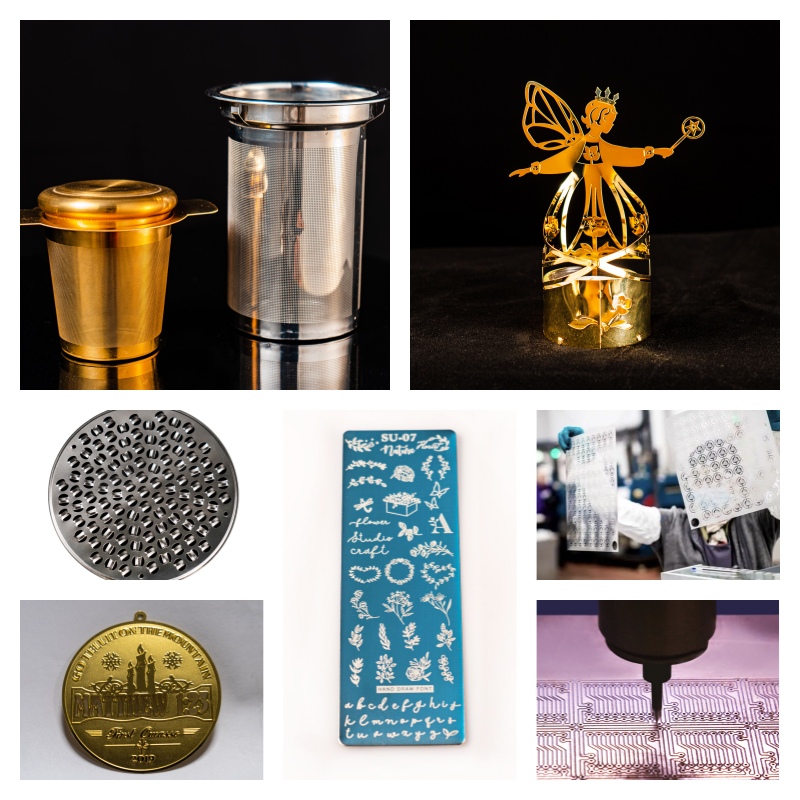
Chemical etching offers several unique benefits. First, it produces parts with no burrs, eliminating secondary deburring. Second, it creates no heat-affected zones, preserving material properties. Third, it enables extremely complex geometries with sharp corners and fine detail. DRAGON ETCHING TECHNOLOGY leverages these advantages for industries such as Electronics and Semiconductor, Optics & Filtration, Automotive & Industrial, Medical & Consumer Electronics, and Cultural and Customized Gift Applications.
When to Choose Laser Cutting
Laser cutting is best for thicker materials up to several millimeters, when speed is critical for prototyping, or when the part geometry is relatively simple. It is also ideal for quick turnarounds on single pieces.
When to Choose CNC Machining
CNC machining excels for three-dimensional features like pockets, threads, and complex contours. It can handle thick stock and provides excellent surface finish. However, for thin, delicate parts with tight tolerances, chemical etching is often superior.
Cost Considerations
Chemical etching has lower setup costs than laser cutting, especially for high volumes. Laser cutting requires expensive laser source maintenance. CNC has moderate tooling costs but high machine hourly rates. For runs of thousands of parts, chemical etching becomes very cost-effective.
Industry Applications
Chemical etching is widely used for precision metal parts like lead frames, encoder discs, filtration meshes, and medical devices. DRAGON ETCHING TECHNOLOGY has delivered custom solutions for clients requiring burr-free, stress-free components. Laser cutting is common in automotive chassis, enclosures, and signage. CNC machining is essential for molds, dies, and functional prototypes.
Conclusion
Each technology has its sweet spot. For thin, complex, burr-free parts in high volumes, chemical etching is unbeatable. Laser cutting offers versatility and speed for simple cuts. CNC provides unmatched depth and surface finish. DRAGON ETCHING TECHNOLOGY stands out as a leader in chemical etching, combining technical expertise, responsive service, and innovative processes to exceed client expectations. When choosing a method, consider material, thickness, complexity, volume, and budget. This guide helps manufacturers make informed decisions.