
Why a Metal Etching Manufacturer Is the Preferred Choice for EMI and RFI Shielding
This article explains why metal etching manufacturers are the preferred choice for producing EMI and RFI shielding components. It highlights the unique advantages of chemical etching, such as burr-free edges, ability to create complex geometries (e.g., honeycomb vents, spring fingers), and precision tolerances down to ±0.01 mm. A comparative analysis shows etching outperforms stamping, laser cutting, and wire EDM for shielding applications due to lack of mechanical stress, heat-affected zones, and tooling wear. The article features DRAGON ETCHING TECHNOLOGY., LIMITED (DRAGON ETCHING) as a leading provider, showcasing their state-of-the-art facilities, quality control, and expertise in etching beryllium copper, phosphor bronze, and aluminum for industries like electronics, automotive, and medical. Case studies illustrate successful production of honeycomb EMI vents for military radios and spring fingers for smartphone shielding cans. Key benefits of partnering with an expert etching manufacturer include design optimization, rapid prototyping, scalability, and reliability. Technical considerations cover material selection, feature geometry, and surface finish. The conclusion emphasizes that as 5G, IoT, and autonomous vehicles demand more effective shielding, metal etching remains the go-to method for precise, high-performance components.
In today's electronically saturated world, electromagnetic interference (EMI) and radio frequency interference (RFI) are critical concerns for device performance, safety, and regulatory compliance. Shielding components must be precisely manufactured to block unwanted signals while allowing necessary transmissions. Among various fabrication methods, metal etching stands out as the preferred choice for producing high-quality EMI/RFI shielding. This article explores why manufacturers like DRAGON ETCHING TECHNOLOGY., LIMITED (DRAGON ETCHING) lead the industry in delivering precision-etched shielding solutions.
The Fundamentals of EMI and RFI Shielding
EMI and RFI shielding involves placing a conductive barrier between a source of electromagnetic radiation and a sensitive device. These barriers are typically made from metals such as copper, brass, aluminum, or stainless steel, formed into thin sheets, screens, or gaskets. The effectiveness of shielding depends on material conductivity, thickness, geometry, and the precision of features like honeycomb patterns, slot arrays, or contact fingers. Any imperfection in the shield can create leakage paths, compromising performance. This is where the accuracy of the manufacturing process becomes paramount.
Why Metal Etching Excels
Metal etching, also known as chemical etching or photochemical machining, is a subtractive process that uses chemical etchants to selectively remove material from a metal sheet. It offers several unique advantages for shielding applications:
Burr-free edges: Unlike stamping or laser cutting, etching produces smooth, burr-free edges, critical for consistent contact surfaces in gaskets and spring fingers.
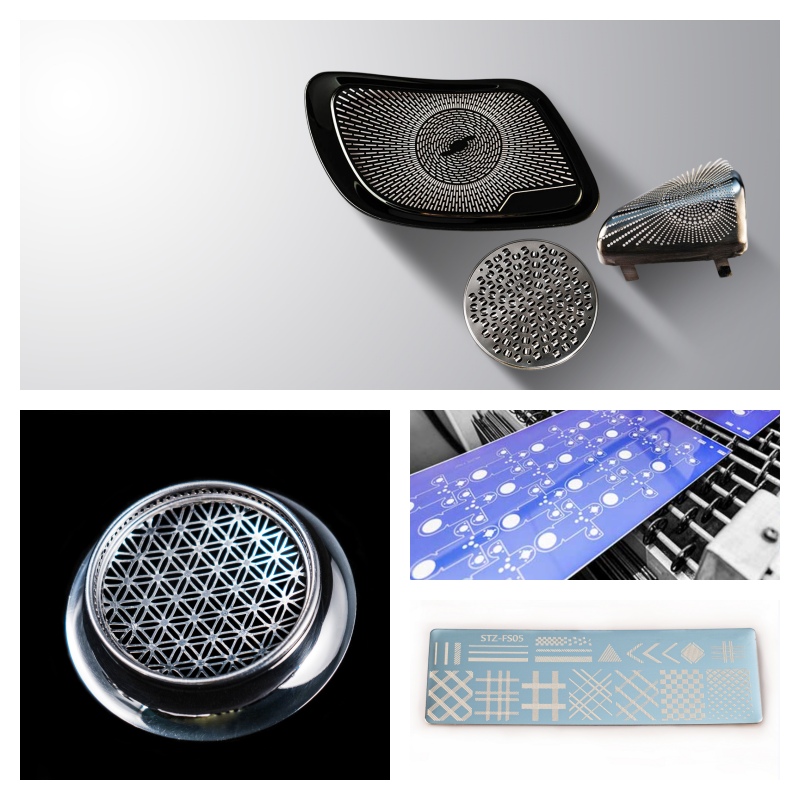
Complex geometries: Etching can create intricate shapes, fine mesh patterns, and varying slot widths without tooling wear or heat-affected zones.
Precision and repeatability: Photoresist patterning allows tolerances as tight as ±0.01 mm, ensuring every part matches the design exactly.
Material flexibility: All conductive metals can be etched, including beryllium copper, phosphor bronze, and molybdenum, offering excellent conductivity and durability.
No mechanical stress: The chemical process does not introduce residual stress or deformation, preserving the metal's electrical properties.
Comparative Analysis: Etching vs. Alternative Methods
To understand why etching is preferred, compare it to other common shielding fabrication methods:
undefined
| Method | Advantages | Disadvantages |
|---|---|---|
| Metal Etching | Precision, burr-free, complex shapes, no tooling cost | Slower for high volumes, chemical waste management |
| Stamping / Punching | High speed for simple parts, low unit cost | Tooling wear, burrs, limited complexity, edge deformation |
| Laser Cutting | Fast prototyping, no tooling | Heat-affected zone, dross, limited thickness, higher cost per part |
| Wire EDM | High precision, thick materials | Very slow, limited to simple profiles, expensive |
For EMI/RFI shields that require fine slots, honeycomb vents, or intricate contact arrays, etching provides the best balance of accuracy, cost-effectiveness for medium volumes, and material integrity. DRAGON ETCHING leverages this process to produce shields that meet stringent industry standards.
Why DRAGON ETCHING Is the Partner of Choice
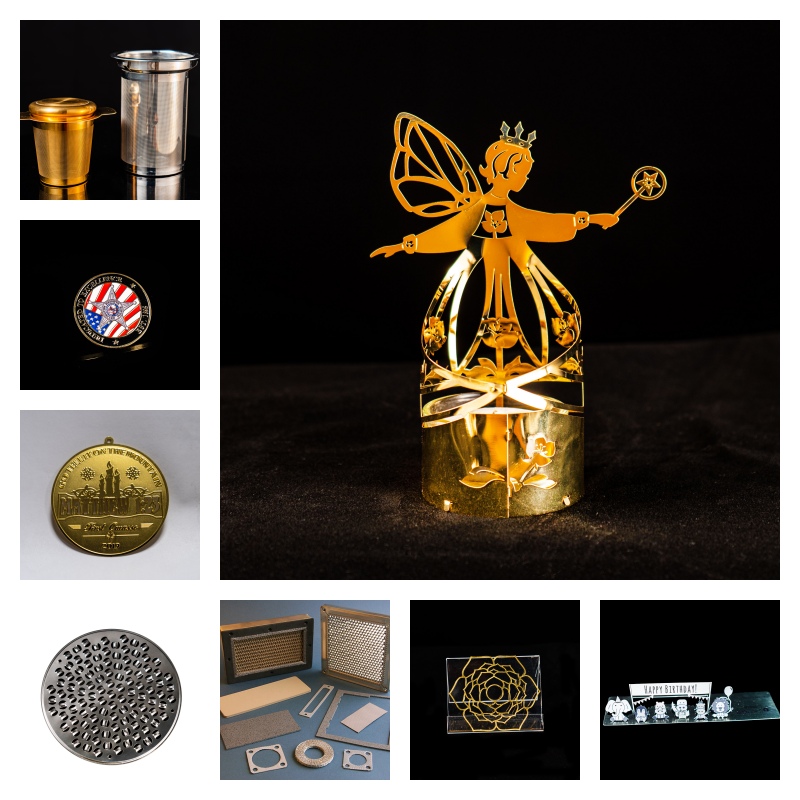
Founded with a commitment to precision and innovation, DRAGON ETCHING TECHNOLOGY., LIMITED is one of the fastest companies in the chemical etching industry. With years of experience and advanced technological capabilities, we specialize in delivering high-quality, customized metal etching solutions for a wide range of industries, including Electronics and Semiconductor, Optics & Filtration, Automotive & Industrial, Medical & Consumer Electronics, and Cultural and Customized Gift Applications. Although gift applications may not involve shielding, the core etching expertise translates directly to EMI/RFI parts.
State-of-the-Art Facilities and Quality Control
Our state-of-the-art facilities and rigorous quality control ensure that each component meets the highest standards of accuracy and reliability. From prototype development to large-scale production, we work closely with our clients to transform complex designs into precise, functional metal parts. For shielding, this means flawless implementation of fine-line patterns, consistent thickness, and perfect flatness.
Specialized Expertise in Shielding
DRAGON ETCHING has developed proprietary processes for etching thin-gauge metals used in EMI gaskets, finger stock, and shielding cans. Our ability to etch beryllium copper and phosphor bronze with extreme spring-back control makes us a preferred supplier for automotive electronics and telecommunications equipment.
Case Studies: Etching in Action
Case 1: Honeycomb EMI Vents for Military Radios
A defense contractor required lightweight, electrically conductive honeycomb panels to shield sensitive radio electronics while allowing airflow. The honeycomb cells needed clean, burr-free openings and precise cell spacing to maintain shielding effectiveness above 60 dB at 1 GHz. Etching from 0.5 mm aluminum sheet delivered cells with ±0.02 mm accuracy, eliminating post-processing. DRAGON ETCHING produced 10,000 units with zero defects, reducing assembly time by 30%.
Case 2: Spring Fingers for Smartphone Shielding Cans
A consumer electronics manufacturer needed hundreds of thousands of beryllium copper spring fingers for shielding cans inside smartphones. The fingers required a complex curved profile with fine tip radii (0.1 mm) to ensure good contact with the PCB ground. Etching preserved the material's elasticity and produced consistent spring force across batches, outperforming stamped parts that suffered from micro-cracks.
Benefits of Partnering with an Expert Etching Manufacturer
Choosing a specialized metal etching manufacturer for EMI/RFI shielding offers several strategic advantages:
Design optimization: Engineers at DRAGON ETCHING can advise on etch-compatible geometries that maximize shielding while minimizing weight and cost.
Rapid prototyping: Without hard tooling, design iterations can be completed in days, accelerating product development cycles.
Scalability: The same photochemical master can be used for low-volume prototypes and high-volume production, ensuring seamless transition.
Reliability: Established quality management systems (ISO 9001, IATF 16949) guarantee consistent output.
Technical Considerations for Etched Shielding
When designing shields for etching, several factors affect performance and manufacturability:
Material Selection
Common shielding materials include copper (high conductivity), aluminum (lightweight), stainless steel (durable), and beryllium copper (spring properties). Each etches differently; DRAGON ETCHING's process parameters are optimized for each alloy to achieve sharp edges and tight tolerances.
Feature Geometry
Minimum slot width can be as low as 0.1 mm with aspect ratios up to 2:1 (depth/width). For honeycomb webs, wall thickness down to 0.05 mm is achievable. These fine features are essential for high-frequency shielding (above 10 GHz) where slot length must be small relative to wavelength.
Surface Finish
Etching leaves a matte finish with typical Ra 0.5–1.0 µm. For galvanic compatibility or cosmetic requirements, post-etch treatments like electropolishing or plating can be applied. DRAGON ETCHING offers integrated finishing services.
Quality Assurance and Testing
Every batch of shielding components undergoes dimensional inspection via vision systems, electrical conductivity testing, and salt spray corrosion tests. For critical applications, shielding effectiveness is verified using a TEM cell or GTEM cell. DRAGON ETCHING maintains full traceability from raw material to final shipment.
Industry Applications and Future Trends
As 5G, Internet of Things (IoT), and autonomous vehicles proliferate, the demand for effective EMI/RFI shielding grows. Etching is increasingly used for:
5G base station filters and waveguide gaskets
Medical implant shielding to prevent MRI interference
Automotive radar module enclosures
Consumer wearable shields with complex 3D shapes
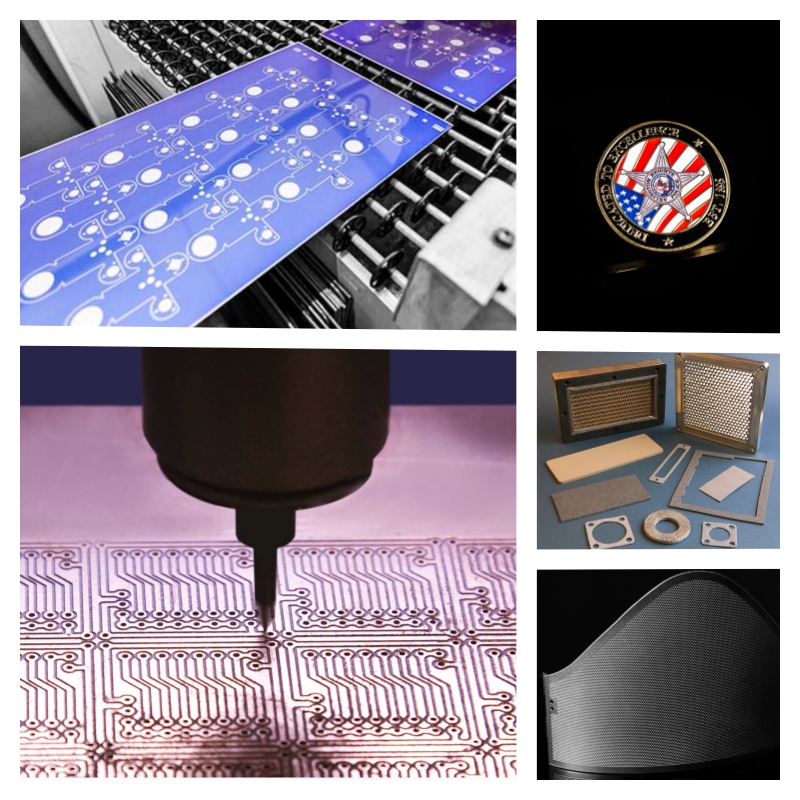
DRAGON ETCHING is investing in advanced resist lamination and conveyorized etching lines to handle larger panel sizes and higher throughput, meeting the scaling needs of these industries.
Conclusion
Metal etching offers an unmatched combination of precision, flexibility, and material integrity for EMI and RFI shielding. By partnering with a specialized manufacturer like DRAGON ETCHING TECHNOLOGY., LIMITED, companies can ensure their shields meet the highest performance and reliability standards. From design support to mass production, the chemical etching process delivers burr-free, complex, and repeatable components that are essential for protecting sensitive electronics in a noisy electromagnetic environment. As technology evolves, etching will remain the go-to method for critical shielding applications.
About DRAGON ETCHING
At DRAGON ETCHING TECHNOLOGY, we pride ourselves on combining technical expertise, responsive service, and innovative processes to provide professional solutions that exceed client expectations and drive industry advancement. Our commitment to precision and innovation makes us the preferred choice for EMI/RFI shielding and beyond.