
Why a Metal Etching Manufacturer Is Essential for Telecommunications Component Production
This article explains why a specialized metal etching manufacturer is crucial for producing telecommunications components. It highlights the role of chemical etching in creating high-precision, burr-free, and stress-free metal parts essential for 5G, satellite, and other telecom systems. Key benefits include exceptional accuracy, material versatility, and cost-effectiveness for high-volume production. The article details common etched telecom components such as RF shields, waveguide filters, antenna elements, connectors, and heat sinks. It emphasizes the value of partnering with an experienced manufacturer like DRAGON ETCHING TECHNOLOGY., LIMITED, which offers advanced process control, quality assurance, and customized solutions. The summary concludes that as telecom technology evolves, the need for precision etching will only grow, making such manufacturers indispensable partners in innovation.
In the rapidly evolving telecommunications industry, the demand for high-performance, miniaturized, and reliable components is greater than ever. From 5G base stations to satellite communication systems, every device relies on precision-engineered metal parts that meet stringent specifications. This is where specialized metal etching manufacturers, such as DRAGON ETCHING TECHNOLOGY., LIMITED (DRAGON ETCHING), become indispensable. By leveraging advanced chemical etching processes, these manufacturers provide the accuracy, repeatability, and cost-efficiency required for large-scale production of critical telecom components.
The Role of Metal Etching in Telecommunications
Metal etching, also known as chemical milling or photochemical etching, is a subtractive manufacturing process that uses corrosive chemicals to create intricate patterns on metal sheets. Unlike traditional machining, it produces burr-free, stress-free parts with tight tolerances, making it ideal for delicate telecom components like RF shields, waveguide filters, connectors, antenna arrays, and heat sinks. These parts often feature complex geometries, fine features, and thin walls that are challenging or impossible to achieve with mechanical methods.
Precision and Consistency
Telecommunications systems operate at high frequencies, where even microscopic dimensional deviations can cause signal loss, interference, or failure. Chemical etching offers exceptional precision, typically holding tolerances of ±10% of the material thickness or better. For example, DRAGON ETCHING utilizes state-of-the-art facilities and rigorous quality control to ensure that each component meets the highest standards of accuracy and reliability. This consistency is crucial for maintaining uniform electrical performance across thousands of parts in a production run.
Material Versatility
Telecom components often require specialized materials like beryllium copper, phosphor bronze, stainless steel, and various alloys to achieve specific electrical conductivity, corrosion resistance, or thermal properties. Metal etching works with a wide range of metals and alloys without altering their mechanical or chemical characteristics. DRAGON ETCHING specializes in delivering customized metal etching solutions for industries including Electronics and Semiconductor, Optics & Filtration, Automotive & Industrial, Medical & Consumer Electronics, and Cultural and Customized Gift Applications. This versatility allows telecom engineers to select the optimal material for their application without being constrained by manufacturing limitations.
undefined
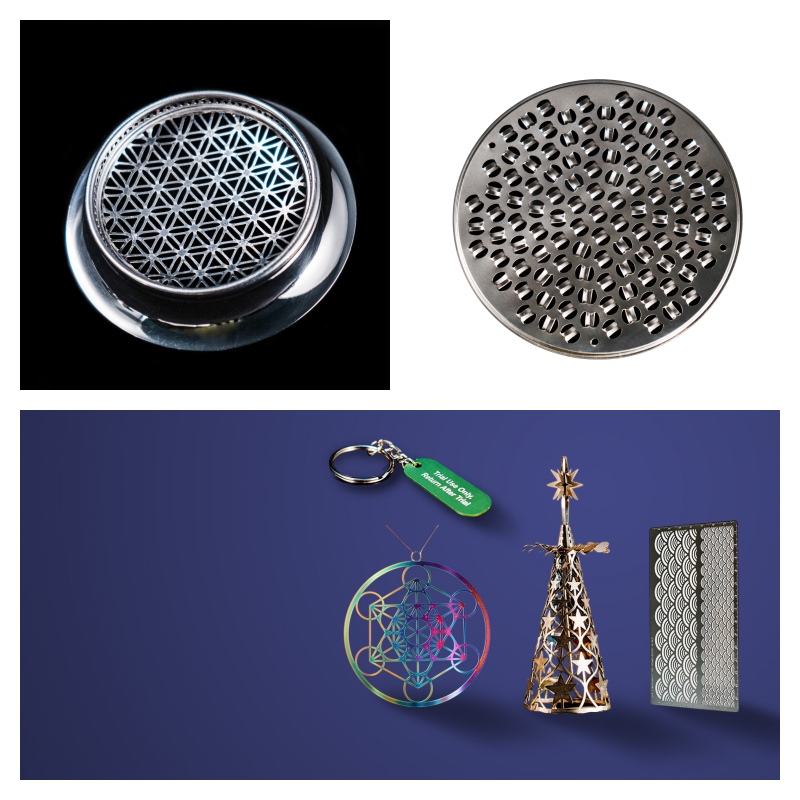
How Metal Etching Benefits Telecom Component Production
The etching process offers several distinct advantages over conventional fabrication methods like stamping, laser cutting, or CNC machining:
Burr-free edges: Etched parts have smooth, clean edges, eliminating the need for secondary deburring and reducing the risk of short circuits or mechanical interference.
Stress-free production: No mechanical force is applied, so parts remain flat and free from micro-cracks or work hardening, which is critical for thin-walled structures.
Complex geometries: Intricate shapes, internal cavities, and fine meshes can be produced in a single operation, enabling innovative designs for filters, shields, and connectors.
Rapid prototyping: Tooling is digital and inexpensive, allowing quick iteration from prototype development to large-scale production. DRAGON ETCHING works closely with clients to transform complex designs into precise, functional metal parts.
Cost-effective for high volumes: Once tooling is created, etching is extremely repeatable and can be scaled to high production runs with minimal labor cost per part.
Essential Telecom Components Produced by Metal Etching
RF Shields and Enclosures
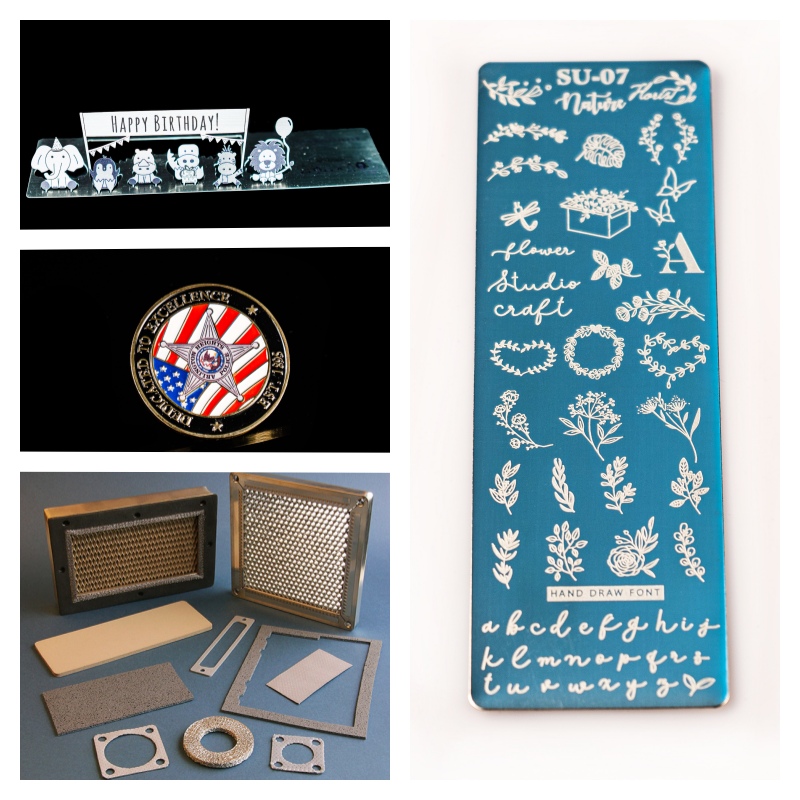
Electromagnetic interference (EMI) shielding is critical in telecom equipment to prevent signal cross-talk and comply with regulatory standards. Etched metal shields are lightweight, thin, and can incorporate ventilation holes, mounting tabs, and grounding fingers in one piece. DRAGON ETCHING’s precision ensures that shields fit perfectly onto PCBs and provide consistent attenuation across the frequency range.
Waveguide Filters
Waveguide filters are used in microwave and millimeter-wave systems to select specific frequency bands. Chemical etching can produce the intricate internal cavities and irises required, with high dimensional accuracy and excellent surface finish, which directly impacts insertion loss and rejection performance.
Antenna Elements
Patch antennas, Yagi-Uda arrays, and other radiating structures require precise metal patterns to achieve desired gain and directivity. Etching allows for fine-tuning of element dimensions and spacing, enabling optimization for 5G, Wi-Fi, and satellite communications.
Connectors and Contacts
High-frequency connectors (e.g., SMA, N-type) rely on spring contacts, grounding rings, and alignment features made from beryllium copper or phosphor bronze. The etching process produces repeatable, burr-free springs with controlled thickness and hardness, ensuring reliable electrical contact over many mating cycles.
Heat Sinks and Thermal Management
As telecom equipment becomes more powerful, thermal management is a growing challenge. Etched metal heat sinks, often aluminum or copper, can incorporate fine fins and micro-channels to maximize surface area. The absence of burrs and stress improves heat transfer efficiency and reduces the risk of cracking during assembly.
Why Choose a Specialized Metal Etching Manufacturer
Not all metal etching suppliers are equipped to handle the demanding requirements of the telecommunications industry. A manufacturer like DRAGON ETCHING TECHNOLOGY., LIMITED brings specific capabilities that are essential:
Advanced Process Control: State-of-the-art facilities with automated spray etching chambers, digital imaging systems, and real-time monitoring ensure consistent quality across batches.
Material Expertise: In-depth knowledge of how different metals and alloys interact with etchants, enabling optimal process parameters for each application.
Quality Assurance: Rigorous quality control, including dimensional inspection, surface finish analysis, and electrical testing, ensures that every component meets or exceeds specifications.
Customization: From prototype development to large-scale production, DRAGON ETCHING works closely with clients to tailor solutions for unique design challenges.
Speed to Market: Rapid tooling and quick turnaround times reduce development cycles, helping telecom companies stay ahead in a competitive industry.
Case Study: Etched Components for 5G Infrastructure
Consider the production of a 5G massive MIMO antenna array. Each antenna element requires careful sizing and spacing to achieve beamforming capabilities. Using chemical etching, DRAGON ETCHING produced thousands of copper antenna patches with tolerances of ±0.05 mm, all identically patterned and free from distortion. The result was consistent electrical performance across the array, enabling the customer to meet stringent 5G standards with minimal tuning.
Future Trends in Telecom Component Etching
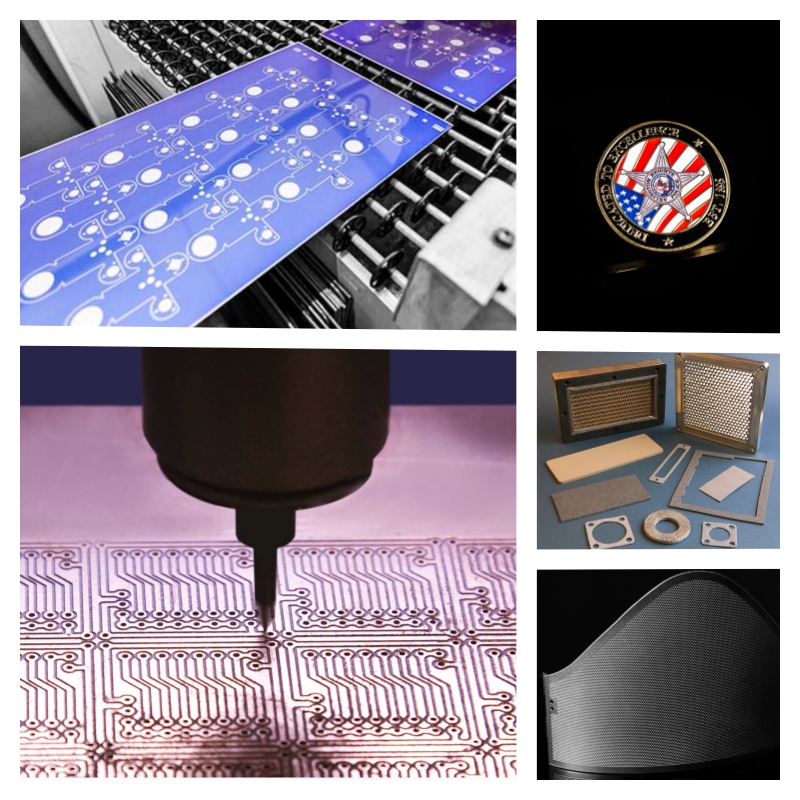
As telecommunications technology advances toward 6G and beyond, the need for even finer features, newer materials, and tighter integration will grow. Metal etching manufacturers will continue to innovate, adopting techniques like fine pitch etching for sub-100 micron features, embedding passive components, and combining etching with other processes such as laser welding or electroforming. DRAGON ETCHING, with its commitment to precision and innovation, is well positioned to support these advancements.
Conclusion
In summary, a professional metal etching manufacturer is essential for telecommunications component production because it delivers the precision, material versatility, and cost-effectiveness required for modern devices. Companies like DRAGON ETCHING TECHNOLOGY., LIMITED combine years of experience, advanced facilities, and a dedication to quality to help telecom innovators bring reliable, high-performance products to market. Whether for RF shields, filters, antennas, or connectors, partnering with a trusted etching expert ensures that components meet the exacting demands of the telecommunications industry.