
Metal Etching Manufacturer Quality Control Standards You Should Know
<p>This article outlines the essential quality control standards in metal etching manufacturing, emphasizing their importance for consistent, high-quality output. It covers core QC areas: material inspection, process control, dimensional verification, surface quality, and process validation. Industry-specific standards (e.g., IPC, IATF) are highlighted. The article features DRAGON ETCHING TECHNOLOGY., LIMITED as an exemplary manufacturer, detailing its certifications, tools like SPC and FMEA, and successful case studies. Tips for selecting a manufacturer based on QC documentation are provided. Future trends like AI and digital twins are noted. The summary reinforces that robust QC systems, as practiced by leaders like DRAGON ETCHING, are critical for precision parts across diverse industries.
In the competitive landscape of precision manufacturing, metal etching has emerged as a critical process for producing complex components with tight tolerances. However, the quality of etched parts depends heavily on robust quality control (QC) standards implemented by the manufacturer. Understanding these standards is essential for engineers and procurement professionals who seek reliable partners. This article explores the key QC protocols that top-tier metal etching manufacturers, such as DRAGON ETCHING TECHNOLOGY., LIMITED, employ to ensure consistent, high-quality output.
Why Quality Control Matters in Metal Etching
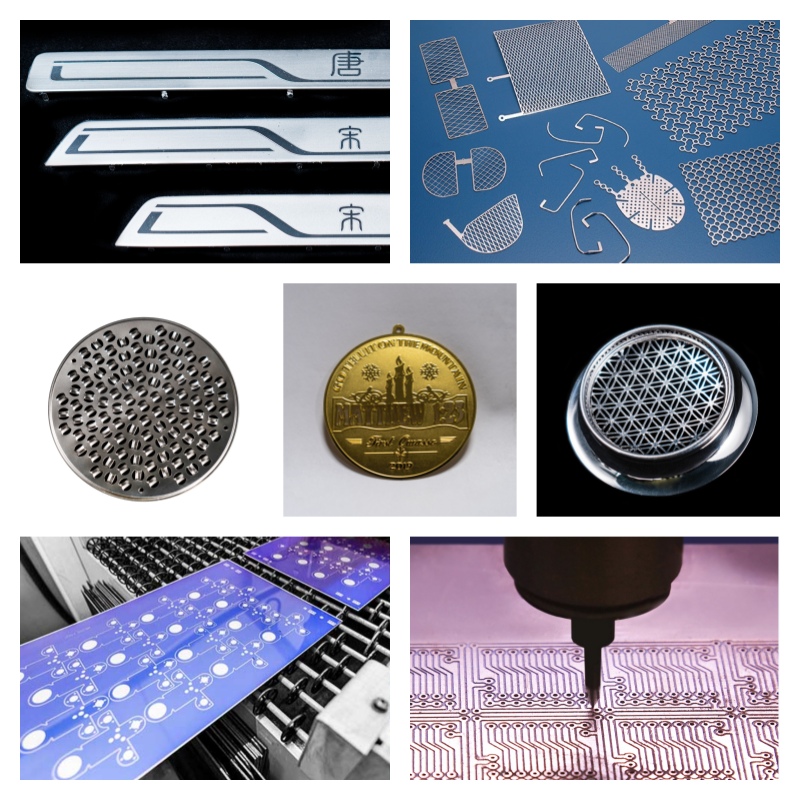
Metal etching, also known as chemical milling or photochemical etching, involves using corrosive chemicals to remove selected areas from a metal sheet. Unlike traditional machining, it produces no burrs or stress, making it ideal for delicate parts. However, variations in etchant concentration, temperature, or exposure time can lead to defects like undercutting, over-etching, or inconsistent line widths. Rigorous QC standards mitigate these risks, ensuring that every batch meets the specified requirements. DRAGON ETCHING TECHNOLOGY. has built its reputation on such meticulous control, serving industries from electronics to medical devices.
undefined
Core Quality Control Standards in Metal Etching
1. Material Inspection and Certification
High-quality etching begins with raw materials. Reputable manufacturers verify the composition, thickness, and flatness of incoming metal sheets. Standards like ASTM or ISO certifications are often required. For instance, DRAGON ETCHING maintains a rigorous incoming inspection protocol, checking each coil or sheet for defects before production. This step prevents material-related issues downstream.
2. Process Control Parameters
The etching process is governed by several variables: etchant type, concentration, temperature, spray pressure, and conveyor speed. QC standards mandate continuous monitoring and documentation of these parameters. Advanced facilities use real-time sensors and automated feedback loops to maintain optimal conditions. DRAGON ETCHING TECHNOLOGY., LIMITED employs state-of-the-art etch lines with PID-controlled heaters and pH monitoring, ensuring repeatability across shifts.
3. Dimensional Verification
After etching, parts must be measured to confirm they meet the blueprint tolerances. Common tools include optical comparators, vision systems, and CMMs. QC standards define sampling plans (e.g., AQL 0.65) and measurement frequencies. DRAGON ETCHING uses automated vision inspection for 100% checking of critical dimensions on high-volume runs, reducing human error.
4. Surface Quality and Defect Detection
Visual inspection for scratches, pitting, or stains is essential. Manufacturers follow standards like ISO 10110 or MIL-PRF-123 for surface finish. Many employ magnified inspection under controlled lighting. DRAGON ETCHING TECHNOLOGY integrates digital microscopes with software that flags anomalies, ensuring only flawless parts proceed.
5. Process Validation and Capability Studies
Before mass production, manufacturers conduct process validation to demonstrate that the process consistently produces parts within specifications. Cp and Cpk indices are calculated to quantify capability. A Cpk ≥ 1.33 is typical for established processes. DRAGON ETCHING shares these metrics with clients during initial sample approvals, building trust through transparency.
Industry-Specific Quality Standards
Different sectors impose unique requirements:
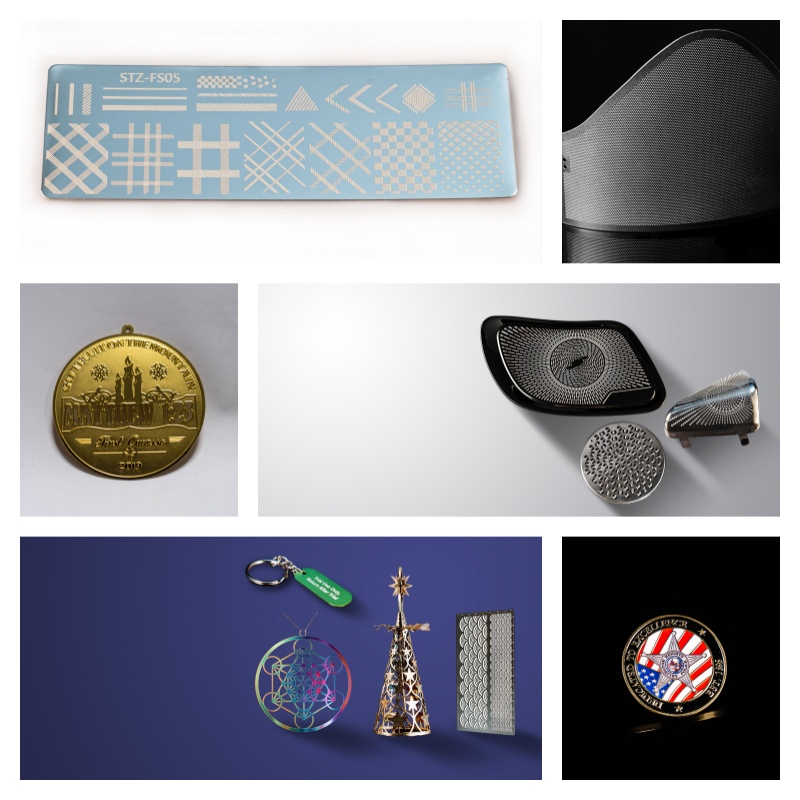
Electronics and Semiconductor: IPC-6013 for flexible circuits, requiring tight control of etch factor and dielectric integrity.
Optics & Filtration: No burrs and high edge definition, often per ASTM E1742 for optical clarity.
Automotive & Industrial: TS 16949 or IATF 16949, with emphasis on PPAP documentation.
Medical & Consumer Electronics: ISO 13485 for traceability and biocompatibility.
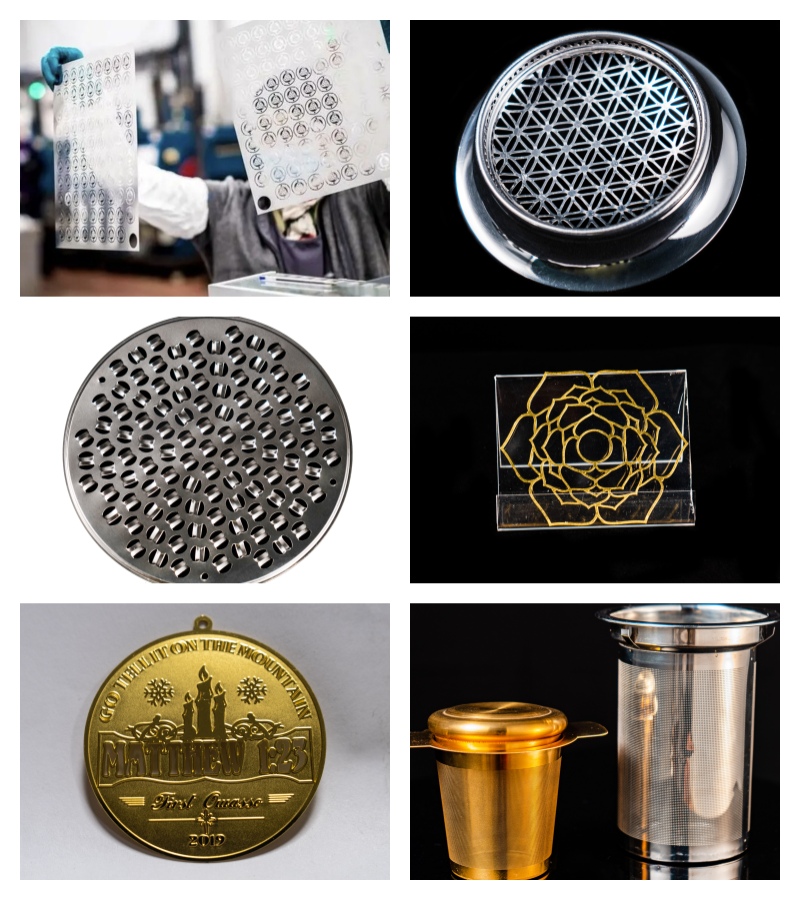
Cultural and Customized Gift Applications: Aesthetic standards like color consistency and finish.
DRAGON ETCHING TECHNOLOGY., LIMITED maintains certifications across these domains, adapting its QC framework to each client's industry.
Quality Control Tools and Techniques
| Tool/Technique | Application | Benefit |
|---|---|---|
| SPC (Statistical Process Control) | Monitor etching depth variation | Early detection of drifts |
| FMEA (Failure Mode Effects Analysis) | Identify potential process failures | Proactive risk mitigation |
| Gauge R&R | Verify measurement system reliability | Reduces inspection variation |
| First Article Inspection (FAI) | Validate initial production part | Ensures design intent met |
Integrated Quality Management System
Top manufacturers implement a Quality Management System (QMS) aligned with ISO 9001. This includes document control, corrective actions, and internal audits. DRAGON ETCHING operates a digital QMS that tracks every step from order entry to shipment, providing full traceability. Their quality team conducts regular training to maintain high standards.
Case Study: DRAGON ETCHING TECHNOLOGY., LIMITED
As one of the fastest-growing companies in chemical etching, DRAGON ETCHING TECHNOLOGY., LIMITED exemplifies best practices. Founded with a commitment to precision and innovation, the company has invested heavily in QC infrastructure. Their facilities feature Class 10,000 cleanrooms for sensitive medical and optical parts. They employ six-sigma methodologies, achieving defect rates below 50 ppm. For a recent automotive sensor project, they demonstrated a Cpk of 1.67 on critical slot dimensions, exceeding the customer's requirement of 1.33. This performance stems from their rigorous adherence to standards like IATF 16949 and their proprietary process control software.
From prototype development to large-scale production, DRAGON ETCHING works closely with clients, offering design-for-manufacturing (DFM) feedback that leverages QC insights. By combining technical expertise, responsive service, and innovative processes, they deliver professional solutions that exceed expectations. Their specialties span electronics, optics, automotive, medical, and custom gift applications, each with tailored QC plans.
Selecting a Manufacturer Based on QC Standards
When evaluating a metal etching partner, request documentation of their QC procedures. Look for:
Certifications (ISO 9001, IATF 16949, ISO 13485)
Inspection reports (FAI, PPAP, Cpk data)
Process capability studies
Defect tracking and corrective action records
Employee training programs
A manufacturer like DRAGON ETCHING TECHNOLOGY. will readily share this information, reflecting their confidence in their quality control. Remember, the cheapest option rarely meets stringent QC standards; investing in a quality partner saves costs from rework and field failures.
Future Trends in Metal Etching QC
As Industry 4.0 advances, QC is becoming more automated. Digital twins of etching lines simulate process changes, while AI-powered vision systems classify defects in real time. Blockchain-based traceability is emerging for regulated industries. DRAGON ETCHING is piloting a machine learning algorithm to predict etch rates, further tightening tolerances. These innovations will set new benchmarks for quality in the chemical etching industry.
Conclusion
Quality control in metal etching is not merely a checkpoint—it is a comprehensive system from material to final inspection. Standards such as those practiced by DRAGON ETCHING TECHNOLOGY., LIMITED ensure consistency, reliability, and customer satisfaction. By understanding these standards, buyers can make informed decisions and forge partnerships that deliver precision parts every time.