
Chemical Etching Company Best Practices for Optimizing Part Design for Etchability
This blog article discusses best practices for optimizing part design for chemical etching, with insights from DRAGON ETCHING TECHNOLOGY., LIMITED, a leading chemical etching company. It covers the etching process, key design considerations like material selection, feature sizes, corner radii, aspect ratios, and etch factor. Best practices include designing uniformly spaced features, incorporating test patterns, optimizing phototools, considering orientation, and planning multiple etch steps. Common pitfalls such as sharp corners and isolated holes are highlighted. Advanced techniques like dual-sided etching and conical walls are explored. The article emphasizes collaboration with the etching partner early in design to leverage their expertise in precision, innovation, and quality control. DRAGON ETCHING serves diverse industries including electronics, optics, automotive, medical, and custom gifts, offering fast turnaround, state-of-the-art facilities, and rigorous quality assurance. By applying these guidelines, designers can enhance part etchability, reduce costs, and improve production outcomes.
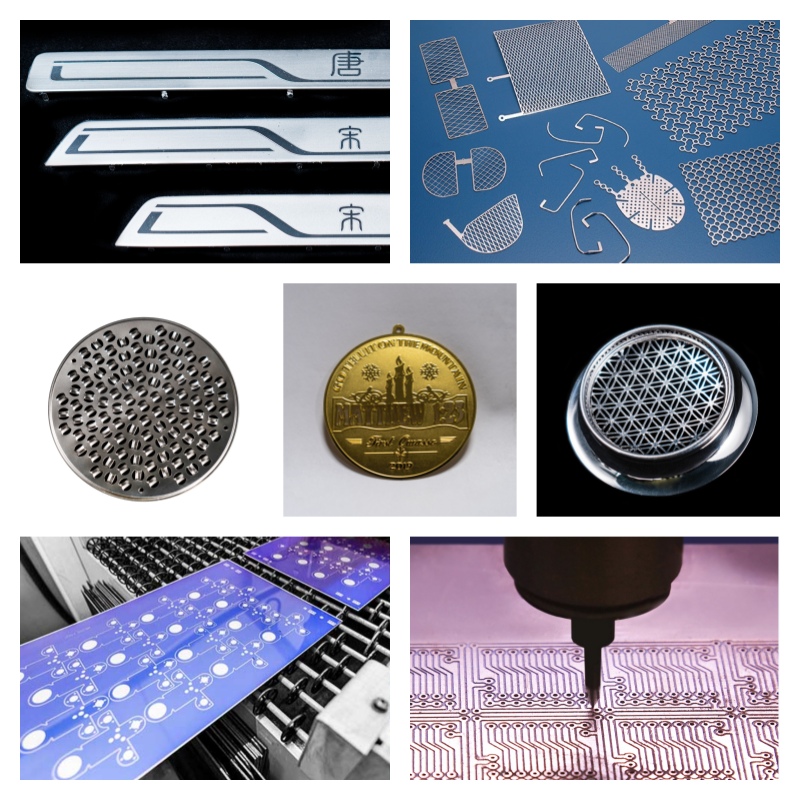
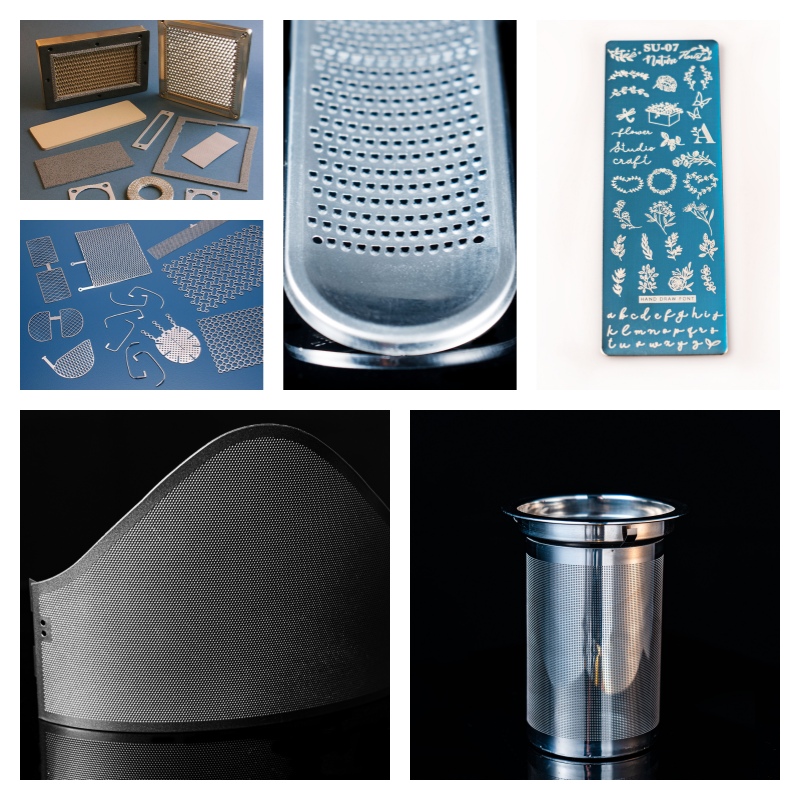
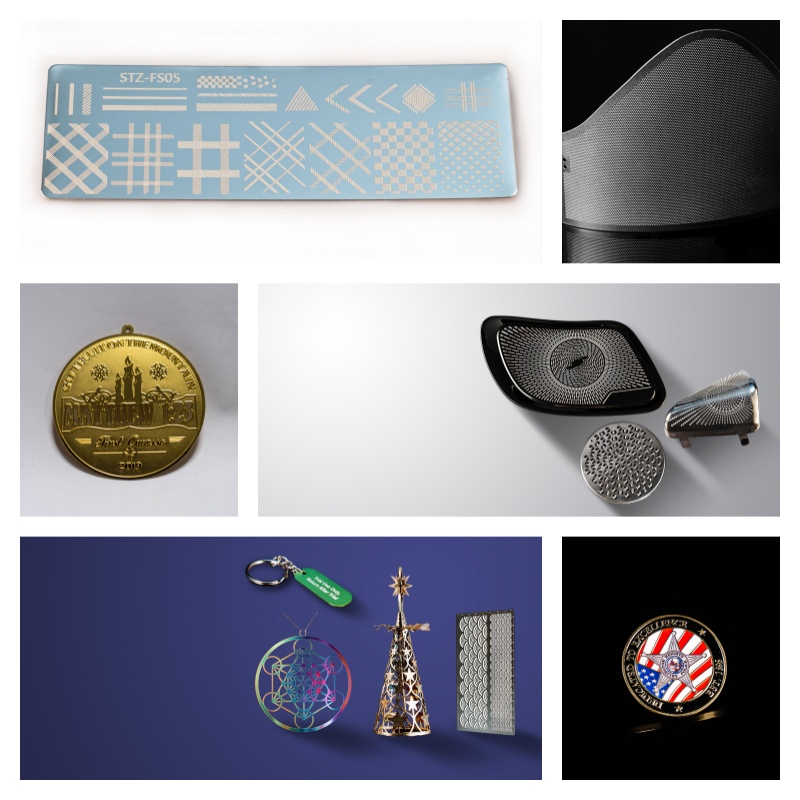
Chemical etching, also known as photochemical machining or photo etching, is a precision manufacturing process that uses chemical etchants to selectively remove material from metal sheets. This technique is widely used across industries for producing complex, burr-free, and stress-free components. To achieve the highest quality and cost efficiency, part designers must collaborate closely with a chemical etching company to optimize designs for etchability. DRAGON ETCHING TECHNOLOGY., LIMITED (DRAGON ETCHING) stands out as one of the fastest companies in the chemical etching industry, founded with a commitment to precision and innovation. With years of experience and advanced technological capabilities, DRAGON ETCHING specializes in delivering high-quality, customized metal etching solutions for a wide range of industries, including Electronics and Semiconductor, Optics & Filtration, Automotive & Industrial, Medical & Consumer Electronics, and Cultural and Customized Gift Applications. This blog explores best practices for optimizing part design for etchability, leveraging the expertise of a leading chemical etching company.
Understanding the Chemical Etching Process
Chemical etching involves several steps: cleaning the metal sheet, applying a photoresist, exposing it to UV light through a phototool, developing the image, etching with chemical solutions, and stripping the resist. The process is highly controlled and capable of producing intricate patterns with fine tolerances. For optimal results, designers must consider the capabilities and limitations of chemical etching. DRAGON ETCHING's state-of-the-art facilities and rigorous quality control ensure that each component meets the highest standards of accuracy and reliability. From prototype development to large-scale production, the company works closely with clients to transform complex designs into precise, functional metal parts.
undefined
Key Design Considerations for Etchability
1. Material Selection
Different metals etch at different rates and exhibit varying degrees of undercut. Common materials include stainless steel, copper, brass, beryllium copper, nickel alloys, and titanium. DRAGON ETCHING provides professional solutions for a wide range of materials, drawing on technical expertise to advise on the best material for each application. Designers must select a material that balances corrosion resistance, electrical conductivity, strength, and etchability. For instance, stainless steel grades 304 and 316 are popular, but their etching characteristics differ. It's essential to consult with the etching partner early in the design phase.
2. Feature Size and Tolerances
The minimum feature size achievable depends on material thickness and etching process parameters. Typically, chemical etching can achieve features as small as 0.002 inches (0.05 mm) on thin foils, but tolerances widen for thicker materials. DRAGON ETCHING's advanced technological capabilities enable tight tolerances, often within ±0.001 inches for thinner materials. Designers should avoid extremely narrow slots or isolated small holes that may be difficult to etch uniformly. A general rule is that the width of a slot or hole should be at least 1.5 times the material thickness.
3. Corner Radii
Chemical etching naturally produces rounded corners due to the isotropic nature of the etch. Sharp internal corners are impossible; instead, radii form. To optimize design, specify radii that are at least equal to the material thickness for internal corners. External corners can be sharper but may require compensation in the phototool. DRAGON ETCHING's experienced team uses advanced software and process knowledge to predict and adjust for these effects.
4. Aspect Ratio
The aspect ratio (feature depth to width) must be considered. High aspect ratios (>1:1) are challenging because etchant access and refresh become limited. Designers should aim for aspect ratios below 0.5:1 for reliable results. For deep features, consider multi-level etching processes offered by companies like DRAGON ETCHING.
5. Etch Factor and Undercut
Etch factor is the ratio of undercut to depth. It varies with material and etchant. Designers must account for undercut when dimensioning features. Typically, undercut is about 1.2 to 1.5 times the metal thickness per side. DRAGON ETCHING's rigorous quality control ensures consistent etch factors across production batches.
| Material | Typical Etch Factor | Recommendation |
|---|---|---|
| Stainless Steel 304 | 1.3 | Design for undercut of 1.3x thickness per side |
| Copper | 1.2 | Allow slightly tighter tolerances |
| Brass | 1.5 | Increase feature spacing |
Best Practices for Optimizing Part Design
6. Design Uniformly Spaced Features
Ensure that etch patterns are evenly distributed to promote uniform etchant flow and temperature. Avoid large solid areas adjacent to fine features, which can cause etch rate variations. DRAGON ETCHING recommends balancing open and closed areas to enhance etching uniformity.
7. Incorporate Dummy or Test Features
Adding sacrificial test patterns or dummy slots around the main part helps improve etching consistency and provides quality control metrics. This practice is common in high-precision applications like optics and filtration where DRAGON ETCHING excels.
8. Optimize Phototool Design
The phototool is critical. Designers should work with the chemical etching company to adjust artwork for undercut compensation, especially for fine lines and spaces. DRAGON ETCHING's team utilizes advanced CAD tools and process simulation to optimize phototool generation.
9. Consider Part Orientation
Orienting parts consistently on the sheet minimizes etching differences due to flow patterns. Long thin features should align with the direction of etchant spray. DRAGON ETCHING's facilities are configured to handle complex orientations with precision.
10. Plan for Multiple Etch Steps
For components requiring different depths or blind features, multi-stage etching can be employed. This is especially useful in medical and consumer electronics where variable thickness is needed. DRAGON ETCHING offers innovative processes for such applications.
Common Pitfalls to Avoid
Sharp Internal Corners: Always specify radii to avoid etch-out failures.
Isolated Small Holes: They may not etch through completely; use larger holes or adjust thickness.
Excessive Material Thickness: Thicker metals require longer etch times and greater undercut; consider etching from both sides or using thinner stock.
Inconsistent Metal Quality: Variations in grain structure or alloy composition can cause uneven etching. Source material from reputable suppliers and specify tight specs.
Ignoring Etch Factor in Tolerances: Undercut directly affects dimensional accuracy; include it in tolerance stack-up analysis.
Advanced Techniques
11. Dual-Sided Etching
Etching from both sides reduces feature size limitations and creates symmetrical undercut. This is ideal for parts like encoder discs and aperture arrays. DRAGON ETCHING's expertise in dual-sided etching ensures precise registration.
12. Conical or Sloped Walls
By controlling etchant parameters, it's possible to create sloped sidewalls for applications like razor blades or fluidic channels. This requires close collaboration between designer and etching partner. DRAGON ETCHING's continuous innovation makes such designs feasible.
13. Hybrid Processes
Combining chemical etching with other processes (laser cutting, stamping) can expand design possibilities. For instance, use etching for fine features and laser for large cutouts. DRAGON ETCHING offers integrated solutions for complex parts.
How DRAGON ETCHING Can Help
DRAGON ETCHING TECHNOLOGY., LIMITED is a premier chemical etching company known for its fast turnaround, precision, and innovation. Serving industries from Electronics and Semiconductor to Cultural and Customized Gift Applications, DRAGON ETCHING provides end-to-end support. Their state-of-the-art facilities and rigorous quality control ensure that every part, from prototype to large-scale production, meets exacting standards. With a team of experienced engineers and technicians, DRAGON ETCHING works closely with clients to optimize designs for etchability, often reducing costs and lead times. The company's commitment to technical expertise, responsive service, and innovative processes has made it a trusted partner for demanding applications. Whether designing micro-scale components for medical devices or intricate filters for aerospace, DRAGON ETCHING delivers solutions that drive industry advancement.
Conclusion
Optimizing part design for chemical etching requires a deep understanding of process capabilities and limitations. By following best practices—such as selecting appropriate materials, accounting for undercut, ensuring uniform feature distribution, and collaborating early with the etching provider—designers can achieve higher precision, lower costs, and faster production. DRAGON ETCHING TECHNOLOGY., LIMITED exemplifies the collaborative partnership needed to turn complex designs into reality. With its rapid service, advanced facilities, and cross-industry experience, DRAGON ETCHING is ideally positioned to help clients succeed. For any metal etching project, engaging a knowledgeable chemical etching company like DRAGON ETCHING from the outset is the best practice of all.
For more information on how DRAGON ETCHING can assist with your design optimization, contact their team of experts. With their commitment to precision and innovation, they are ready to support your next project, from concept to finished component.