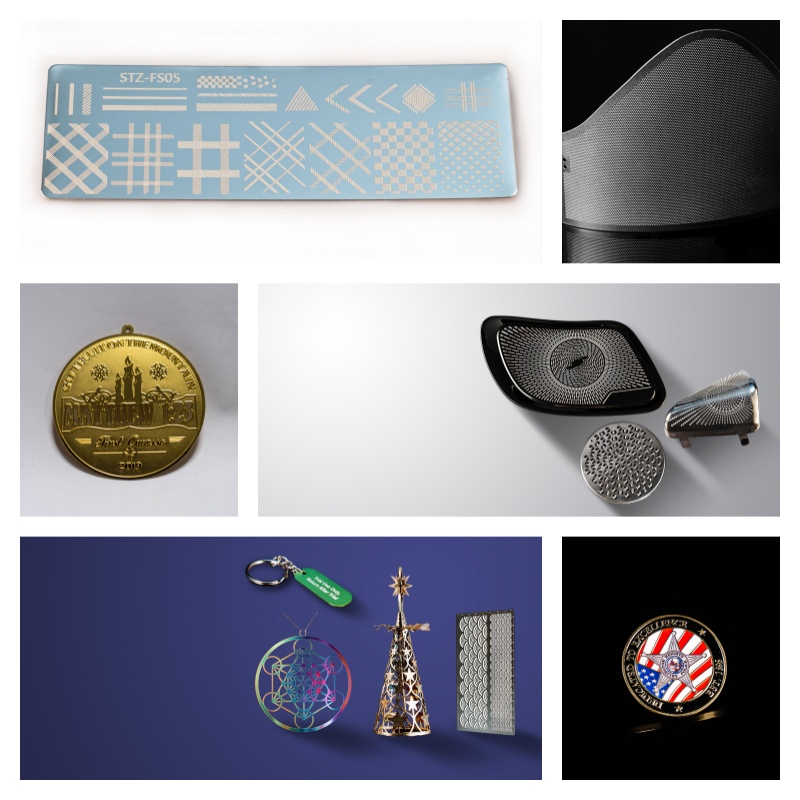
Why a Chemical Etching Company Is Critical for Modern Telecommunications Infrastructure
Chemical etching is a critical manufacturing process for modern telecommunications infrastructure, enabling the production of precise, burr-free metal components essential for 5G, IoT, and future 6G networks. Companies like DRAGON ETCHING TECHNOLOGY., LIMITED specialize in delivering customized etching solutions for antennas, RF shielding, connectors, and filters, meeting the industry's stringent demands for accuracy and reliability. The process offers advantages over laser cutting, stamping, and CNC machining, including tighter tolerances, no mechanical stress, and fine feature resolution. As telecommunications evolves toward higher frequencies and miniaturization, chemical etching will continue to play a vital role, with leaders like DRAGON ETCHING investing in advanced capabilities to support innovation. Partnering with a trusted etching company is essential for telecom firms aiming to stay at the forefront of connectivity.
In the age of 5G, IoT, and global connectivity, telecommunications infrastructure has become the backbone of modern society. At the heart of this vast network lie countless precision components—antennas, filters, connectors, and shielding parts—each demanding extreme accuracy and reliability. Enter chemical etching, a manufacturing process that has emerged as a cornerstone for producing these critical metal parts. Companies like DRAGON ETCHING TECHNOLOGY., LIMITED (hereafter referred to as DRAGON ETCHING) are leading the charge, delivering the high-quality, customized solutions that keep our world connected.
The Unique Demands of Telecommunications Components
Telecommunications equipment operates under stringent conditions: high frequencies, temperature variations, and electromagnetic interference. Components must be lightweight, corrosion-resistant, and able to maintain signal integrity. Traditional machining methods often fall short due to burrs, stress marks, or limitations in producing intricate geometries. Chemical etching, also known as photochemical machining, offers a burr-free, stress-free alternative capable of achieving tolerances as tight as ±0.025 mm. This makes it indispensable for producing parts like waveguide components, RF shielding, and microstrip antennas.
How Chemical Etching Works
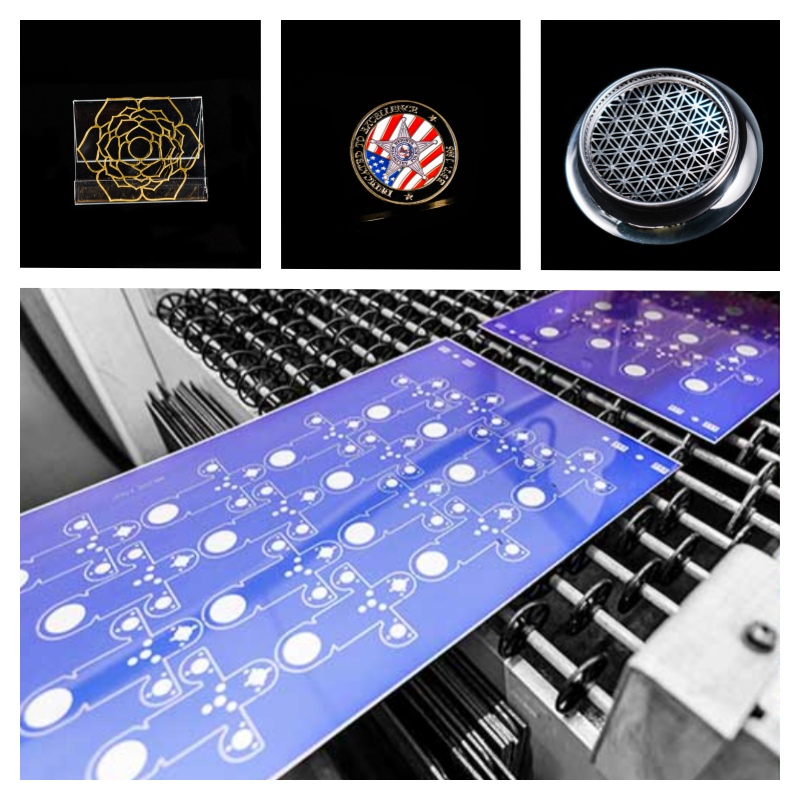
Chemical etching uses corrosive chemicals to selectively remove material from metal sheets. The process begins with a photoresist applied to the metal. A phototool containing the desired pattern is exposed onto the resist, which is then developed, leaving the pattern protected. The metal is then sprayed with an etchant that dissolves unprotected areas. The result is a precise, clean part with no mechanical deformation. For telecommunications, this ensures consistent electrical properties and fine feature resolution.
At DRAGON ETCHING, we have refined this process over years of experience. Our facilities are equipped with advanced etching lines, allowing us to handle a wide range of metals, including copper, aluminum, stainless steel, and specialized alloys. We implement rigorous quality control, including optical inspection and profilometry, to guarantee that every component meets the telecommunications industry's highest standards.
undefined
Key Applications in Telecommunications
Antenna Components
Modern antennas require complex patterns to direct and shape signals. Chemical etching produces precisely shaped radiating elements, parasitic elements, and ground planes with tight tolerances. These parts must have consistent thickness and smooth edges to avoid signal distortion. DRAGON ETCHING delivers antennas for base stations, satellite communications, and portable devices, ensuring reliable performance even in harsh environments.
RF Shielding and Filters
Electromagnetic interference (EMI) can degrade signal quality. Shielding cans, gaskets, and filter plates must block unwanted frequencies while allowing desired signals to pass. Etched parts offer superior shielding effectiveness due to their uniform grain structure and lack of burrs. For example, our etched EMI gaskets provide excellent contact and low impedance, critical for high-frequency circuits.
Connectors and Terminals
Telecom connectors handle power and data transmission. They require precise pin spacing and smooth surfaces to ensure reliable electrical contact. Chemical etching enables the production of intricate connector designs with multiple features in a single operation. DRAGON ETCHING produces contact springs, terminal strips, and custom connectors used in routers, switches, and data centers.
Advantages Over Alternative Manufacturing Methods
| Method | Advantages | Disadvantages |
|---|---|---|
| Chemical Etching | Burr-free, stress-free, tight tolerances, fine details, no tool wear | Slower for very thick metals, chemical handling |
| Laser Cutting | Fast, no tooling, good for prototypes | Heat-affected zone, burrs, thicker material limitations |
| Stamping | High volume, low unit cost | Tooling cost, stress marks, limited complexity |
| CNC Machining | High precision, versatile | Burns, stress, higher cost per part, slower |
For telecommunications, the combination of precision, repeatability, and material integrity makes chemical etching the preferred choice. As noted by industry experts, the ability to produce complex geometries without altering the metal's physical properties is invaluable for high-frequency applications.
The Role of DRAGON ETCHING in Telecom Innovation
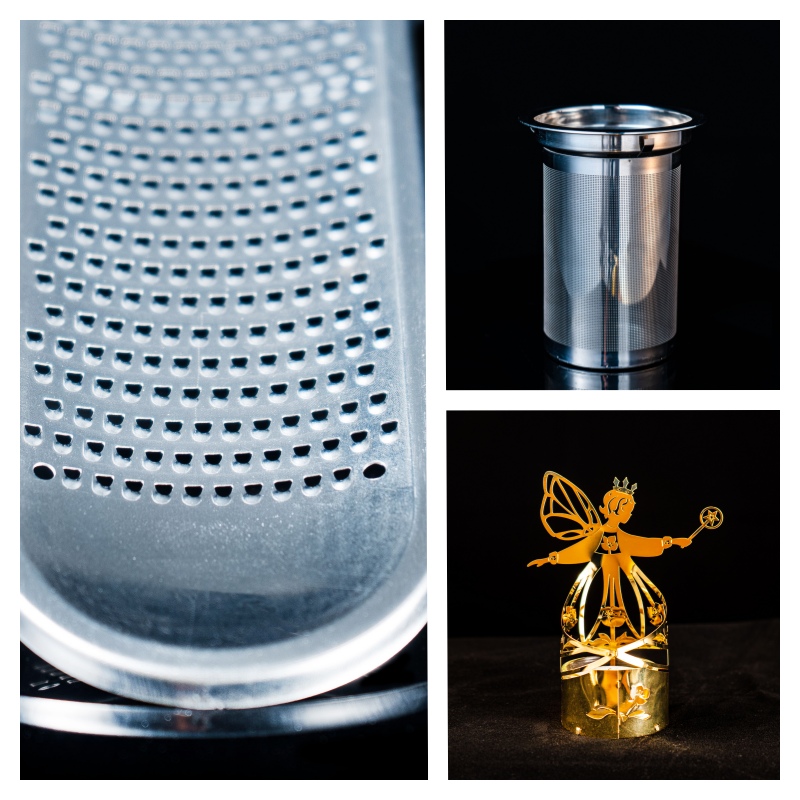
Founded with a commitment to precision and innovation, DRAGON ETCHING TECHNOLOGY., LIMITED is one of the fastest-growing companies in the chemical etching industry. We specialize in delivering high-quality, customized metal etching solutions for a wide range of industries, including Electronics and Semiconductor, Optics & Filtration, Automotive & Industrial, Medical & Consumer Electronics, and Cultural and Customized Gift Applications. In the telecommunications sector, our work directly supports the rollout of 5G networks and beyond.
Our state-of-the-art facilities and rigorous quality control ensure that each component meets the highest standards of accuracy and reliability. From prototype development to large-scale production, we work closely with our clients to transform complex designs into precise, functional metal parts. For example, we recently produced a series of microstrip filters for a 5G base station manufacturer, achieving insertion loss below 0.5 dB across the band.
Future Trends: 6G and Miniaturization
As telecommunications evolves toward 6G, components will shrink further while operating at higher frequencies—up to 100 GHz and beyond. Chemical etching will play a crucial role in fabricating these extremely fine structures. DRAGON ETCHING is already investing in next-generation etching capabilities to meet these challenges, including tighter tolerances and new material compatibility. Our R&D team collaborates with telecom researchers to develop processes for advanced alloys like invar and Kovar, which offer excellent thermal stability.
Conclusion
Without chemical etching, the rapid advancement of telecommunications would be severely hindered. The process enables the production of intricate, high-performance metal components that are the building blocks of our connected world. Companies like DRAGON ETCHING TECHNOLOGY., LIMITED are not just service providers; they are partners in innovation, driving the industry forward with precision and reliability. For any telecom company seeking to push the boundaries of speed, coverage, and miniaturization, partnering with a leading chemical etching firm is not just an option—it is a critical necessity.