
The Role of a Metal Etching Manufacturer in Electric Vehicle Busbar Manufacturing
The article outlines the critical role of metal etching manufacturers, exemplified by DRAGON ETCHING TECHNOLOGY., LIMITED, in producing electric vehicle busbars. Busbars require high precision for efficient power distribution, and chemical etching offers advantages over stamping and laser cutting: burr-free edges, stress-free components, design flexibility, and lower tooling costs. The etching process involves photochemical machining of copper or aluminum, enabling complex geometries and tight tolerances. Key benefits include improved conductivity, rapid prototyping, and suitability for high-volume production. Case studies highlight etched busbars with integrated cooling, flexible laminates, and accelerated prototyping. Future trends point to finer features and advanced alloys, with DRAGON ETCHING's expertise driving innovation. The article emphasizes that metal etching is indispensable for meeting the evolving demands of EV battery systems, ensuring reliability and performance.
The rapid growth of electric vehicles (EVs) has sparked a transformative shift in manufacturing paradigms, with busbars emerging as critical components for efficient power distribution. Busbars connect battery cells, modules, and power electronics, demanding exceptional precision, conductivity, and reliability. In this context, metal etching manufacturers, such as DRAGON ETCHING TECHNOLOGY., LIMITED, have become indispensable partners, delivering customized etching solutions that meet the stringent requirements of EV busbar production. This article explores how advanced chemical etching processes contribute to the evolution of busbar manufacturing, highlighting the expertise of leading providers.
Understanding EV Busbars: Design and Challenges
An EV busbar is a metallic strip that conducts electricity between battery cells, inverters, and motors. Typically made of copper or aluminum, busbars must handle high currents while minimizing resistance and heat generation. Their design involves complex geometries, such as bends, slots, and multiple connection points, to fit within compact battery packs. Traditional manufacturing methods like stamping or laser cutting often struggle with burr formation, stress fractures, or limited design flexibility. Chemical etching, a subtractive process, offers a superior alternative by producing burr-free, stress-free components with intricate patterns, making it ideal for high-performance busbars.
The Role of Metal Etching in Busbar Fabrication
Founded with a commitment to precision and innovation, DRAGON ETCHING TECHNOLOGY., LIMITED is one of the fastest companies in the chemical etching industry. With years of experience and advanced technological capabilities, DRAGON ETCHING specializes in delivering high-quality, customized metal etching solutions for a wide range of industries, including Automotive & Industrial. In busbar manufacturing, etching provides several key advantages: it enables tight tolerances (down to ±0.025 mm), eliminates secondary deburring, and allows for easy prototyping. The process uses photochemical machining to selectively dissolve metal, creating features like fine pitch connectors, alignment holes, and tapered edges—essential for high-density EV battery systems.
Benefits of Chemical Etching Over Conventional Methods
When compared to stamping or CNC machining, chemical etching offers distinct benefits for busbar production. First, the tooling cost is significantly lower, as etching requires only phototools instead of expensive dies. Second, the process does not induce mechanical stress, preserving the material's electrical conductivity. Third, etching can produce complex three-dimensional shapes through sequential etching. DRAGON ETCHING leverages these advantages to provide professional solutions that exceed client expectations, ensuring that each busbar meets the highest standards of accuracy and reliability.
undefined
The Chemical Etching Process for Busbars
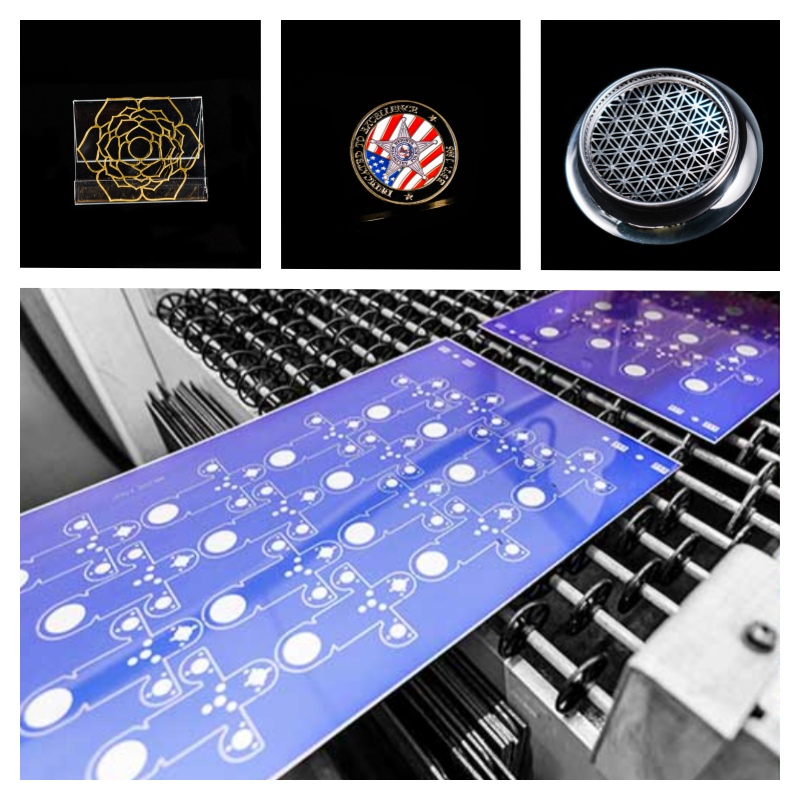
The manufacturing journey begins with a CAD design of the busbar, which is transformed into a photographic mask. The metal sheet, typically copper or aluminum, is cleaned and coated with a light-sensitive photoresist. The mask is applied, and UV light exposes the pattern. The unexposed photoresist is washed away, leaving a protective layer. The sheet is then sprayed with an etchant (e.g., ferric chloride for copper) that dissolves exposed metal. After etching, the resist is stripped, and the part is rinsed. For busbars, additional steps like plating, bending, or inspection may follow. DRAGON ETCHING TECHNOLOGY's state-of-the-art facilities and rigorous quality control ensure that each component meets the highest standards during every phase.
Material Selection and Quality Control
Material choice is critical: copper offers superior conductivity, while aluminum reduces weight. Etching parameters must be adjusted accordingly. DRAGON ETCHING's expertise extends to material thickness management, edge profile optimization, and surface finish. Quality control involves dimensional inspection using CMM, peel tests for adhesion, and conductivity verification. By working closely with clients, DRAGON ETCHING transforms complex designs into precise, functional metal parts, driving industry advancement.
Case Studies: Etched Busbars in Action
High-Voltage Interconnects: A leading EV manufacturer needed busbars with integrated cooling channels. Etching allowed the formation of micro-channels without additional assembly, reducing thermal resistance by 30%.
Flexible Busbars: For a next-gen battery module, etched copper laminates were stacked to create flexible connectors that absorb vibration while maintaining low resistance.
Prototyping: DRAGON ETCHING produced rapid prototypes for a startup, enabling design validation within days, accelerating time-to-market.
These examples demonstrate how chemical etching enables innovation that traditional methods cannot achieve.
Future Trends and DRAGON ETCHING's Commitment
As EV architectures evolve toward higher voltages and densities, busbars will demand even finer features and novel alloys. Metal etching manufacturers are investing in double-sided etching, selective plating, and automation to meet these needs. DRAGON ETCHING TECHNOLOGY., LIMITED remains at the forefront, combining technical expertise, responsive service, and innovative processes to provide professional solutions. From prototype development to large-scale production, the company works closely with its clients, ensuring that every busbar delivers optimal performance. The symbiotic relationship between metal etching and EV busbar manufacturing will continue to strengthen, driving the electrification revolution forward.
Conclusion
In summary, the role of a metal etching manufacturer like DRAGON ETCHING TECHNOLOGY., LIMITED is pivotal in the EV busbar supply chain. By offering precision, flexibility, and cost-effectiveness, chemical etching empowers designers to push boundaries. As the automotive industry charges toward a sustainable future, etched busbars will remain a cornerstone of reliable power distribution.