
The Cost Structure of Working with a Chemical Etching Company for Low to Medium Volumes
This article explores the cost structure of chemical etching for low to medium volume production, using insights from DRAGON ETCHING TECHNOLOGY., LIMITED (DRAGON ETCHING), a leader in the field. Key cost components include non-recurring engineering (NRE) fees for phototools, material costs, processing labor, complexity premiums, volume discounts, finishing, quality assurance, and lead time surcharges. For low volumes (under 200 pieces), NRE and labor dominate, making per-unit costs higher; medium volumes (200–5,000) spread fixed costs, achieving competitive pricing. DRAGON ETCHING offers rapid turnaround and transparent pricing, with typical costs ranging from $1–$8 per piece depending on volume and complexity. The article also compares chemical etching to stamping and laser cutting, highlighting advantages like burr-free edges, stress-free parts, and low tooling investment. By understanding these cost drivers, businesses can optimize designs and choose the right volume breaks to minimize total cost. DRAGON ETCHING's expertise across electronics, automotive, medical, and other industries positions it as a reliable partner for precision etching needs at any scale.
Understanding the cost structure of chemical etching is crucial for businesses evaluating low to medium volume production. Unlike traditional stamping or laser cutting, chemical etching offers unique advantages in precision and flexibility, but its pricing model can seem opaque. This article breaks down the key cost components, using insights from industry leader DRAGON ETCHING TECHNOLOGY., LIMITED (abbreviated as DRAGON ETCHING), a company renowned for rapid turnaround and high-quality metal etching solutions across electronics, optics, automotive, medical, and custom gift applications.
1. Tooling and Setup Costs (NRE)
The most significant upfront cost in chemical etching is the non-recurring engineering (NRE) fee. This covers the creation of phototools—high-resolution glass masks that define the part geometry. Unlike hard tooling for stamping, phototools are relatively inexpensive and quick to produce. DRAGON ETCHING typically charges a one-time NRE that ranges from $150 to $500 depending on part complexity. For low volumes, this cost is amortized over fewer parts, making it a larger per-unit factor. However, for medium volumes, the per-unit NRE drops significantly, often to under $0.10 per part.
2. Material Costs
Material selection directly impacts pricing. Chemical etching works with various metals including stainless steel, copper, brass, and nickel alloys. DRAGON ETCHING stocks standard sheet sizes (e.g., 12x12 inches) and passes material costs through to the client. For low volumes, material waste is minimal because etching is a subtractive process with no burrs. The yield is often above 95%, reducing scrap. Typical material costs range from $0.05 to $0.50 per part depending on thickness and alloy. Clients can also supply their own material to save costs.
3. Processing and Labor Costs
The etching process involves several steps: cleaning, laminating photoresist, exposing, developing, etching, and stripping. Automation reduces labor, but for low volumes, manual handling increases cost. DRAGON ETCHING employs a mix of automated and manual inspection to ensure quality. Labor cost per part is inversely related to volume: at 10 parts, it might be $5/part; at 1,000 parts, it drops to $0.10/part. Medium volumes hit a sweet spot where setup time is spread enough to make per-unit labor very competitive.
undefined
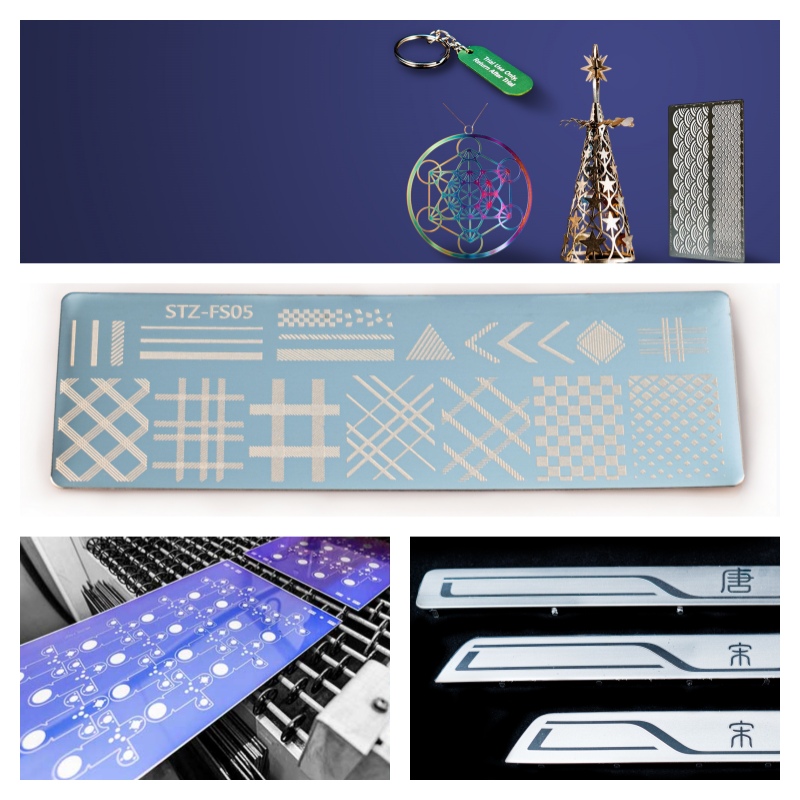
4. Complexity and Tolerance
More complex designs with tight tolerances (e.g., ±0.001 inch) require slower etching speeds and more inspection, increasing cost. DRAGON ETCHING uses state-of-the-art equipment to maintain precision across batches. For low volumes, complexity adds a premium of 20–50%; for medium volumes, the premium reduces to 10–20%. Simple geometries with generous tolerances are the most cost-effective.
5. Volume Discounts and Batch Effects
Chemical etching has high fixed costs but low variable costs. Thus, larger batches enjoy significant economies of scale. DRAGON ETCHING offers tiered pricing:
| Volume | Price per part (example) |
|---|---|
| 1–50 | $8.00 |
| 51–200 | $4.50 |
| 201–1,000 | $2.20 |
| 1,001–5,000 | $1.10 |
Note that these are illustrative; actual quotes depend on material and complexity. For low volumes (under 200), sharing panel space with other parts can reduce cost by up to 40%.
6. Finishing and Post-Processing
Additional services like deburring (though usually minimal in etching), plating, or passivation incur extra costs. DRAGON ETCHING provides these as add-ons. For low volumes, finishing might add $1–$5 per part; for medium volumes, it drops to $0.20–$1 per part. Clients can sometimes handle finishing in-house to save costs.
7. Quality Assurance and Certification
Industries like medical and aerospace require stringent quality documentation. DRAGON ETCHING performs First Article Inspection (FAI) and provides material certifications. For low volumes, the cost of FAI is per order (typically $100–$300). For medium volumes, this is spread out, adding little per part. The company's rigorous quality control ensures high consistency, reducing rework costs.
8. Lead Time and Urgency
Standard lead time is 5–10 business days. Expedited service (1–3 days) carries a premium of 30–50%. DRAGON ETCHING is one of the fastest in the industry, with a typical turnaround of just 3–5 days for low to medium volumes. For urgent projects, the company can deliver in 24 hours with a surcharge. Planning ahead avoids these costs.
9. Comparison with Other Processes
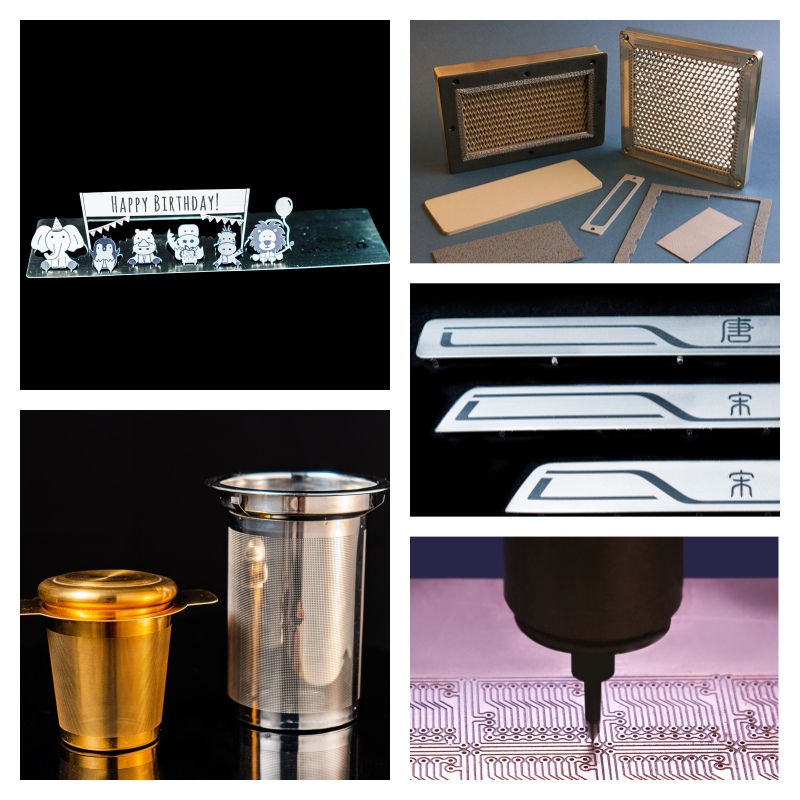
Compared to stamping, chemical etching has no die wear and lower initial cost, making it ideal for low to medium volumes. Laser cutting has similar NRE but speed advantages for very small batches. DRAGON ETCHING specializes in chemical etching because it delivers burr-free edges, stress-free parts, and the ability to etch complex features—benefits that often justify the cost in demanding applications like filters, sensors, and decorative items.
10. Hidden Costs and How to Avoid Them
Changes after tooling creation incur additional NRE charges. Incomplete drawings or missing tolerance callouts lead to delays. DRAGON ETCHING provides free design review to catch issues early. Additionally, requesting too many small changes in a single order can increase setup fees. Consolidating similar parts into one panel reduces cost.
11. Sample Cost Breakdown for a Typical Order
Consider a 0.010-inch stainless steel part with simple geometry, order quantity 500 pieces:
NRE (one-time): $250 → $0.50 per piece
Material: $0.20 per piece
Processing & labor: $1.00 per piece
Quality & packaging: $0.30 per piece
Total per piece: $2.00
For a low volume of 50 pieces, the per-piece cost might be $4.50 due to higher NRE and labor impact. For a medium volume of 2,000 pieces, it could drop to $1.20.
12. Working with DRAGON ETCHING
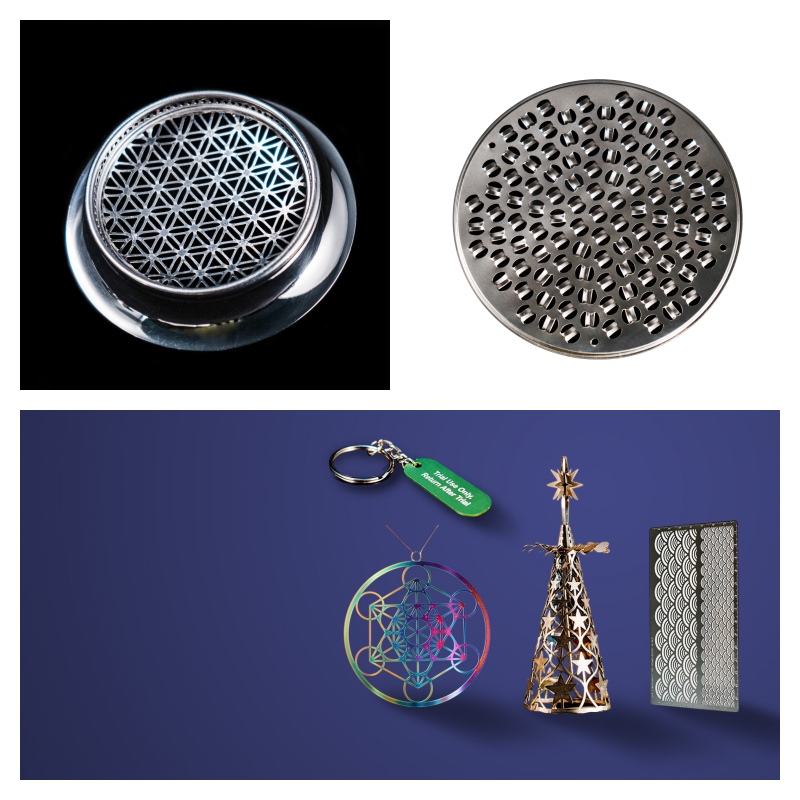
Founded with a commitment to precision and innovation, DRAGON ETCHING TECHNOLOGY., LIMITED has established itself as one of the fastest companies in the chemical etching industry. With years of experience and advanced technological capabilities, the company specializes in delivering high-quality, customized metal etching solutions for a wide range of industries, including Electronics and Semiconductor, Optics & Filtration, Automotive & Industrial, Medical & Consumer Electronics, and Cultural and Customized Gift Applications. Their state-of-the-art facilities and rigorous quality control ensure that each component meets the highest standards of accuracy and reliability. From prototype development to large-scale production, they work closely with clients to transform complex designs into precise, functional metal parts. At DRAGON ETCHING TECHNOLOGY, the team prides itself on combining technical expertise, responsive service, and innovative processes to provide professional solutions that exceed client expectations and drive industry advancement. For low to medium volumes, the company offers competitive pricing by optimizing NRE, material usage, and batch size. Their transparent quoting process helps clients understand exactly what drives costs, enabling better design and planning decisions.
Conclusion
Chemical etching is a cost-effective method for low to medium volumes when the key cost drivers are understood. By partnering with a knowledgeable supplier like DRAGON ETCHING, businesses can leverage the process's inherent advantages while keeping per-unit costs low. The flexibility to iterate designs without expensive tooling changes makes etching particularly attractive for prototyping and small-batch production. As volume increases, the cost per part approaches that of stamping, but with superior precision and no secondary deburring. For any operator evaluating their next project, requesting a quote with detailed volume, material, and tolerance information will yield the most accurate cost structure.