
How a Metal Etching Manufacturer Supports Rapid Design Iterations with Low-Cost Tooling
This article explores how metal etching manufacturers, particularly DRAGON ETCHING TECHNOLOGY., LIMITED, facilitate rapid design iterations using low-cost tooling. Traditional fabrication methods like stamping and CNC machining rely on expensive hard dies that discourage frequent design changes. In contrast, chemical etching uses phototools—inexpensive films that can be updated from CAD files within hours—enabling multiple design iterations at minimal cost and lead time. The process supports complex geometries, a wide range of metals, and high precision (tolerances down to ±0.005 mm) without additional tooling expenses. This allows engineers to test and refine designs quickly, accelerating time-to-market for industries such as electronics, medical devices, automotive, optics, and consumer goods. Additionally, chemical etching is economical for low volumes, integrates seamlessly with digital workflows, and offers environmental benefits. By eliminating the barriers of costly retooling, DRAGON ETCHING enables clients to iterate freely and optimize part performance, ultimately driving innovation and competitive advantage.
In today's fast-paced product development landscape, the ability to iterate designs quickly and cost-effectively is a critical competitive advantage. Engineers and designers often face the challenge of balancing speed, precision, and budget constraints when moving from concept to production. One manufacturing process that has emerged as a game-changer for rapid iteration is chemical etching, also known as photochemical machining (PCM). DRAGON ETCHING TECHNOLOGY., LIMITED (DRAGON ETCHING) exemplifies how a specialized metal etching manufacturer can support rapid design iterations with low-cost tooling, enabling clients to refine products faster than ever before.
The Limitations of Traditional Metal Fabrication
Traditional metal fabrication methods such as stamping, laser cutting, and CNC machining often require expensive hard tooling, long lead times, and significant setup costs. For instance, stamping dies can cost tens of thousands of dollars and take weeks to produce. This makes iterative design changes costly and time-consuming. Any modification to the design typically requires a new die, which discourages experimentation and optimization. In contrast, chemical etching uses phototools that are inexpensive and quick to produce, allowing for design changes without the burden of retooling. This fundamental difference makes etching ideal for prototyping and low to medium-volume production runs.
What Is Chemical Etching?
Chemical etching is a subtractive manufacturing process that uses chemical solutions to selectively remove material from a metal sheet. The process begins with creating a digital design, which is then transferred onto a photoresist-coated metal panel. After exposure and development, the metal is etched in a chemical bath, leaving behind the desired pattern. The key advantage is that the only tooling required is a phototool—a photographic film or digital mask that costs a fraction of a stamping die. At DRAGON ETCHING, we leverage this capability to support rapid design iterations, often delivering prototypes within days.
Low-Cost Tooling: The Heart of Iteration
Low-cost tooling is the cornerstone of rapid iteration in chemical etching. Unlike hard tooling, phototools can be generated from a CAD file in a matter of hours. This means that engineers can make design changes and receive new metal parts in a short timeframe without incurring prohibitive costs. For example, if a design for a semiconductor lead frame needs adjustment in the width of a contact finger, the etching process allows for immediate modification of the phototool. The associated cost is minimal compared to altering a stamping die. DRAGON ETCHING’s advanced facilities ensure that these phototools are produced with high precision, maintaining tolerances as tight as ±0.005 mm.
undefined
Speed from Prototype to Production
With low-cost tooling, the barrier to creating multiple iterations is removed. In traditional manufacturing, a single design iteration might take weeks and cost thousands. With chemical etching, multiple iterations can be executed in parallel or sequentially within days. This accelerates the development cycle, allowing engineers to validate form, fit, and function quickly. For industries such as electronics and medical devices, where time-to-market is crucial, this speed translates directly to competitive advantage. DRAGON ETCHING has a streamlined process from design submission to shipping, often completing first articles in under 5 business days.
Supporting Complex Geometries Without Extra Cost
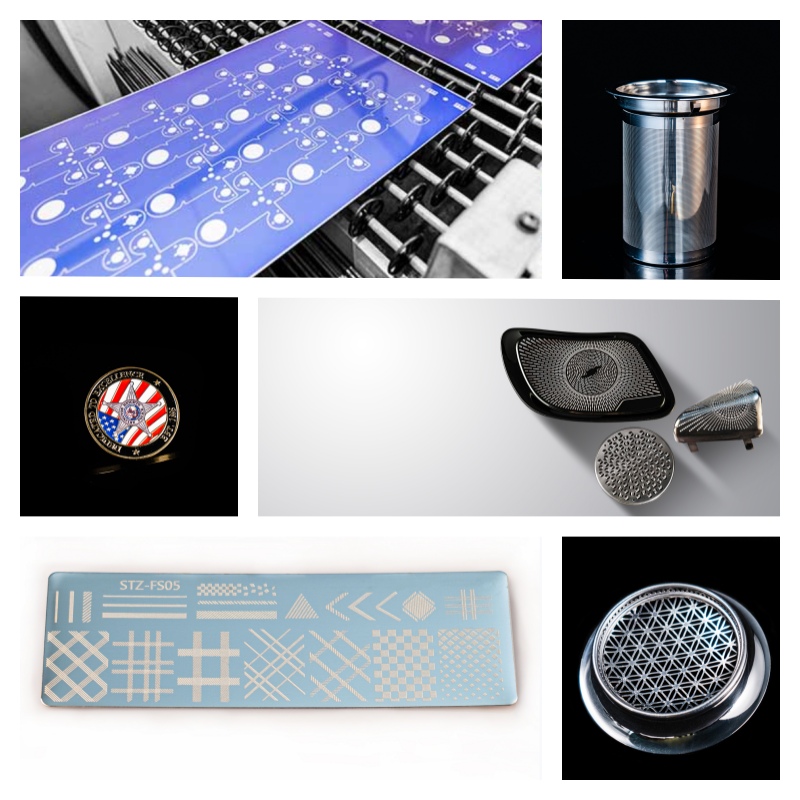
Another advantage of chemical etching is its ability to produce complex geometries without additional tooling costs. Features such as fine grids, sharp corners, burr-free edges, and intricate patterns are challenging to achieve with conventional methods. In etching, the complexity of the part does not increase tooling cost because the phototool is simply a pattern. This encourages designers to optimize parts for performance rather than for manufacturability constraints. For instance, in optical filtration components, precise slit patterns are essential. Etching allows for rapid design changes to the slit width or spacing without incurring extra tooling expenses. DRAGON ETCHING specializes in such high-precision applications across various industries including optics, automotive, and consumer electronics.
Material Flexibility and Quality
Chemical etching works with a wide range of metals, including stainless steel, copper, brass, nickel, and titanium. This flexibility allows designers to choose the optimal material for their application without worrying about tooling compatibility. Moreover, the etching process produces parts with no mechanical stress, no burrs, and no heat-affected zones, preserving the material's mechanical and electrical properties. This quality consistency is vital for iterative testing, as it ensures that design changes are evaluated on their merits, not on process variations. At DRAGON ETCHING, rigorous quality control measures guarantee that each batch meets the highest standards of accuracy.
Case Study: Rapid Design Iteration for a Medical Device Component
Consider a medical device startup developing a microfluidic chip. The chip requires thin metal electrodes with specific patterns. Initially, the design uses a simple grid, but testing shows that a serpentine pattern improves sensitivity. With chemical etching, the startup can revise the design and have new prototypes in three days. The cost for the new phototool is negligible compared to the overall development budget. Over the course of a month, the team tests five iterations and optimizes the pattern for maximum performance. This rapid cycle would have been impossible with stamping or machining. DRAGON ETCHING’s responsive service and technical expertise made this possible, reinforcing our commitment to client success.
Low Volume: A Perfect Match for Iteration
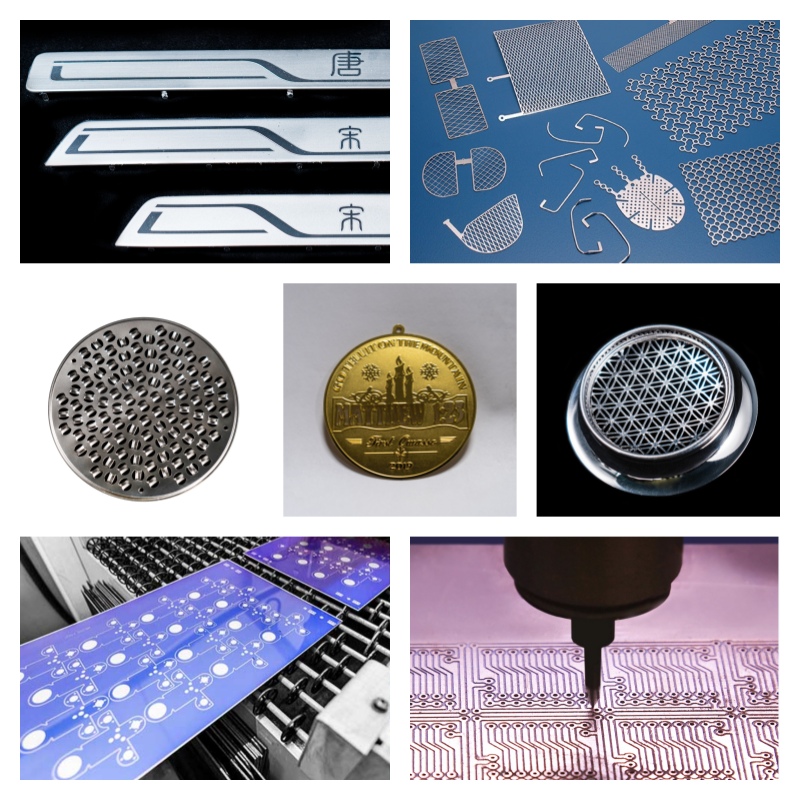
Rapid iteration is particularly valuable for low-volume production runs, which are common in prototyping and niche applications. Chemical etching is economical for quantities from a single prototype to tens of thousands of parts. Unlike injection molding or die casting, which require high volumes to amortize tooling costs, etching remains cost-effective even for small batches. This allows companies to test market acceptance or produce limited edition components without overcommitting resources. DRAGON ETCHING serves clients in cultural and customized gift applications, where each piece may have a unique design, yet the low tooling cost makes it feasible.
Integration with Digital Workflows
Modern design iteration relies heavily on digital tools. Chemical etching integrates seamlessly with CAD/CAM software. Design files can be transmitted electronically to DRAGON ETCHING, where they are processed and converted into phototools. This eliminates the need for physical tooling transfers and reduces lead times. Additionally, the process can be easily scaled: once the design is finalized, the same phototool can be used for recurring production runs. The absence of setup charges for each run further incentivizes iterative improvements. Our state-of-the-art facilities are equipped to handle these digital workflows efficiently.
Environmental and Economic Benefits
Low-cost tooling also brings environmental benefits. Fewer physical tools mean reduced material waste and energy consumption in tool production. Moreover, chemical etching is a relatively clean process with efficient chemical recycling. By enabling rapid iteration, manufacturers can optimize designs to minimize material usage, contributing to sustainability. Economically, the lower tooling costs reduce the financial risk associated with design changes, encouraging innovation. DRAGON ETCHING is dedicated to combining technical expertise with responsible practices to drive industry advancement.
Conclusion: The Future of Rapid Iteration
As product cycles shorten and customization demands increase, the ability to support rapid design iterations with low-cost tooling becomes paramount. Metal etching manufacturers like DRAGON ETCHING TECHNOLOGY., LIMITED are uniquely positioned to meet these needs. Through photochemical machining, we provide a flexible, fast, and economical pathway from concept to production. Whether for electronics, medical, automotive, or creative applications, our process empowers designers to iterate freely, innovate boldly, and bring superior products to market faster. With a commitment to precision and partnership, DRAGON ETCHING continues to set the standard for rapid iteration in metal fabrication.
Summary
This article explores how metal etching manufacturers, particularly DRAGON ETCHING TECHNOLOGY., LIMITED, facilitate rapid design iterations using low-cost tooling. Traditional fabrication methods like stamping and CNC machining rely on expensive hard dies that discourage frequent design changes. In contrast, chemical etching uses phototools—inexpensive films that can be updated from CAD files within hours—enabling multiple design iterations at minimal cost and lead time. The process supports complex geometries, a wide range of metals, and high precision (tolerances down to ±0.005 mm) without additional tooling expenses. This allows engineers to test and refine designs quickly, accelerating time-to-market for industries such as electronics, medical devices, automotive, optics, and consumer goods. Additionally, chemical etching is economical for low volumes, integrates seamlessly with digital workflows, and offers environmental benefits. By eliminating the barriers of costly retooling, DRAGON ETCHING enables clients to iterate freely and optimize part performance, ultimately driving innovation and competitive advantage.