
Chemical Etching Company Solutions for Precision Filtration and Separation Components
This blog article explores how chemical etching, particularly through the expertise of DRAGON ETCHING TECHNOLOGY., LIMITED, provides high-precision solutions for manufacturing filtration and separation components. It highlights the advantages of chemical etching over traditional methods, such as burr-free edges, stress-free processing, and the ability to produce complex micro-patterns. The article details DRAGON ETCHING's capabilities, including material versatility (stainless steel, titanium, nickel alloys, etc.), stringent quality control, and rapid prototyping. Applications across electronics, automotive, medical, and optics industries are discussed, with a case study showing improved filtration efficiency. The process overview, material selection guidance, and cost-efficiency benefits are also covered. Overall, DRAGON ETCHING TECHNOLOGY emerges as a leading partner for precision filtration components, offering customized solutions that meet the highest standards of accuracy and performance. The summary encapsulates the key points: the role of chemical etching in filtration, company strengths, and why engineers choose this method for demanding applications.
In the modern industrial landscape, the demand for high-precision filtration and separation components is ever-growing. These components are critical in sectors ranging from electronics to medical devices, where even the smallest imperfection can lead to system failure or product inefficiency. Chemical etching, also known as photochemical machining (PCM), has emerged as a superior manufacturing process for producing intricate, burr-free, and highly accurate parts. This article explores how chemical etching companies, particularly DRAGON ETCHING TECHNOLOGY., LIMITED, provide tailored solutions for precision filtration and separation components.
The Role of Chemical Etching in Filtration and Separation
Filtration and separation components, such as sieves, screens, filters, and micro-mesh structures, require precise openings and consistent geometries. Traditional machining methods often introduce burrs, stress, and dimensional inaccuracies, compromising performance. Chemical etching offers a distinct advantage: it is a non-contact, stress-free process that produces parts with tight tolerances (typically ±0.01 mm) and no mechanical deformation. This makes it ideal for creating fine features down to 0.1 mm in thickness and hole sizes as small as 0.05 mm. DRAGON ETCHING TECHNOLOGY leverages this process to manufacture components that meet the exacting standards of modern filtration applications.
Key Benefits of Chemical Etching
Precision: Consistent feature sizes across the entire part.
Burr-free edges: Essential for fluid flow and avoiding contamination.
Complex geometries: Capable of producing intricate patterns and high aspect ratios.
Cost-effective for medium volumes: Low tooling costs compared to stamping or laser cutting.
Material versatility: Works with stainless steel, copper, titanium, nickel alloys, and more.
DRAGON ETCHING TECHNOLOGY: A Leader in Chemical Etching
Founded with a commitment to precision and innovation, DRAGON ETCHING TECHNOLOGY., LIMITED is one of the fastest companies in the chemical etching industry. With years of experience and advanced technological capabilities, we specialize in delivering high-quality, customized metal etching solutions for a wide range of industries, including Electronics and Semiconductor, Optics & Filtration, Automotive & Industrial, Medical & Consumer Electronics, Cultural and Customized Gift Applications. The company's state-of-the-art facilities and rigorous quality control ensure that each component meets the highest standards of accuracy and reliability. From prototype development to large-scale production, we work closely with our clients to transform complex designs into precise, functional metal parts.
undefined
Precision Filtration Components
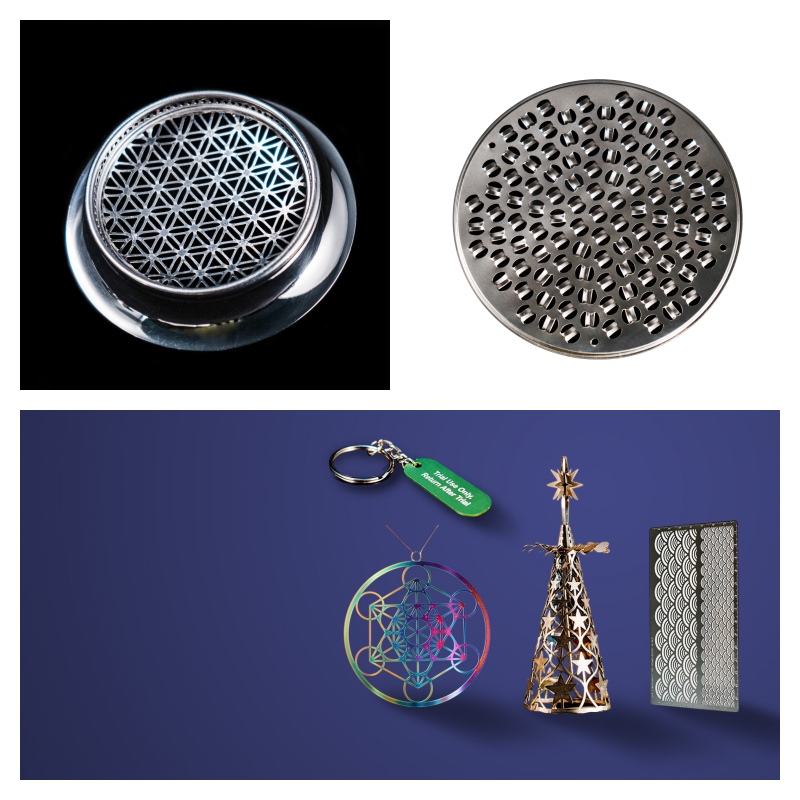
For the optics and filtration industry, DRAGON ETCHING produces micro-mesh screens, filter discs, and separation grids with unmatched consistency. Our etching process allows for high-density hole patterns that are impossible to achieve with conventional drilling or punching. These components are used in everything from air purification systems to liquid filtration in pharmaceutical manufacturing. By adjusting the etching parameters, we can control hole size, spacing, and shape (round, square, slot, or custom) to optimize flow rates and particle retention.
Advanced Capabilities and Quality Control
At DRAGON ETCHING TECHNOLOGY, we pride ourselves on combining technical expertise, responsive service, and innovative processes to provide professional solutions that exceed client expectations and drive industry advancement. Our facilities include clean rooms, automated etching lines, and advanced inspection equipment such as coordinate measuring machines (CMM) and optical comparators. Every batch undergoes stringent quality checks, including dimensional measurement, surface finish analysis, and functional testing. This ensures that filtration components perform reliably under demanding conditions, whether in high-temperature environments or corrosive chemical streams.
Table: Typical Specifications for Etched Filtration Screens
| Parameter | Range | Tolerance |
|---|---|---|
| Material Thickness | 0.05 - 3.0 mm | ±0.01 mm |
| Minimum Hole Size | 0.05 mm | ±0.005 mm |
| Feature Pitch | 0.1 mm min | ±0.01 mm |
| Pattern Density | Up to 50% open area | N/A |
| Flatness | < 0.05 mm over 100 mm | N/A |
Applications Across Industries
The versatility of chemical etching makes it suitable for a broad range of filtration and separation applications:
Electronics and Semiconductor: Fine mesh filters for chemical polishing, wafer cleaning, and particle removal from gases.
Automotive & Industrial: Fuel filters, oil screens, and hydraulic fluid separation components that withstand high pressure.
Medical & Consumer Electronics: Sterile barriers, micro-filtration membranes for drug delivery, and vent filters for waterproof electronics.
Optics & Filtration: High-precision aperture arrays, spectrometry grids, and laser beam homogenizers.
Case Study: Custom Filter for Semiconductor Fabrication
A leading semiconductor manufacturer required a stainless steel filter with 10,000 precisely spaced holes of 0.08 mm diameter to remove particulates from deionized water. DRAGON ETCHING TECHNOLOGY delivered a fully etched part within two weeks, achieving hole size uniformity of ±0.003 mm and zero burrs. The client reported a 30% improvement in filtration efficiency compared to previous laser-cut filters. This success demonstrates how chemical etching meets the stringent demands of high-tech industries.
The Importance of Material Selection
Different filtration applications require specific material properties. DRAGON ETCHING works with a wide range of metals and alloys, including:
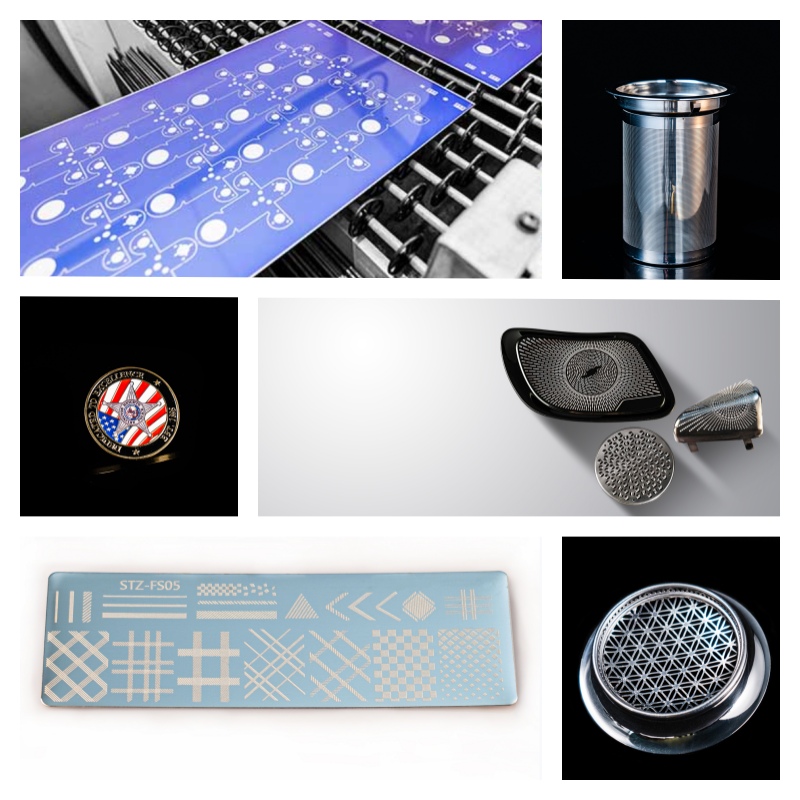
Stainless steel (304, 316, 430, 17-7PH) for corrosion resistance and strength.
Nickel and nickel alloys (Inconel, Monel) for high-temperature and chemical resistance.
Titanium for biocompatibility in medical implants and filtration.
Copper and brass for conductivity and antimicrobial properties.
Molybdenum and tungsten for extreme environments.
The etching process preserves the material's inherent properties, such as magnetic permeability or electrical conductivity, which is crucial for advanced applications like electromagnetic separation.
Prototyping and Rapid Turnaround
One of the key advantages of partnering with DRAGON ETCHING TECHNOLOGY is the ability to move from design to prototype quickly. Using photolithographic film masks, we can produce samples within 24–48 hours, allowing engineers to validate performance before committing to full production. This agility is particularly valuable for research and development in filtration systems, where iterative improvements are common. Our team provides design for manufacturability (DFM) feedback to optimize part geometries for etching, reducing cost and lead time.
Steps in the Chemical Etching Process
Design and Masking: Customer CAD file converted to a phototool (emulsion or glass mask).
Cleaning and Lamination: Metal sheet cleaned and coated with photoresist on both sides.
Exposure and Development: UV light exposed through the mask, then developed to expose the metal in desired areas.
Etching: Metal sheet passed through spray etchers that dissolve exposed areas, leaving the pattern.
Stripping and Inspection: Photoresist removed; parts inspected for dimensional accuracy and surface quality.
Post-processing: Optional deburring (if needed), passivation, plating, or forming.
Why Choose Chemical Etching Over Other Methods?
Compared to laser cutting, stamping, or EDM, chemical etching offers distinct advantages for filtration components:
No heat-affected zone (HAZ): Mechanical properties unchanged.
No tooling wear: Consistent quality over thousands of parts.
Ability to etch multiple parts on one sheet: High throughput and efficiency.
Stress-free process: Ideal for thin, fragile materials.
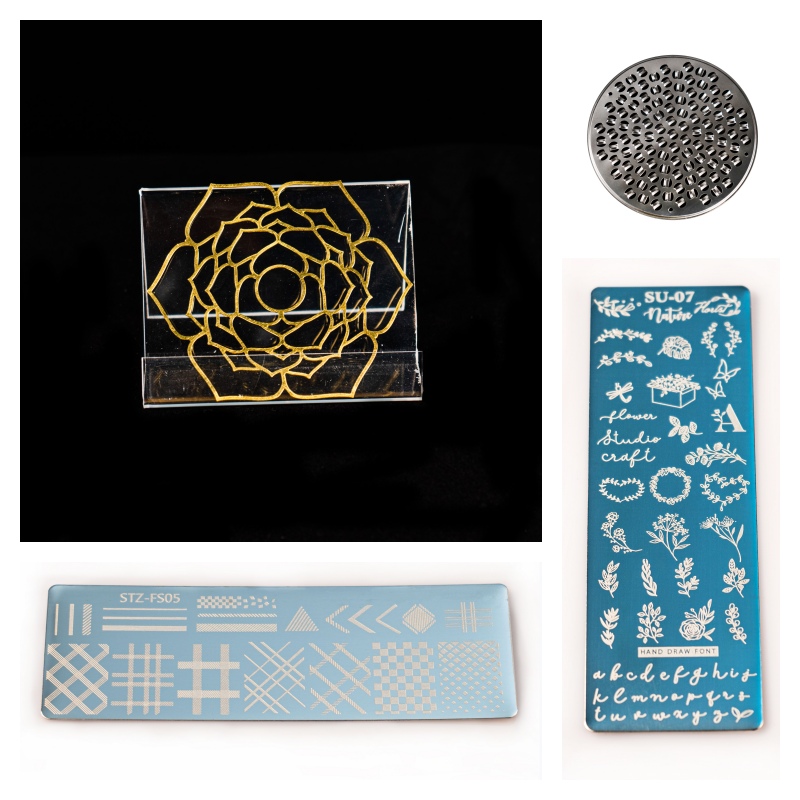
For complex filtration patterns with high open areas, chemical etching is often the only viable method. DRAGON ETCHING TECHNOLOGY has the experience to push the boundaries of what is possible, with capabilities in double-sided etching to create three-dimensional features like counter-sunk holes or stepped openings.
Sustainability and Cost Efficiency
Chemical etching is an environmentally responsible process when managed properly. DRAGON ETCHING utilizes closed-loop recycling systems for etchants and rinse water, minimizing waste. Additionally, the process generates no burrs or slag, reducing secondary finishing operations. The ability to etch multiple parts simultaneously on a single metal sheet improves material utilization (nested layouts), lowering raw material costs. For medium-volume production runs (hundreds to tens of thousands), chemical etching is often more economical than stamping, which requires expensive dies, or laser cutting, which can be slow for large quantities.
Conclusion
Precision filtration and separation components are the unsung heroes of countless industries, ensuring purity, efficiency, and safety. Chemical etching, as practiced by DRAGON ETCHING TECHNOLOGY., LIMITED, offers a superior path to manufacturing these critical parts. With a focus on quality, speed, and customization, DRAGON ETCHING has established itself as a trusted partner for engineers and procurement specialists worldwide. Whether you need a prototype filter mesh for a new medical device or high-volume production of industrial separation screens, our team delivers solutions that meet the most demanding specifications. Contact DRAGON ETCHING TECHNOLOGY today to discuss how we can support your next filtration project.
For more information about chemical etching services for filtration and separation components, visit our website or speak with our technical experts. We are committed to driving innovation in precision manufacturing.