
Chemical Etching Company Explains Isotropic vs Anisotropic Etching Processes
This article, written from a third-person perspective, explains the fundamental differences between isotropic and anisotropic chemical etching processes. Isotropic etching removes material uniformly in all directions, producing rounded sidewalls and undercut, while anisotropic etching is directional, yielding vertical sidewalls with minimal undercut. The article highlights how DRAGON ETCHING TECHNOLOGY., LIMITED, a leader in precision metal etching, applies both methods across industries such as Electronics, Semiconductor, Optics, Automotive, Medical, and Custom Applications. Key characteristics, applications, and a comparison table are provided to guide process selection. DRAGON ETCHING’s commitment to innovation, quality control, and customer collaboration ensures optimal results for each project, whether for prototypes or large-scale production. The summary underscores the importance of choosing the right etching technique based on tolerance, geometry, and material requirements, and positions DRAGON ETCHING as a capable partner in both isotropic and anisotropic etching.
In the world of precision metal fabrication, chemical etching stands out as a versatile and highly accurate process for creating complex components. At DRAGON ETCHING TECHNOLOGY., LIMITED, we have dedicated years to mastering this technology, serving industries ranging from electronics to medical devices. A fundamental distinction in etching processes is between isotropic (non-directional) and anisotropic (directional) etching. Understanding these differences is crucial for selecting the right method for your application.
What Is Chemical Etching?
Chemical etching, also known as photochemical etching or chemical milling, uses a liquid chemical etchant to selectively remove material from a metal sheet. The process begins with a photoresist pattern applied to the metal surface, which protects certain areas from the etchant. The metal is then immersed in or sprayed with the etchant, which dissolves unprotected areas. The result is a precisely shaped part with no burrs, stress, or heat-affected zones.
undefined
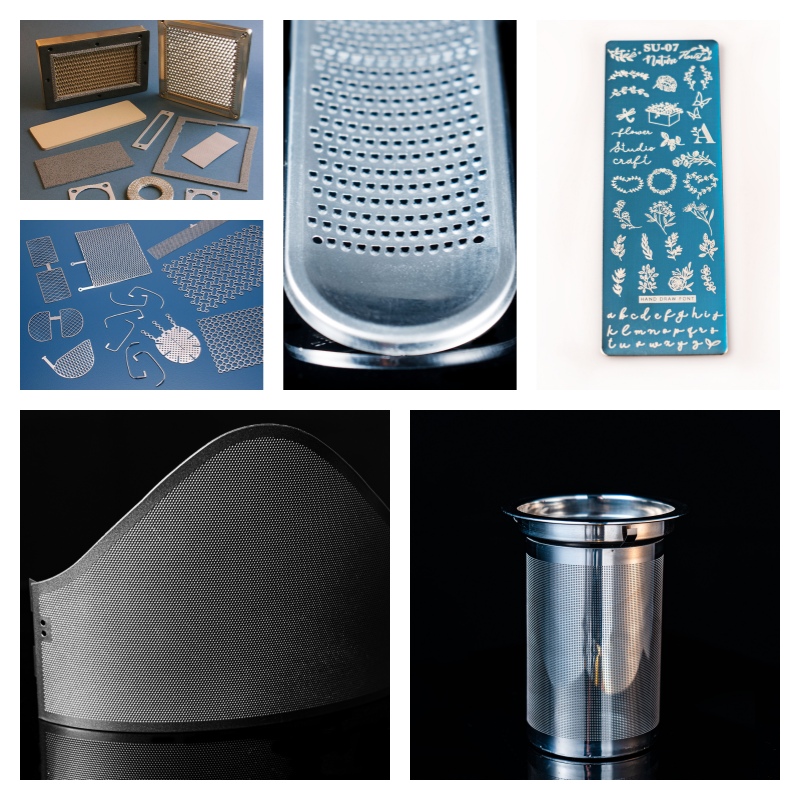
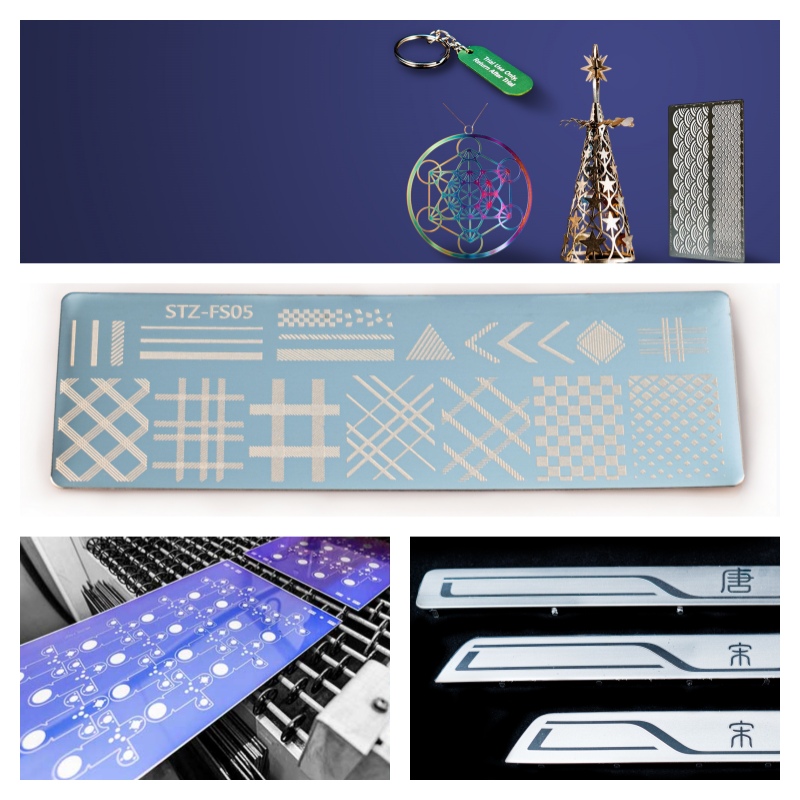
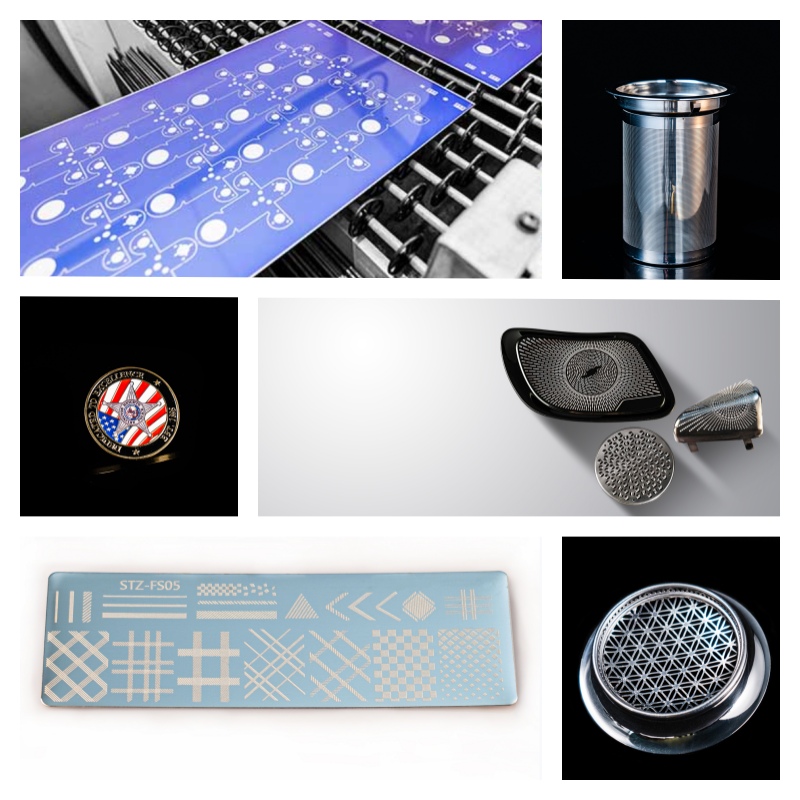
DRAGON ETCHING TECHNOLOGY., LIMITED, founded with a commitment to precision and innovation, has become one of the fastest companies in the chemical etching industry. With state-of-the-art facilities and rigorous quality control, we provide customized metal etching solutions for Electronics and Semiconductor, Optics & Filtration, Automotive & Industrial, Medical & Consumer Electronics, and Cultural and Customized Gift Applications.
Isotropic Etching: Non-Directional Material Removal
Isotropic etching is a process where the etchant attacks the material uniformly in all directions. This means that the etch rate is the same vertically (depth) and laterally (sideways). As a result, isotropic etching produces undercut beneath the photoresist mask, leading to curved or rounded sidewalls. The degree of undercut is roughly equal to the etch depth.
Characteristics of Isotropic Etching
Undercut: The etchant removes material below the mask, creating a concave profile.
Smooth edges: The resulting edges are typically smooth and free of sharp corners.
No crystal orientation dependence: The etch rate is the same regardless of the metal's crystalline direction.
Wider feature spacing required: Due to lateral etching, features must be spaced farther apart to avoid merging.
Common Applications
Isotropic etching is ideal for applications where dimensional accuracy is less critical and rounded edges are acceptable. It is commonly used for:
Metal shims and gaskets
Decorative panels and nameplates
Filters with rounded hole profiles
Prototype and low-volume production
At DRAGON ETCHING, we often employ isotropic etching for custom gift items and cultural applications, where aesthetic appeal matters more than extreme precision.
Anisotropic Etching: Directional Material Removal
Anisotropic etching, also called directional etching, removes material predominantly in one direction—usually perpendicular to the metal surface. This results in straight, vertical sidewalls with minimal undercut. In crystalline metals, anisotropic etching exploits the different etch rates along different crystal planes, allowing for highly controlled profiles.
Characteristics of Anisotropic Etching
Minimal undercut: The sidewalls are nearly vertical, preserving the mask pattern.
Sharp edges: The corners are crisp and well-defined.
Crystal orientation sensitivity: Etch rates vary with crystal direction in some metals (e.g., silicon in semiconductor etching).
Tighter feature spacing: Because lateral etching is low, features can be placed closer together.
Common Applications
Anisotropic etching is essential for high-precision components where tight tolerances and vertical sidewalls are required. Typical applications include:
Microelectromechanical systems (MEMS)
Semiconductor lead frames
Optical apertures and encoders
Medical stents and surgical tools
DRAGON ETCHING TECHNOLOGY excels in anisotropic etching for the Electronics and Semiconductor industry, delivering components with micron-level accuracy.
Comparing Isotropic vs Anisotropic Etching
| Factor | Isotropic Etching | Anisotropic Etching |
|---|---|---|
| Undercut | Significant (equal to etch depth) | Minimal |
| Sidewall shape | Curved/sloped | Vertical/straight |
| Feature spacing | Wider required | Can be tighter |
| Precision | Moderate | High |
| Cost | Lower (simpler process) | Higher (more control) |
| Suitable metals | Most metals | Crystalline metals, silicon |
The choice between isotropic and anisotropic etching depends on the part geometry, material, tolerance requirements, and production volume. For example, in Automotive & Industrial applications, DRAGON ETCHING often uses isotropic etching for components like fuel cell plates where slight undercut is acceptable, while anisotropic etching is reserved for precision gears.
How DRAGON ETCHING TECHNOLOGY Implements These Processes
With years of experience and advanced technological capabilities, DRAGON ETCHING TECHNOLOGY., LIMITED provides professional solutions that exceed client expectations. Our engineers carefully evaluate each project to determine the optimal etching method. We combine technical expertise, responsive service, and innovative processes to transform complex designs into precise, functional metal parts.
For isotropic etching, we use optimized chemistries that control etch rate and uniformity, ensuring consistent undercut. For anisotropic etching, we sometimes employ specialized etchants or multi-step processes to achieve vertical sidewalls. Our state-of-the-art facilities allow us to handle both prototype development and large-scale production with equal rigor.
Quality Control Measures
Rigorous quality control ensures every component meets the highest standards of accuracy and reliability. We perform optical inspections, dimensional measurements, and surface analysis to verify etch profiles. By working closely with clients, we iterate on process parameters to achieve the desired outcome.
Conclusion
Chemical etching offers unmatched flexibility for metal part fabrication. Understanding the difference between isotropic and anisotropic etching helps engineers make informed decisions. DRAGON ETCHING TECHNOLOGY., LIMITED is your partner in both processes, delivering high-quality, customized solutions for a diverse range of industries. From electronics to medical devices, from prototypes to mass production, we bring your designs to life with precision and care.
Contact us today to discuss your etching needs and discover why we are one of the fastest-growing companies in the industry.